


Adoption during wartime: experts examine the motivations and risks
When adjudicating adoption cases, which is the highest priority form of placing a child in a family, courts consider the applicants’ motives, their genuine connection with the child, the child’s health, and the family’s readiness to assume long-term responsibility.
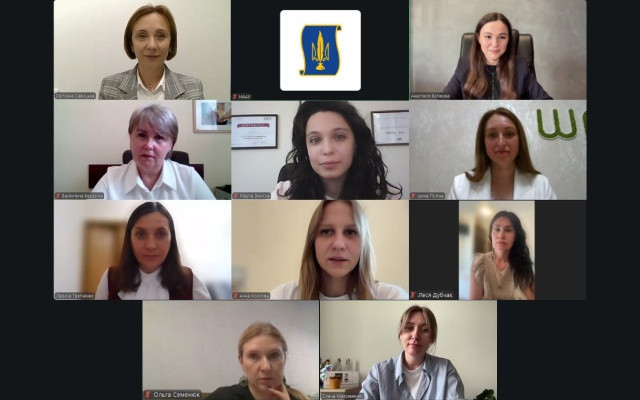
Current challenges were discussed during a professional discussion organized by the UNBA Committee on family law by advocates, representatives of child welfare agencies, scholars and experts in the field of child rights protection.
Opening the event, Committee chairman Larysa Gretchenko noted that under martial law, adoption practices cannot remain unchanged. The war affects both the practical aspects of adoption decisions and procedural issues. She cited court statistics for 2025: over the course of the year, approximately 5,000 adoption cases involving Ukrainian citizens residing in Ukraine were pending; 4,371 decisions were issued, 4,276 applications were granted, and about 900 cases remained pending at the end of the reporting period.
The notion of adoption as the highest-priority form of placing a child in a family has a downside, believes the Committee’s deputy chairman Svitlana Savitska. According to her, a child does not always receive exactly what they need, and the motivation of prospective adoptive parents has varied depending on social circumstances. At the same time, financial stability alone does not guarantee readiness for adoption, as in many cases the psychological and emotional resources of the adults are the determining factor.
Speaking about statistics from Kyiv, head of the adoption and family-based care division at the Kyiv City State Administration’s Department of children and family affairs Valentyna Berezina cited the evacuation and relocation of children as one of the main challenges for child welfare services following the start of the full-scale invasion. According to her, more than 1,500 orphans and children deprived of parental care were evacuated from Kyiv, some of them abroad. She also highlighted frequent changes in legislation, inconsistencies in regulatory documents, differing interpretations of international agreements, staff shortages, professional burnout, and coordination issues among agencies.
The number of children eligible for adoption and registered locally is decreasing, Berezina noted. In contrast, the number of applicants increased after the start of the full-scale invasion, peaking in 2024. Among the motivations for applications, she cited the desire to take in a child who might have been orphaned due to shelling, the desire to save a child, as well as the impact of mobilization calls.
Special attention was given to categories of children who are overlooked by prospective adoptive parents. According to the speaker, a significant portion of children registered for adoption are over 11 years old. There are also groups of siblings who cannot be separated, as well as children with disabilities. However, applicants most often focus on younger children, and the adoption of children with disabilities or sibling groups remains rare.
The topic of temporary custody until a court decision takes legal effect was also discussed. V. Berezina explained that after submitting an adoption application to the court, prospective adoptive parents may apply to the guardianship and custody authority in the child’s place of residence and temporarily take the child into their care. According to her, there have been cases over the past year where children were returned at this very stage. Such situations are recorded not as a cancellation of the adoption, but as a termination of guardianship.
Secretary of the UNBA Committee Iryna Popika focused on the topic of informed adoption. A rushed adoption is not always positive, as applicants need complete information about the child, their health condition, circumstances of their previous life, siblings, relatives, and the reasons for removal from the family. She cited a case in which, after living with the children, the prospective adoptive parents discovered health-related circumstances regarding the child that were not included in the information provided to them, and withdrew their adoption application before the court’s decision became final.
A member of the UNBA Committee Council Marta Zmysla drew attention to the age requirement for adoptive parents. She noted that, according to Article 211 of the Family Code, adoptive parents must be legally competent individuals at least 21 years of age, except in cases involving relatives. At the same time, the age difference between the person wishing to adopt a child and the child must be at least 15 years. In her opinion, the mandatory nature of this requirement can create obstacles even when the child is actually living with the prospective adoptive parent and has established family ties with them.
A member of the UNBA Committee Council Anastasia Belikova spoke about the transformation of judicial practice. According to her, adoption cases remain separate proceedings, but the war has given them an additional legal dimension, since a decision on adoption may, under certain circumstances, affect deferment or discharge from military service. Therefore, courts are moving away from a formal review of documents and are more thoroughly examining family ties, motives, good faith, and intentions.
Among the trends, A. Belikova noted the involvement of military authorities in these cases, specifically the TCC and the Military Registration and Enlistment Office (MREO), military units, and the Ministry of Defense. Courts also verify the applicant’s military registration status, the existence of grounds for deferment or discharge from military service, their health condition, and the conclusions of the Medical Examination Commission (MEC). According to her, the most questions arise in cases of intra-family adoption, when a stepfather seeks to adopt his wife’s child and may acquire the status of a father to three children.
A member of the UNBA Committee Council Lesya Dubchak spoke about the annulment of adoption.
She recalled the grounds provided for in Article 238 of the Family Code, specifically cases where a relationship has developed between the adoptive parent and the child that makes cohabitation and the fulfillment of parental duties impossible, or where the child suffers from a mental or other serious illness of which the adoptive parent was unaware at the time of adoption. The advocate noted that, unlike adoption cases, the law does not clearly define the jurisdiction for cases involving the annulment of adoption or the composition of the defendants.
The topic of annulment of adoption in the context of the application of Article 8 of the Convention for the Protection of Human Rights and Fundamental Freedoms was continued by a member of the UNBA Committee Council Olga Semenyuk. According to her, such disputes receive less attention than adoption cases, although courts must take into account not only national legislation and the practice of the Supreme Court, but also the Convention and the practice of the ECHR. Here, it is important to assess which specific interests of the child will be protected, whether there is an urgent social need for such a decision, whether the principle of proportionality has been observed, and whether there are less radical alternatives that would allow family ties to be preserved.
The psychological aspect of attachment was explained by expert psychologist Anna Kozlova, who noted that the term «affection» is often used in documents, but in psychological terms it is more accurate to speak of attachment. According to her, orphaned children may have no experience of interacting with parents at all, while children deprived of parental care may have disrupted attachment experiences. Therefore, in cases of adoption and termination of adoption, it is important to examine not only the parents’ behavior but also the child’s ability to form a secure bond within the family.
A member of the UNBA Committee Council and UNBA representative in the Czech Republic Olena Maksymenko presented the Czech experience, where adoption issues are regulated not by the Family Code but by civil law. Social services and the court proceed from the best interests of the child and select parents for the child, rather than the other way around. Adoption is also preceded by a lengthy period of preparation, background checks, and contact with the child.
Summarizing the discussion, S. Savitska noted that the topics raised require further discussion, particularly in light of the practice of providing legal aid and issues that may be overlooked by state authorities. L. Gretchenko supported the need to continue the discussion in a broader forum, particularly with the participation of judges and adoptive parents, in order to combine legal and psychological perspectives on adoption decisions and their revocation.
Popular news
Announcements
Internships at German law firms: IRZ is accepting applications from Ukrainians
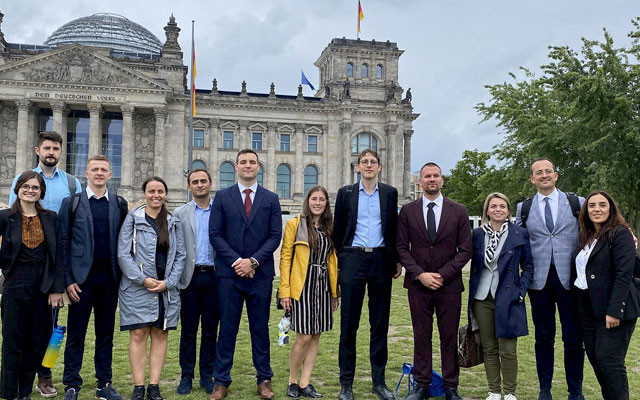
In 2026, the German Foundation for International Legal Cooperation (IRZ) plans to organize a multilateral internship program for young advocates from partner countries. Participants will attend an introductory seminar in Bonn and complete internships at law firms in Germany.
European integration
The UNBA presented the CCBE with an overview of legal reform and challenges
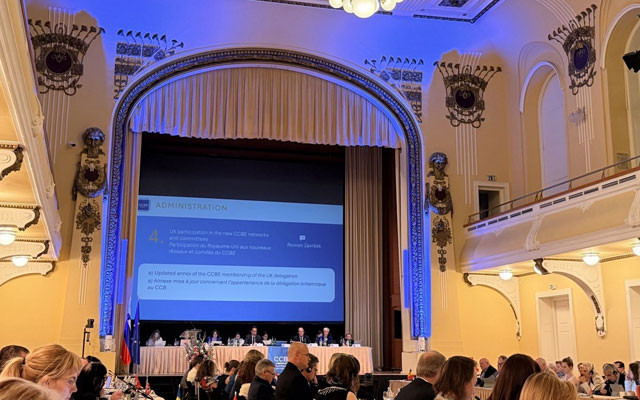
Reform of the legal profession, Ukraine’s European integration commitments, guarantees of the profession’s independence, and practices of bar self-governance in European countries — these issues were the subject of discussion at the Council of Bars and Law Societies of Europe (CCBE).

Rule of Law Roadmap
The UNBA is compiling the findings of the subgroups regarding the implementation of the Rule of Law Roadmap
Today, May 28, the Ukrainian National Bar Association hosted a meeting of the Coordination Bureau of the Working Group on the implementation of the Rule of Law Roadmap regarding the reform of the advocacy profession. Following a series of meetings by thematic subgroups, the work is now moving to the stage of consolidating proposals and preparing a coordinated package of recommendations.
Discussion
UNBA discussed removing barriers at border crossings for families with children with disabilities
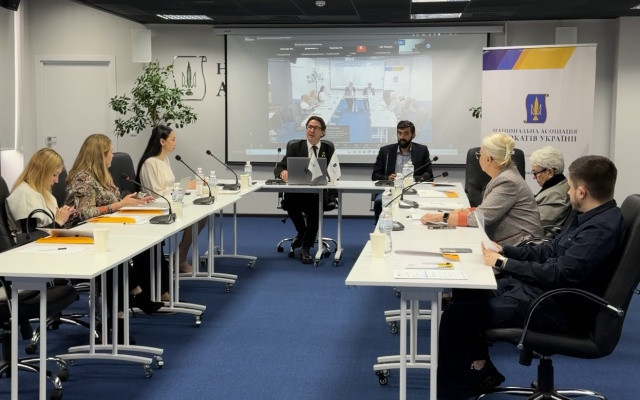
Families of children with disabilities face additional requirements when traveling abroad, particularly regarding consular registration. What is happening and what changes are needed to remove these obstacles were discussed during the roundtable «Borders without barriers for families of children with disabilities».
Discussion
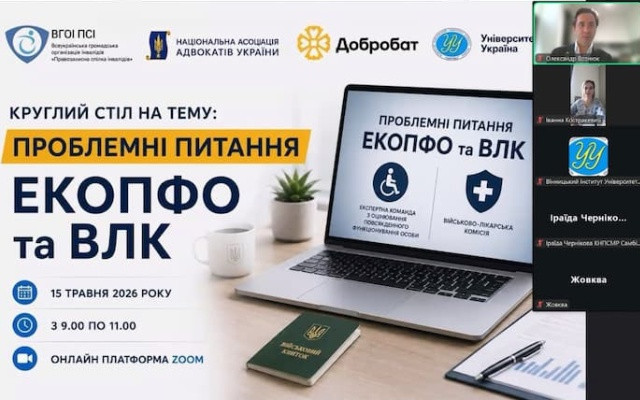
New rules, old problems: the UNBA discussed the work of the ETAIDF and MMC
The reform of medical-social assessment and military medical commissions has changed procedures but has not resolved practical issues. People face situations where documents are not issued, decisions are based on technicalities, assessments are delayed, and they struggle to demonstrate their actual health status in specific life situations.
Discussion
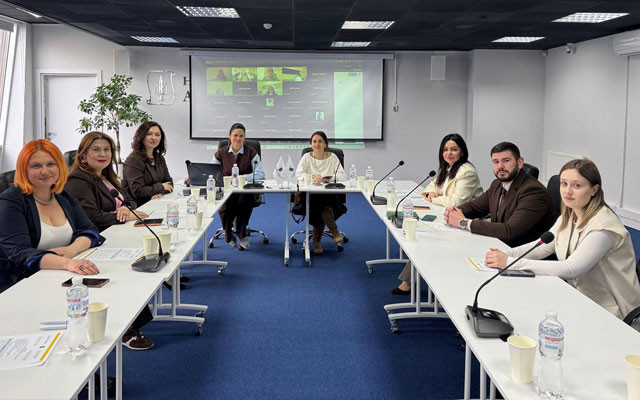
Co-parenting shouldn't be reduced to a 50/50 formula, — roundtable discussion
Following a divorce, joint custody can serve as a mechanism for ensuring equal parental rights. However, this model requires clear criteria and cannot be applied automatically without taking into account the child’s age, the level of conflict between the parents, the risk of violence, and the feasibility of enforcing the future decision.

Legislation
Penalties for errors in military registration require clear rules, – UNBA
The liability of officials for violations of military registration rules must be legally defined, proportionate, and effectively enforceable. Otherwise, the new fines will not protect citizens from registration errors but will create additional risks.

Educational events
How an advocate can find clients when starting a legal practice
Starting a law practice undoubtedly requires professional knowledge. At the same time, a clear understanding of one’s own area of specialization, clients, and communication channels is essential for success.
Publications

Volodymyr Matsko Extradition during wartime: when the risks outweigh the request

Volodymyr Matsko Extradition as a systemic form of rights violations

Victoria Yakusha, Law and Business The anti-corruption vertical cannot «take care» of the Bar as an institution, - acting head of the HQDCB

Censor.net Protecting advocates – protecting justice: addressing concerns about the new law

Ihor Kolesnykov A BRIEF SUMMARY REGARDING THE APPLICATION OF THE ORDER ON EXTENDED CONFISCATION IN LATVIA REGARDING FINANCIAL ASSETS OF…

Valentyn Gvozdiy WORKING IN A WAR ZONE

Lydia Izovitova Formula of perfection

Sergiy Vylkov Our judicial system is so built that courts do not trust advocates