


Law clerk or in-house counsel: which path to a career in advocacy should you choose?

A paralegal and a corporate advocate have different starting points before entering advocacy, but both need to understand how to pass the bar exam, whether an internship is required, and how to structure their first year of practice.
This was discussed during the webinar «The path to becoming an advocate: legal assistant & advocate», organized by the UNBA NextGen in the Vinnytsia and Mykolaiv regions.
The two paths were compared by the Committee’s regional representatives Kateryna Tomay, who worked as a paralegal, and Dmytro Slobodyanyuk, who had experience as an advocate.
K. Tomay explained that working as a paralegal allowed her to gain an inside look at document preparation, strategy development, and pre-trial work. Such early experience also reveals the responsibilities of the profession, as a legal assistant already works in accordance with the Law «On advocacy and the practice of law» and the Rules of Professional Conduct for Advocates. Therefore, anxiety about the exam may relate not only to taking the test itself but also to the question of what to do after receiving the license.
D. Slobodyanyuk described another path — working as an in-house counsel at companies. According to him, such experience can be in-depth in certain areas but does not always provide the variety of situations that a legal assistant gains while working alongside a practicing advocate. For a lawyer in the corporate sector, the breadth of the qualifying exam’s questions poses a challenge, as their accumulated knowledge is often strong only in specific areas.
K. Tomay noted that for an advocate’s assistant, part of the exam preparation already takes place in practice, since the candidate has previously drafted many procedural documents on the job. At the same time, the oral portion requires the ability to respond not only within one’s usual area of specialization but also regarding other branches of law. The commission may ask follow-up questions where it perceives a lack of experience, so it is important not to panic and to calmly structure your response. D. Slobodyanyuk advised against writing excessively long documents in the written portion of the exam and instead recommended focusing on the mandatory elements required by procedural law.
The difference between the two paths becomes apparent even after the exam: K. Tomay, as a former advocate's assistant, did not undergo a legal internship, while D. Slobodyanyuk spent six months on it.
Speaking about his first year in the profession, D. Slobodyanyuk cautioned against an approach where an advocate obtains a license without a clear plan for future actions. After being laid off from his job as a legal counsel, he faced a choice: to look for a new job or to start a solo practice.
From this experience, he concluded that the first year should be planned carefully, with a clear understanding of the nature of the work, sources of clients, and professional strategy.
In his opinion, a solo practice gives an advocate freedom, but it is more difficult to handle the workload and the variety of legal issues on one’s own. Working as part of a team allows for the distribution of specializations and client workload; however, the rules governing collaboration, revenue sharing, and decision-making must be agreed upon from the outset.
K. Tomay also highlighted another risk of the first year — communication skills with early clients: the client’s expectations versus the actual results that can be achieved during the course of the collaboration. As an example, she cited a case involving reimbursement of legal fees, which the court may not award in full, even if the case is decided in the client’s favor.
In summary, the speakers advised young advocates to use professional events, continuing education, and communication with colleagues as tools for entering the legal community. D. Slobodyanyuk also advised advocates to create a five-year development plan specifically as a business plan, rather than merely as a description of professional ambitions.
Popular news
Guarantees of the practice of law
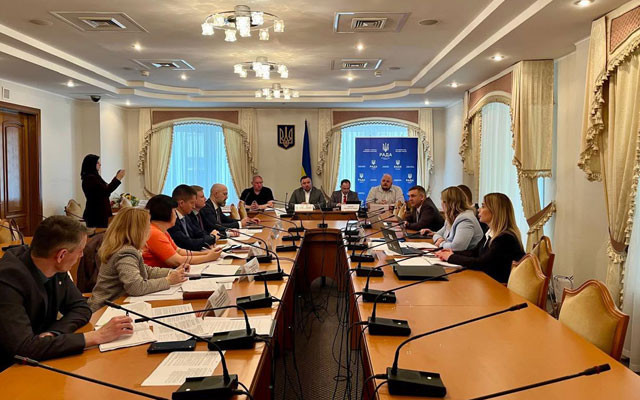
Preparations for the ratification of the Convention on the Protection of the Professions of Lawyer are in the final stages
On June 9, the Verkhovna Rada Committee on legal policy held a working meeting to prepare for the ratification of the Council of Europe Convention on the Protection of the Professions of Lawyer. The Ministry of Justice and the Ukrainian National Bar Association agreed on approaches to draft laws regarding the ratification and implementation of the Convention. Participants have been given 10 days to prepare the draft laws that will be submitted for consideration.
Announcements
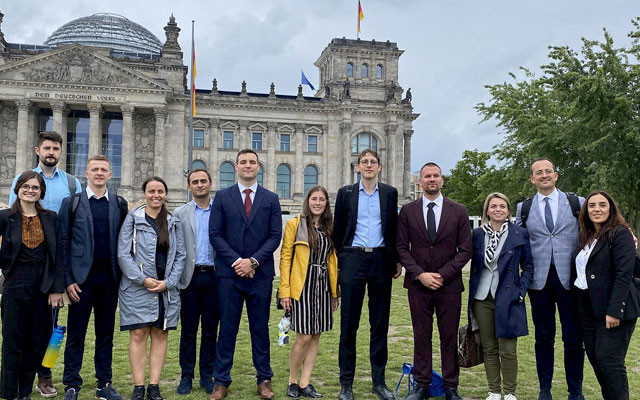
Internships at German law firms: IRZ is accepting applications from Ukrainians
In 2026, the German Foundation for International Legal Cooperation (IRZ) plans to organize a multilateral internship program for young advocates from partner countries. Participants will attend an introductory seminar in Bonn and complete internships at law firms in Germany.

Guarantees of the practice of law
Restrictions on the right to legal assistance in pretrial detention centers are unacceptable – statement by the BCU
The Bar Council of Ukraine has stated that it is unacceptable to restrict the right to professional legal assistance, the guarantees of legal practice, and the confidentiality of communications between advocates and clients in pretrial detention facilities operated by the State Criminal-Executive Service of Ukraine.
European integration
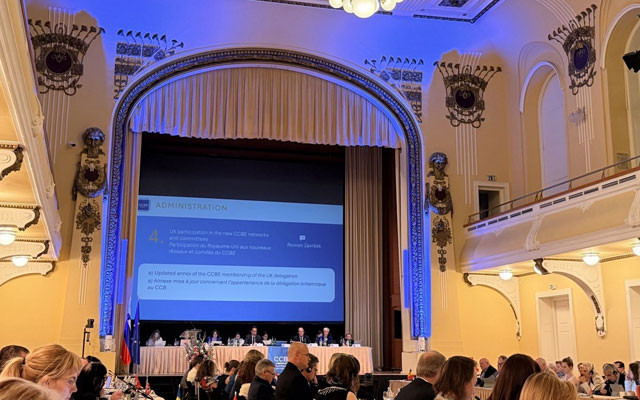
The UNBA presented the CCBE with an overview of legal reform and challenges
Reform of the legal profession, Ukraine’s European integration commitments, guarantees of the profession’s independence, and practices of bar self-governance in European countries — these issues were the subject of discussion at the Council of Bars and Law Societies of Europe (CCBE).

Rule of Law Roadmap
The UNBA is compiling the findings of the subgroups regarding the implementation of the Rule of Law Roadmap
Today, May 28, the Ukrainian National Bar Association hosted a meeting of the Coordination Bureau of the Working Group on the implementation of the Rule of Law Roadmap regarding the reform of the advocacy profession. Following a series of meetings by thematic subgroups, the work is now moving to the stage of consolidating proposals and preparing a coordinated package of recommendations.
Discussion
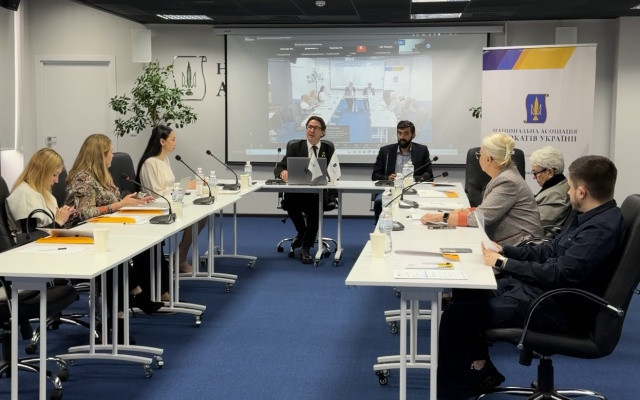
UNBA discussed removing barriers at border crossings for families with children with disabilities
Families of children with disabilities face additional requirements when traveling abroad, particularly regarding consular registration. What is happening and what changes are needed to remove these obstacles were discussed during the roundtable «Borders without barriers for families of children with disabilities».
Discussion
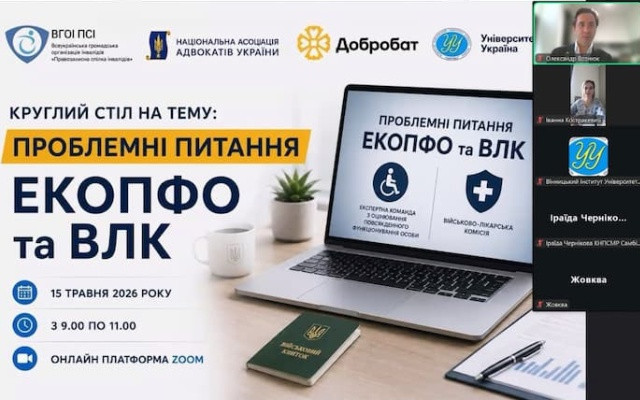
New rules, old problems: the UNBA discussed the work of the ETAIDF and MMC
The reform of medical-social assessment and military medical commissions has changed procedures but has not resolved practical issues. People face situations where documents are not issued, decisions are based on technicalities, assessments are delayed, and they struggle to demonstrate their actual health status in specific life situations.

Legislation
Reports from digital platforms should not disclose attorney-client privilege – UNBA
The introduction of automatic exchange of income information via digital platforms is linked to Ukraine’s fulfillment of its international obligations and the alignment of its legislation with EU rules. However, the new tax regime should not create a mechanism through which tax authorities would obtain data on clients’ communications with advocates.
Publications

Volodymyr Matsko Extradition during wartime: when the risks outweigh the request

Volodymyr Matsko Extradition as a systemic form of rights violations

Victoria Yakusha, Law and Business The anti-corruption vertical cannot «take care» of the Bar as an institution, - acting head of the HQDCB

Censor.net Protecting advocates – protecting justice: addressing concerns about the new law

Ihor Kolesnykov A BRIEF SUMMARY REGARDING THE APPLICATION OF THE ORDER ON EXTENDED CONFISCATION IN LATVIA REGARDING FINANCIAL ASSETS OF…

Valentyn Gvozdiy WORKING IN A WAR ZONE

Lydia Izovitova Formula of perfection

Sergiy Vylkov Our judicial system is so built that courts do not trust advocates