






Trials in absentia, access to an advocate, pretrial detention: guidelines from an ECHR judge

When does the conduct of a criminal case in absentia not violate the Convention? How does the European Court of Human Rights assess restrictions on access to an advocate at the outset of proceedings and complaints regarding detention? And does a violation found by the Court mean that the person will be released?
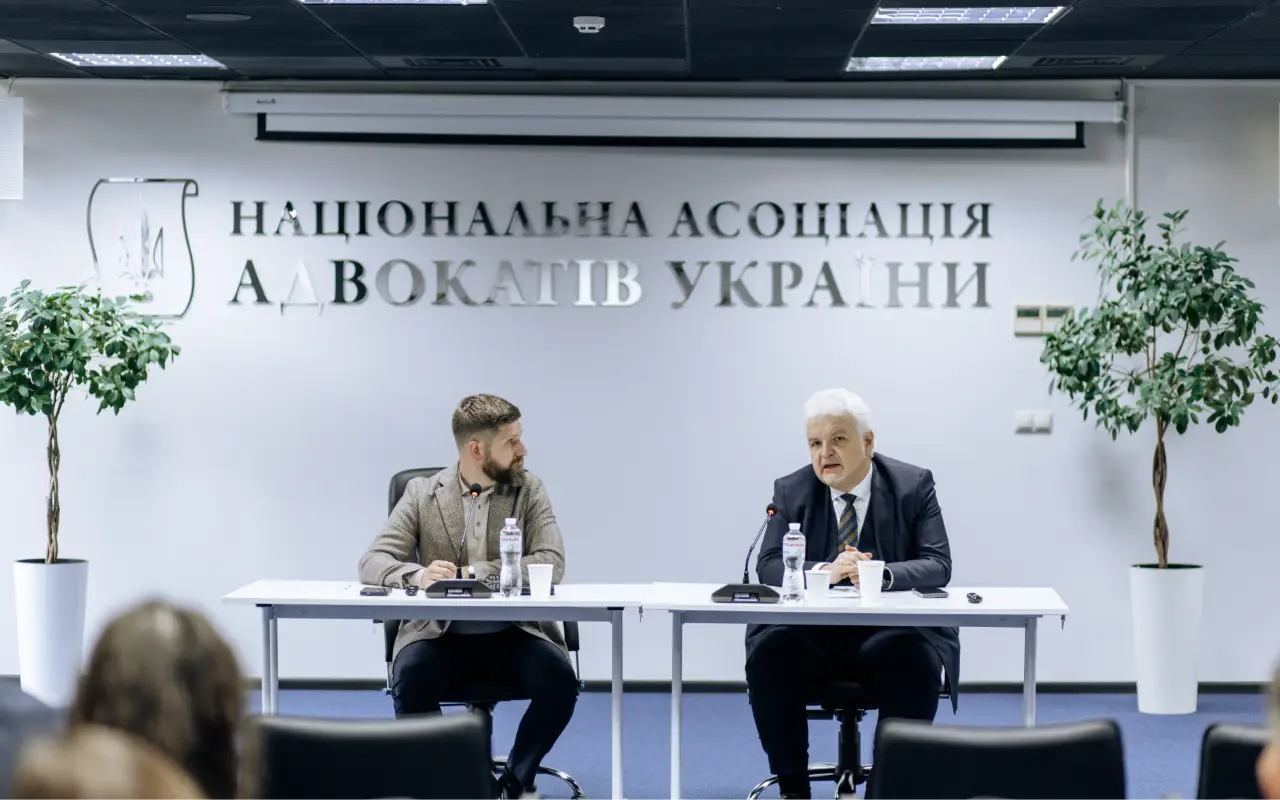
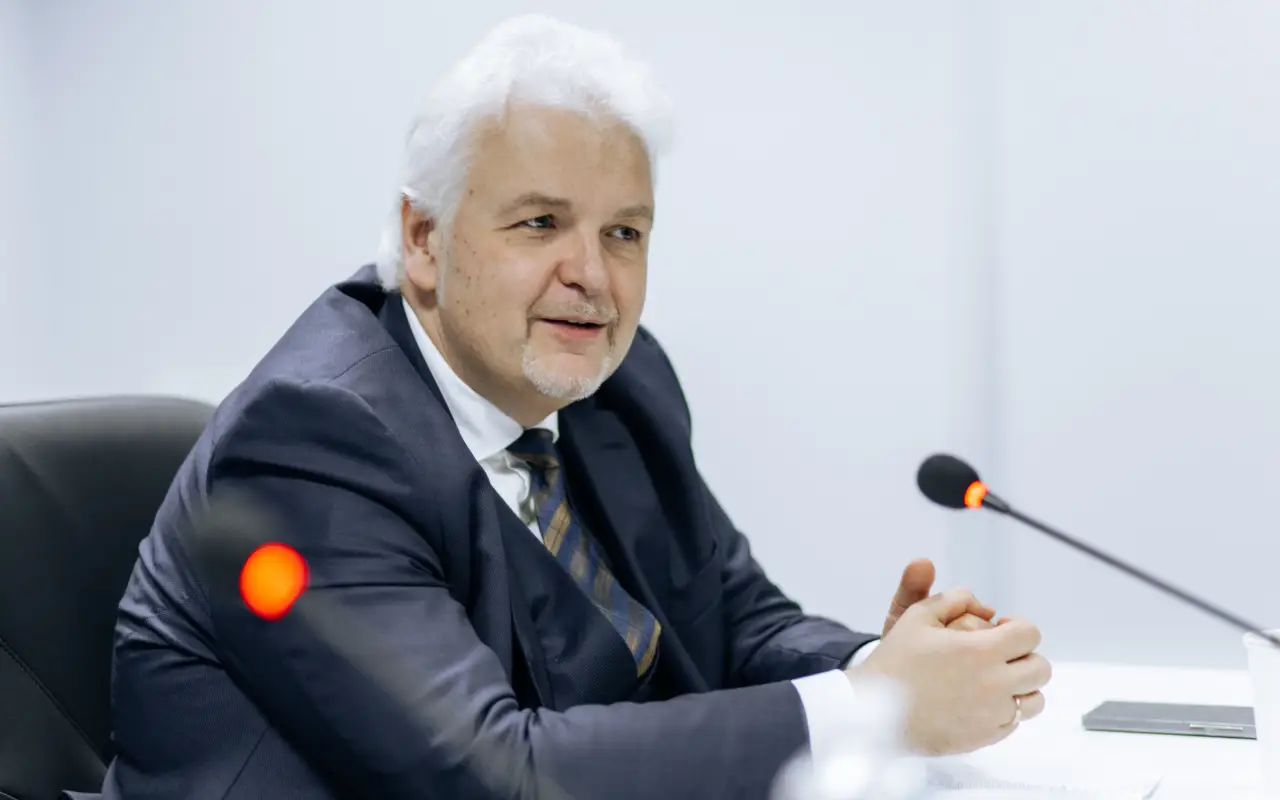
These issues were discussed with ECHR judge Mykola Gnatovsky during the workshop «The European Court of Human Rights today: protecting human rights in criminal proceedings and in times of war». The event took place on October 28, 2026, and was organized by the UNBA Committee on human rights protection. The meeting was moderated by the Committee’s secretary Bogdan Hlyadik.
In particular, he raised the issue of special pretrial investigations and special court proceedings (in absentia) and proposed discussing a situation where the defendant is abroad, provides his address, and repeatedly requests permission to participate via video link. The court denies the request and proceeds with the case in the defendant’s absence.
M. Gnatovsky distinguished between established approaches to trials in absentia and the issue of choosing a remote format for participation. Proceedings in the absence of the defendant do not, in and of themselves, violate the Convention. What is important are the circumstances of his non-participation and the establishment of a deliberate waiver of the right to be present or an intent to evade trial. The possibility of a new trial with his participation is also significant if such a waiver or evasion is not established.
Regarding participation via video link from abroad, the judge emphasized the need to assess the specific circumstances. Alongside the individual’s desire to participate in the proceedings, questions arise regarding identity verification, communication conditions, and the absence of outside influence. M. Gnatovsky refrained from speculating on how the ECHR would rule on such cases, emphasizing the importance of their factual circumstances.
When discussing criminal proceedings, M. Gnatovsky reminded the audience that the ECHR is not a fourth instance court. In particular, using the example of restrictions on access to an advocate at the outset of proceedings, he explained the approach to assessing the overall fairness of the process. The Court examines the impact of such a restriction on the subsequent proceedings and the existence of safeguards that ensured the rights of the defense. In the absence of compelling reasons for the restriction, this scrutiny must be particularly rigorous.
M. Gnatovsky also discussed the simplified processing of applications concerning issues covered by the Court’s established case law. These include excessive length of proceedings, the duration and grounds for pretrial detention, and inadequate conditions of detention. In such cases, the Court applies, in particular, so-called «formulaic decisions»: it relies on established legal approaches and concisely sets forth the circumstances of individual applications.
This procedure allows for a more expeditious review of repetitive complaints. At the same time, their constant influx indicates that the problems to which the ECHR has already drawn attention remain unresolved. As an example, the repetition of identical wording in rulings on the extension of pretrial detention was mentioned during the discussion.
Another question concerned the consequences of the ECHR finding a violation of the right to liberty. M. Gnatovsky explained that a direct order by the Court to release an applicant from custody is an exceptional measure. Therefore, a finding of a violation and the method of enforcing a specific decision must be distinguished.
Participants also raised the issue of the safety of people in places of detention during air raid alerts and their access to shelters. According to M. Gnatovsky, at the time of the meeting, the relevant statements had already been communicated to the Government of Ukraine. The judge explained that an assessment of these issues would be provided in the judgments once the necessary procedures were completed.
The workshop also addressed the problems faced by people in places of detention, the Court’s procedures, and the requirements for applications.
B. Hlyadik suggested drawing on M. Gnatovsky’s experience on the European Committee for the Prevention of Torture, which he chaired from 2015 to 2021. The question concerned which issues faced by people in places of detention remain underrepresented in applications to the ECHR.
According to the judge, visiting such facilities and speaking confidentially with people allow one to observe circumstances that do not always become the subject of court proceedings. This includes pretrial detention centers, correctional facilities, psychiatric institutions, and other places of detention. Particularly vulnerable are individuals who, due to their health condition or isolation, effectively lack access to an advocate and external appeal mechanisms. The absence of applications from such individuals does not indicate the absence of violations.
In explaining the reasons for delays in other cases, the judge highlighted the backlog and the complexities of reviewing applications related to the war. In particular, he mentioned the inaccessibility of case materials in the occupied territories and the interconnection between some individual applications and interstate cases. Consequently, the timeframes for reviewing different categories of applications may vary significantly.
M. Gnatovsky explained the division of responsibilities among Secretariat staff, non-judicial rapporteurs, and single judges. Proposals for inadmissibility are prepared following an analysis of the materials, and the decision is made by a judge. However, the judge elected from Ukraine does not hear applications against Ukraine alone. In this context, the participants drew attention to the requirements of Article 47 of the Court’s Rules of Procedure. An incomplete application form or the absence of required documents may prevent the application from being considered. Submitting an application on the last day of the four-month deadline is particularly risky: there may not be enough time left to remedy any deficiencies. Properly completing the application, however, does not guarantee that it will be declared admissible.
The workshop continued the work of the Committee on the practical application of international human rights protection mechanisms. Earlier, advocates discussed the work of the UN Working Group on arbitrary detention with its chairman Hanna Yudkivska. The UNBA Committee on labor law systematized the ECHR’s practice regarding the admissibility of applications against Ukraine. It prepared digests on procedural grounds for inadmissibility, on the criteria of ratione personae, temporis, loci and materiae and on admissibility criteria based on the merits of the case. The UNBA Committee on legal aid analyzed violations of procedural safeguards in in absentia proceedings in a report.
Popular news
Legislation
The UNBA warned against restricting advocates' rights during the implementation of the Convention
The Ukrainian National Bar Association supported the adoption in principle of draft laws aimed at harmonizing national legislation with the Council of Europe Convention on the Protection of the Professions of Lawyer, and also highlighted the need to refine them in preparation for the second reading.

Legal defence of military personnel
Guarantees in the event of detention and procedures for military personnel: recommendations from the UNBA Committee
Most often, military personnel turn to advocates regarding frozen bank accounts and delays in discharge. Step-by-step procedures have been prepared for such situations. A guide on one-time financial assistance has been provided for the families of those killed in action. And the new regulations governing the stay of mobilized individuals at TCCs require changes regarding guarantees of communication with an advocate.
Guarantees of the practice of law
Ratification first, reform second: Valentin Gvozdiy on the Council of Europe Convention
Albania and Bosnia and Herzegovina have ratified the Council of Europe Convention on the Protection of the Professions of Lawyer. Eight ratifications are required for it to enter into force, so Ukraine may still be among the states that will activate the mechanism for monitoring guarantees for the legal profession.
Rule of Law Roadmap
Lidiya Izovitova: reform of the advocacy profession should make the profession stronger and individuals better protected
The Ukrainian advocacy community is finalizing work on a new version of the relevant law. The roadmap on the rule of law has set the fourth quarter of 2026 as the deadline for achieving results in this area. The draft is intended to ensure safeguards for the practice of law through mechanisms of accountability for violations.
Abroad
The first country to ratify the Convention on the Protection of the Professions of Lawyer
Bosnia and Herzegovina became the first country to ratify the Council of Europe Convention on the Protection of the Professions of Lawyer (CETS No. 226). The country signed the Convention on March 17, 2026, so it took just over seven months to ratify it.
Discussion
Civil security and guidelines for investors: representatives of the UNBA attend a forum in Prague
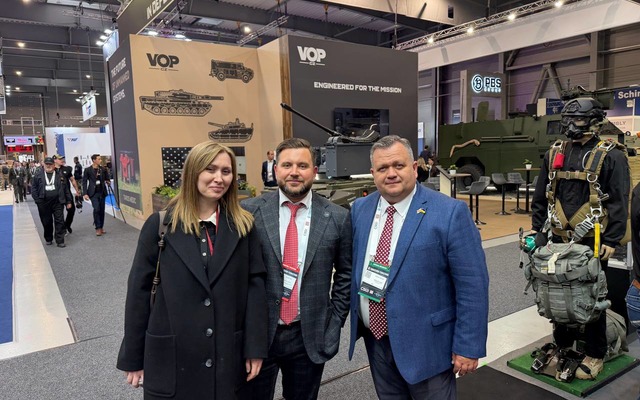
How to establish a business in Ukraine, protect investments, and comply with regulatory requirements — these were the issues that foreign companies in the security sector discussed with representatives of the UNBA during an international forum in Prague.
Legislation
An emergency search without a warrant? What changes are advocates proposing to the CPC
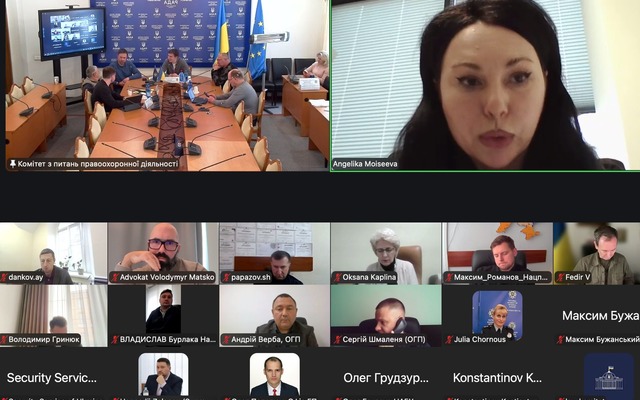
The Verkhovna Rada is preparing a consolidated draft of amendments to the Criminal Procedure Code regarding searches in urgent cases without a prior ruling by an investigating judge. The UNBA insists that judicial oversight following such a search must be effective, and that homeowners must be full participants in the procedure.
Discussion
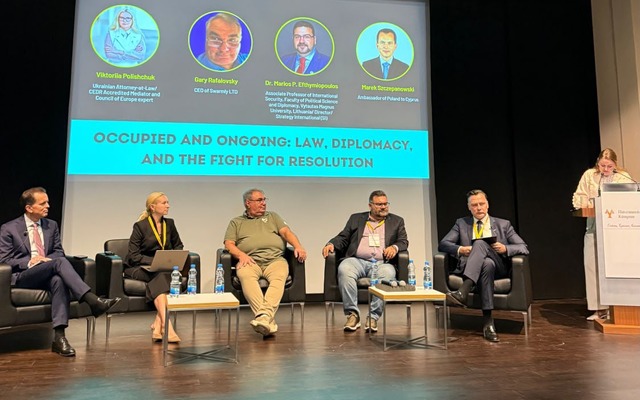
In Nicosia discussions focused on the protection of labor rights under occupation
How can a person’s labor rights be protected if the employer, the archives, and the employment record book remain in the occupied territory? And does a court that takes into account a document issued there legitimize the occupying authority?
Publications

Vasyl Kolishnyi, «Law and Business» Supporting mental health should become part of the professional culture of the Bar, - H. Udovenko

Volodymyr Matsko Extradition during wartime: when the risks outweigh the request

Volodymyr Matsko Extradition as a systemic form of rights violations

Victoria Yakusha, Law and Business The anti-corruption vertical cannot «take care» of the Bar as an institution, - acting head of the HQDCB

Censor.net Protecting advocates – protecting justice: addressing concerns about the new law

Ihor Kolesnykov A BRIEF SUMMARY REGARDING THE APPLICATION OF THE ORDER ON EXTENDED CONFISCATION IN LATVIA REGARDING FINANCIAL ASSETS OF…

Valentyn Gvozdiy WORKING IN A WAR ZONE

Lydia Izovitova Formula of perfection

