Tromso Convention as a basis for digital governance and artificial intelligence
The Council of Europe Convention on Access to Official Documents together with international open data standards create a legal basis for the accumulation of official information in machine-readable formats for the purposes of e-government and the development of artificial intelligence.
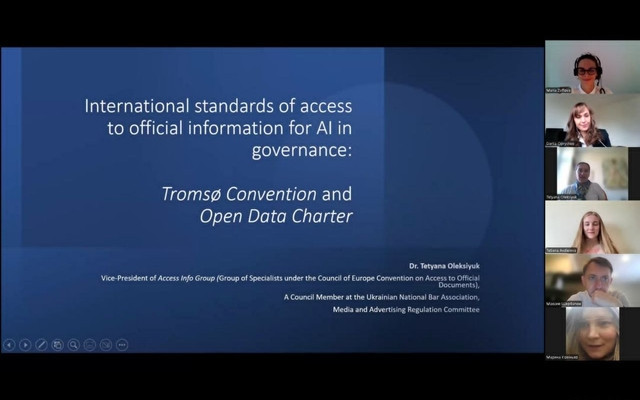
A report on the role of the Council of Europe Convention on Access to Official Documents (Tromso Convention) and international open data standards in the development of artificial intelligence tools was delivered by Tetyana Oleksiyuk, a member of the UNBA Committee on Media and Advertising Law, at the European Regional Conference «Artificial Intelligence for Information Accessibility» (AI4IA), organized by the UNESCO Information for All Program (IFAP) Working Group on Information Accessibility.
The Tromso Convention entered into force in December 2020 and became the first legally binding international instrument to enshrine the right of everyone, without discrimination, to access official information collected and created by public authorities. «Access to official data is a necessary component of transparency, accountability and citizen participation, and the Convention provides, albeit minimal, but fundamental standards for governments to provide access to official data, including in digital formats», - said T. Oleksiyuk. In her opinion, the accumulation of public sector information in digital formats suitable for machine processing will enable the development of e-government and artificial intelligence tools to improve public access to official information.
The Convention defines official documents as any information recorded in any form and held by public authorities, including digital formats such as databases, emails, and audiovisual recordings. This definition expands the scope of access to information in digital formats, which is increasingly replacing traditional paper documents. Therefore, the standards of the Convention can be fully applied to the processes of improving public access to government digital data. And the transition to digital document management opens up opportunities for improving the efficiency of public administration and implementing the principle of openness of public information by default and openness by design.
The governments of the countries that are parties to the Tromso Convention, including Ukraine, are obliged to manage their documents effectively (Article 9 of the Convention), which is extremely important in the context of digitalization. Public authorities are required to establish clear rules for the storage, destruction and accessibility of official information. This provision is consistent with the principles of good governance, ensuring that official data is preserved and structured in a way that facilitates public access.
In addition, public authorities should promote transparency by actively publishing information on the Internet, facilitating direct public access to information without the need for separate requests. The reports of the countries party to the Convention provide examples of successful access to information in digital formats and best practices in implementing proactive data disclosure.
Open data as a component of public information under the Law on Access to Public Information already provides citizens, researchers, and businesses with free access to public sector datasets in a machine-readable format. International open data standards, such as those enshrined in the Open Data Charter, promote the unification of approaches to data publication, which allows for the creation of higher quality and more interoperable datasets. This, in turn, stimulates innovation, as open data can be used to develop new services and products that improve the quality of life and promote economic growth.
According to T. Oleksiyuk, although the Tromso Convention provides a clear framework for improving access to official information, there are still obstacles to the effective implementation of these international standards. The main challenges are the lack of appropriate infrastructure, lack of knowledge and skills of responsible public officials, and insufficient legal literacy of requesters.
To overcome these challenges, governments should invest in digital infrastructure, develop user-friendly data portals, and introduce clear guidelines for publishing and managing public information in digital formats. Public authorities should also engage in awareness-raising campaigns to raise the awareness of civil servants and the public about digital access to public information.
Thus, the Tromso Convention, along with key open data documents, creates the basis for the development of digital public administration based on accurate, timely official information and using artificial intelligence tools. In particular, such tools can significantly accelerate the processing of large volumes of official information by automating the search, analysis, and classification of data. By implementing international open data standards and using AI tools, it will be possible to integrate different sources of information, providing more accessible and understandable interfaces for the public.
Popular news
Support
Mental health, archives and cybersecurity: The UNBA and the IBA reviewed the progress of joint projects
The Ukrainian National Bar Association and the International Bar Association (IBA) reviewed the progress of joint projects that are of practical importance in the context of the war: supporting the mental health of advocates, digitizing archives, and strengthening the cybersecurity of the legal infrastructure.
Rule of Law Roadmap
The UNBA is developing a model for reforming the legal profession
The reform of the advocacy profession is part of the negotiation process regarding Ukraine’s accession to the European Union, and the Rule of Law Roadmap explicitly identifies the Ukrainian National Bar Association as one of the key stakeholders in the process.

Legal defence of military personnel
Missing in action: advocates explain the procedure to the families of servicemembers
As part of the «Advocate+» pilot project, advocates continue to work with military personnel in the brigades, helping to resolve practical legal issues — ranging from social benefits and payments to undergoing medical examinations and processing paperwork.
Guarantees of the practice of law
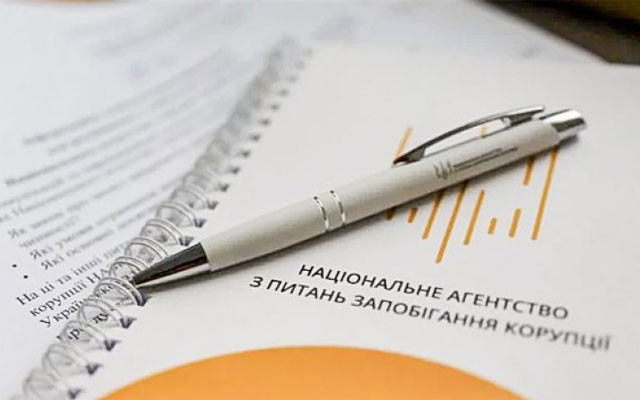
Police to investigate the NACP's attempts to reform advocacy
The Office of the Prosecutor General has opened a criminal investigation into alleged abuse of power by employees of the National Agency for Corruption Prevention.
Interaction
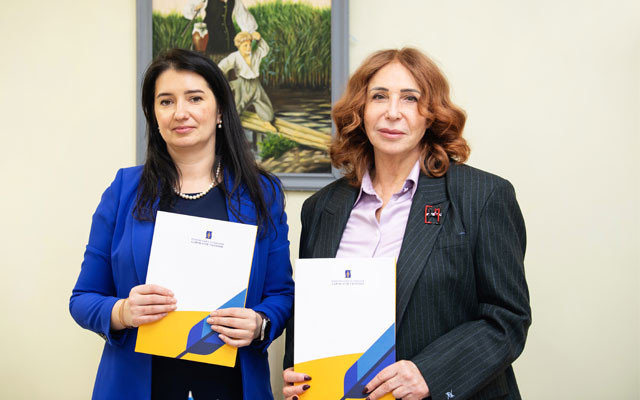
Advocates and patent attorneys combine their expertise in the field of intellectual property
Joint legislative proposals, expert opinions on regulatory changes and professional discussions on key issues in the field of intellectual property will form the basis of cooperation between the Ukrainian National Bar Association and the National Association of Patent Attorneys of Ukraine.
Interaction
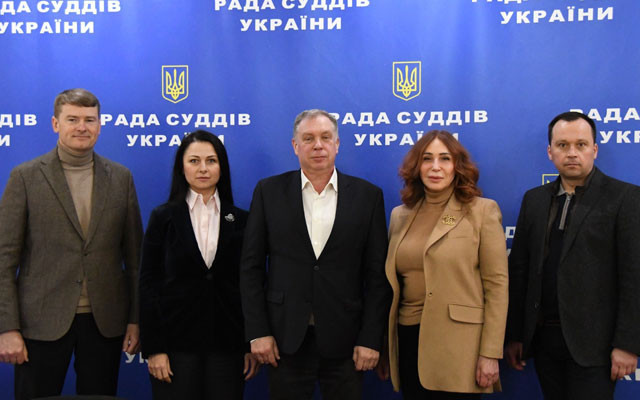
The UNBA and the Council of Judges of Ukraine are expanding their professional dialogue
On April 24, a working meeting was held between the President of the UNBA, BCU Lidiya Izovitova and the Chairman of the Council of Judges of Ukraine Vitaliy Salikhov. Topics discussed included formats for cooperation between bar and judicial self-governing bodies, the development of joint ethical standards, and the formation of a Selection Committee for the recruitment of members of the High Council of Justice.

Legal defence of military personnel
The model for legal assistance to veterans was discussed at the UNBA
A working meeting was held at the Ukrainian National Bar Association, during which representatives of the advocacy profession, the Ministry of Veterans Affairs of Ukraine and a foreign expert discussed approaches to providing legal aid to veterans, the role of the advocacy profession in this system, and the experience of other countries.
Guarantees of the practice of law
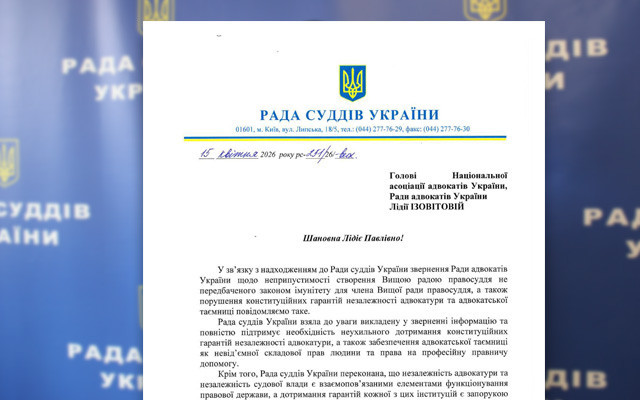
The CJU has endorsed guarantees of the legal profession’s independence and has proposed a meeting with the BCU
The Council of Judges of Ukraine has responded to a letter from the Bar Council of Ukraine regarding the inadmissibility of the High Council of Justice granting immunity to a member of the High Council of Justice — a privilege not provided for by law — as well as regarding violations of constitutional guarantees of the independence of the legal profession and attorney-client privilege.
Publications

Volodymyr Matsko Extradition during wartime: when the risks outweigh the request

Volodymyr Matsko Extradition as a systemic form of rights violations

Victoria Yakusha, Law and Business The anti-corruption vertical cannot «take care» of the Bar as an institution, - acting head of the HQDCB

Censor.net Protecting advocates – protecting justice: addressing concerns about the new law

Ihor Kolesnykov A BRIEF SUMMARY REGARDING THE APPLICATION OF THE ORDER ON EXTENDED CONFISCATION IN LATVIA REGARDING FINANCIAL ASSETS OF…

Valentyn Gvozdiy WORKING IN A WAR ZONE

Lydia Izovitova Formula of perfection

Sergiy Vylkov Our judicial system is so built that courts do not trust advocates