Those mobilized in the TCC do not have access to legal aid (document)
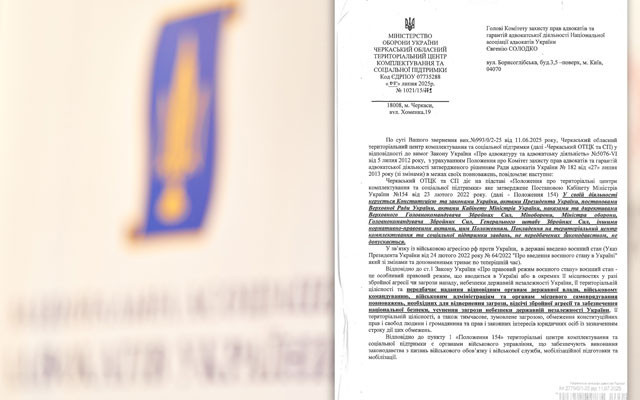
When an advocate in Cherkasy region submitted a request to the TCC on behalf of a mobilized client, the TCC claimed that the documents had been forged because the conscript did not have a telephone and was physically unable to sign a contract for legal assistance.
In March, the man applied to the Zvenyhorodsky district TCC for military registration and deferment. He was told that deferment was only possible after appearing in person. However, upon arrival at the TCC, the man was registered, found fit for service, and mobilized.
The advocate with whom a legal aid agreement had been concluded sent a lawyer's request to the TCC. In response, officials claimed that the documents had been forged and even notified the police. As later explained by the regional TCC, the mobilized man «did not leave the premises of the territorial center, did not have free access to electronic and technical means, since his mobile phone was voluntarily left by the citizen with the duty officer for safekeeping, and therefore he was physically unable to sign a contract for legal assistance». They explained their actions by saying that the territory of the TCC and its premises are military facilities, and the dissemination of information about military facilities is prohibited in accordance with Order No. 605 of the Ministry of defense of Ukraine dated October 17, 2023.
The Zvenyhorod district police department of the main directorate of the National Police in the Cherkasy region looked into the claim about a possible forged signature, but since there wasn't enough evidence of a crime, they didn't find any grounds to start a criminal case.
In connection with the facts of interference in his professional activities, the advocate appealed to the Ukrainian National Bar Association. In particular, he reported that on the day of his client's mobilization, he was illegally deprived of his mobile phone and freedom of movement, which made it impossible to communicate quickly.
The Committee for the protection of lawyers' rights and guarantees of advocacy proceeded from the assumption that the Law «On Advocacy and Advocacy» expressly prohibits any actions that could be regarded as obstruction of legal assistance. It is the duty of the state to create conditions for its provision, regardless of the situation in which the client finds himself.
Particularly unacceptable are the facts of identifying the advocate with the client, publicly accusing them of abuse of rights without decisions of competent authorities, and ignoring the duty of state bodies to provide advocates with information in accordance with applicable law.
Therefore, the UNBA Committee concluded that the actions of the district TCC officials contain signs of two crimes: obstruction of the lawful activities of a lawyer (Article 397 of the Criminal Code) and knowingly false reporting of a crime (Article 383 of the Criminal Code).
In this regard, the UNBA appealed to the Ministry of defense and the TCC with demands to conduct an internal investigation into the actions of officials, provide a legal assessment of the facts of the unfounded accusations against the advocate, respond to the lawyer's request on its merits, and provide clarification on compliance with guarantees for the practice of law and the prevention of similar violations in the future.
Popular news

Legislation
DIC and customs control: advocates warn against the risks of draft law No. 13421
Ukrainian defense companies face bureaucratic delays in importing components, which could critically affect the timing of government contracts. At the same time, the mechanism proposed in the Verkhovna Rada creates risks that could outweigh the potential benefits for the industry.
Discussion
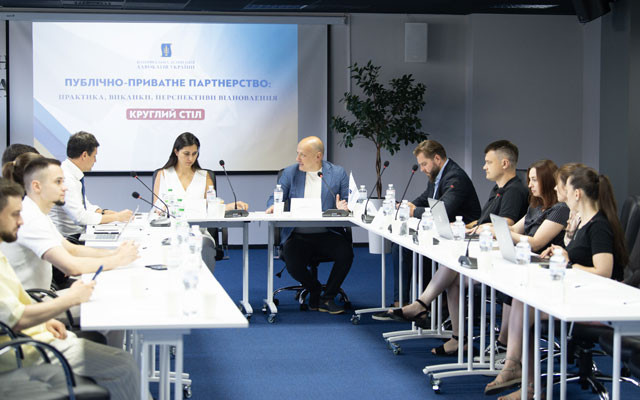
Partnership for reconstruction: UNBA discusses new law on PPPs
Public-private partnerships are considered one of the key tools for Ukraine's recovery, but in practice, their mechanisms remain complex, poorly understood, and often ineffective.
Guarantees of the practice of law
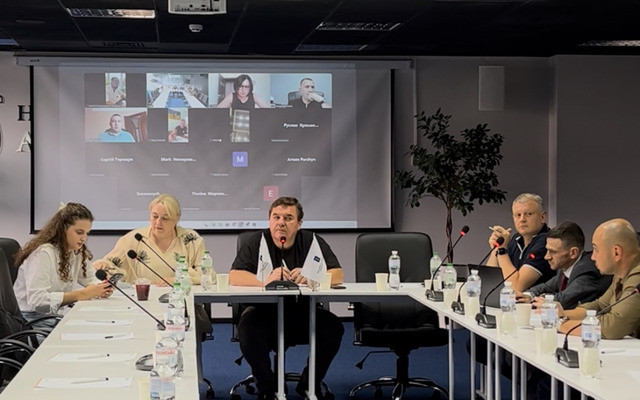
Defended police officers — ended up in the army: advocate mobilized while performing his duties
An advocate specializing in defending the rights of law enforcement officers and who had repeatedly won cases against the police was mobilized while performing his professional duties. The day before, a report appeared in the Oberig registry stating that he had violated military registration rules, and his current deferral was canceled. The advocate was detained, taken to the TCC and the SS, beaten and sent to a military unit.

Announcements
The BCU has begun accepting documents from candidates for the Competition Commission for the selection of members of the HQCJ
The Bar Council of Ukraine announces the start of accepting documents from candidates who wish to be elected to the Competition Commission for the selection of members of the High Qualification Commission of Judges under the BCU quota.

Legislation
Venice Commission warned of risks of changes to disciplinary procedures for Ukrainian judges
The European Commission for Democracy through Law (Venice Commission) and the Council of Europe Directorate for Human Rights and Rule of Law are preparing an assessment of draft laws concerning the judicial system and the status of judges in Ukraine.
Announcements
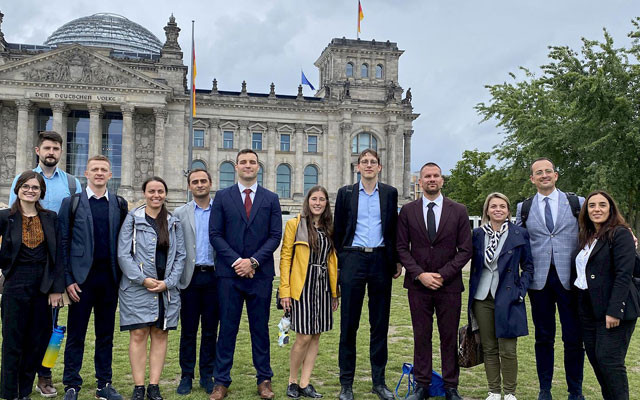
Ukrainian advocates invited to Bonn for internship
Young Ukrainian advocates specializing in civil, commercial, and economic law have the opportunity to participate in an internship program in Germany. The program is organized by the International Legal Cooperation Foundation (IRZ) in cooperation with the Federal Bar Association and the German Bar Association.
Legislation
Declarations of integrity for judges and others: BCU approves conclusions on draft laws
Under the guise of restoring trust in the judiciary, repressive mechanisms of control over it may be introduced. This directly contradicts international experience and may lead to the degradation of the Ukrainian justice system.
Court practice
Automatic extension of detention violates the right to defense, - says Constitutional Court
The obstacles to access to court and the violation of the right to be heard in court for a person in such an important matter as the extension of the term of detention, established by the provisions of the CPC, mean that it is impossible to exercise the right to defense guaranteed by part two of Article 63 of the Constitution.
Publications

Ihor Kolesnykov A BRIEF SUMMARY REGARDING THE APPLICATION OF THE ORDER ON EXTENDED CONFISCATION IN LATVIA REGARDING FINANCIAL ASSETS OF…

Valentyn Gvozdiy WORKING IN A WAR ZONE

Lydia Izovitova Formula of perfection

Sergiy Vylkov Our judicial system is so built that courts do not trust advocates

Iryna Vasylyk Advocacy in the proclamation of Independence of Ukraine

Oleksandr DULSKY When we cross the border of the Supreme Anti-Corruption Court, we get into another department of the National Anti-Corruption…

Vadym Krasnyk The UNBA will work, and all obstacles and restrictions are only temporary inconveniences

Lydia Izovitova Interview with Lydia Izovitova on the occasion of the 8th anniversary of the founding of UNBA: We are the voice of t…