


Unspoken actions against an advocate: who should go to court?

The granting of permission by an investigating judge to conduct covert investigative (search) activities in relation to an advocate at the request of an investigator, which has only been approved by the head of the regional prosecutor's office, is a violation of the guarantees of legal practice.
This conclusion was reached by the Bar Council of Ukraine in its decision No. 121 of October 18, 2025, which approved the relevant clarification.
The basis for considering the issue was an appeal by an advocate regarding the application of paragraph 3 of part 1 of Article 23 of the Law «On the advocacy and legal practice», according to which:
«operational-search measures or investigative actions against an advocate, which may be carried out only with the permission of a court, shall be carried out on the basis of a court decision adopted at the request of the Prosecutor General, his deputies, the prosecutor of the Autonomous Republic of Crimea, the region, the city of Kyiv, and the city of Sevastopol».
BCU requested clarification as to whether the situation where permission for CISA in relation to an advocate is granted by a court on the basis of a motion by an investigator, agreed with the regional prosecutor, and not directly on the basis of a motion by such a prosecutor, complies with this provision.
The bar self-government body proceeded from the assumption that, as a general rule under Article 246 of the CPC, the decision to conduct a special investigative measure is made by an investigator, a prosecutor, and in certain cases, an investigating judge at the request of a prosecutor or investigator, agreed with the prosecutor. At the same time, paragraph 7 of part 1 of Article 480 of the CPC refers to advocates as persons to whom a special procedure for criminal proceedings applies.
In cases where the legislator establishes enhanced guarantees for special subjects, such guarantees must be clearly enshrined in the rules governing the procedure for conducting the relevant procedural measures. And paragraph 3 of part 1 of Article 23 of the relevant Law provides for a non-alternative mechanism: a court decision must be made at the request of the head of the prosecutor's office.
At the same time, the BCU drew attention to paragraph 10 of part 2 of Article 36 of the CPC, which distinguishes between two forms of exercising the powers of a prosecutor: approval of a request by an investigator to an investigating judge to conduct investigative or covert actions, and independent submission of such a request. Approval of the request is considered as permission to implement the investigator's initiative, while the submission of the request by the prosecutor is the implementation of his own initiative. At the same time, Article 480 of the CPC, in the context of a special subject – an advocate – attaches a special procedure specifically to the heads of the prosecution authorities who hold administrative positions and may not be part of the group of prosecutors in a particular proceeding.
Therefore, the powers of the heads of the prosecution authorities in this regard are exceptional and cannot be delegated to other prosecutors or investigators. It is this approach that provides an additional guarantee of protection of the rights of an advocate as a person with special status in criminal proceedings.
In view of the above, the BCU concluded that the granting of permission by an investigating judge to conduct covert investigative (search) actions against an advocate on the basis of a request by an investigator, which has been agreed with the prosecutor (the Prosecutor General, his deputy, the prosecutor of the Autonomous Republic of Crimea, the region, the city of Kyiv, and the city of Sevastopol) is a violation of the guarantees of advocacy established by paragraph 3 of part 1 of Article 23 of the Law of Ukraine «On the advocacy and legal practice».
The full text of the decision of the BCU No. 121 of October 18, 2025, can be viewed at this link.
Popular news
European integration
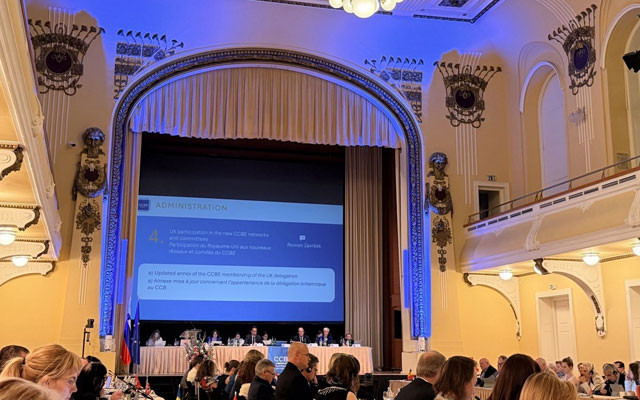
The UNBA presented the CCBE with an overview of legal reform and challenges
Reform of the legal profession, Ukraine’s European integration commitments, guarantees of the profession’s independence, and practices of bar self-governance in European countries — these issues were the subject of discussion at the Council of Bars and Law Societies of Europe (CCBE).

Rule of Law Roadmap
The UNBA is compiling the findings of the subgroups regarding the implementation of the Rule of Law Roadmap
Today, May 28, the Ukrainian National Bar Association hosted a meeting of the Coordination Bureau of the Working Group on the implementation of the Rule of Law Roadmap regarding the reform of the advocacy profession. Following a series of meetings by thematic subgroups, the work is now moving to the stage of consolidating proposals and preparing a coordinated package of recommendations.
Discussion
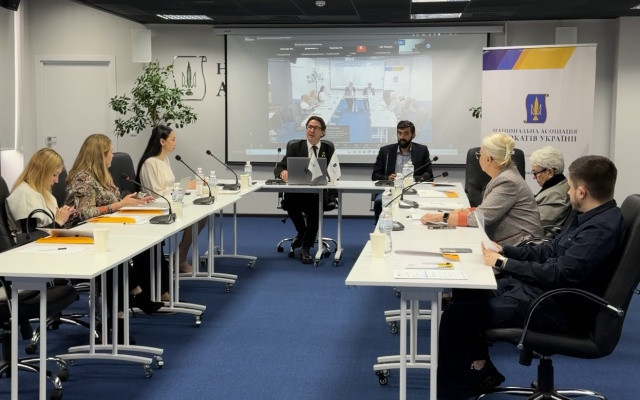
UNBA discussed removing barriers at border crossings for families with children with disabilities
Families of children with disabilities face additional requirements when traveling abroad, particularly regarding consular registration. What is happening and what changes are needed to remove these obstacles were discussed during the roundtable «Borders without barriers for families of children with disabilities».
Discussion
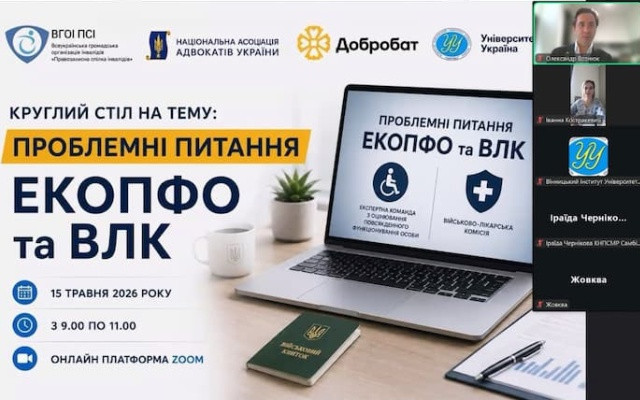
New rules, old problems: the UNBA discussed the work of the ETAIDF and MMC
The reform of medical-social assessment and military medical commissions has changed procedures but has not resolved practical issues. People face situations where documents are not issued, decisions are based on technicalities, assessments are delayed, and they struggle to demonstrate their actual health status in specific life situations.
Discussion
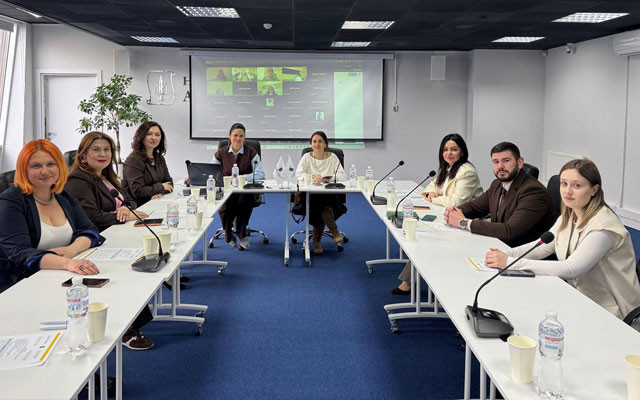
Co-parenting shouldn't be reduced to a 50/50 formula, — roundtable discussion
Following a divorce, joint custody can serve as a mechanism for ensuring equal parental rights. However, this model requires clear criteria and cannot be applied automatically without taking into account the child’s age, the level of conflict between the parents, the risk of violence, and the feasibility of enforcing the future decision.

Legislation
Penalties for errors in military registration require clear rules, – UNBA
The liability of officials for violations of military registration rules must be legally defined, proportionate, and effectively enforceable. Otherwise, the new fines will not protect citizens from registration errors but will create additional risks.

Educational events
How an advocate can find clients when starting a legal practice
Starting a law practice undoubtedly requires professional knowledge. At the same time, a clear understanding of one’s own area of specialization, clients, and communication channels is essential for success.
European integration
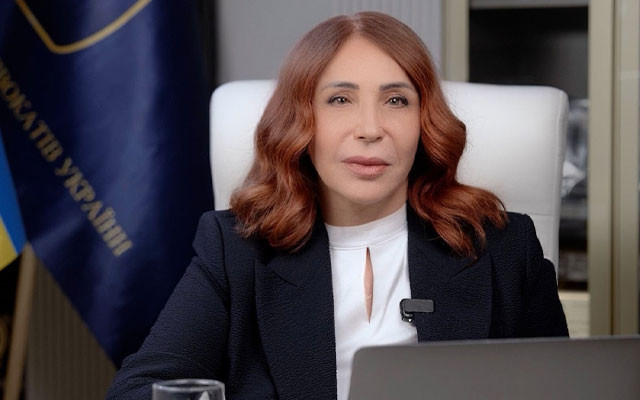
Lidiya Izovitova: In the context of European integration reforms, advocacy is a partner of the state, not a target of reform
The war has significantly altered the working conditions for advocates, while European integration has presented the profession with new institutional challenges. The ongoing negotiation process covers issues such as the rule of law, judicial independence, fundamental rights, justice, freedom and security.
Publications

Volodymyr Matsko Extradition during wartime: when the risks outweigh the request

Volodymyr Matsko Extradition as a systemic form of rights violations

Victoria Yakusha, Law and Business The anti-corruption vertical cannot «take care» of the Bar as an institution, - acting head of the HQDCB

Censor.net Protecting advocates – protecting justice: addressing concerns about the new law

Ihor Kolesnykov A BRIEF SUMMARY REGARDING THE APPLICATION OF THE ORDER ON EXTENDED CONFISCATION IN LATVIA REGARDING FINANCIAL ASSETS OF…

Valentyn Gvozdiy WORKING IN A WAR ZONE

Lydia Izovitova Formula of perfection

Sergiy Vylkov Our judicial system is so built that courts do not trust advocates