Advocates name three steps to ensure quality translations in criminal cases
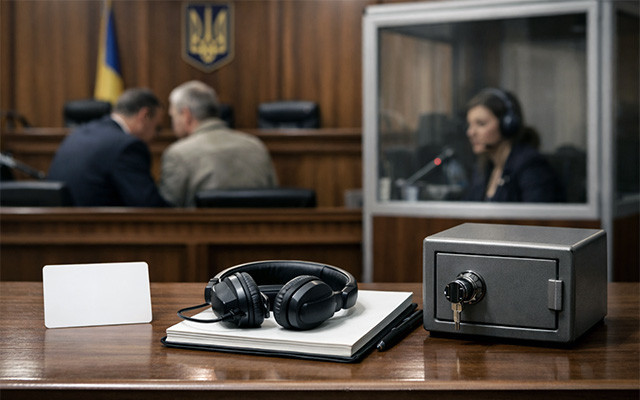
The low quality of translation in criminal proceedings is a systemic problem due to the lack of regulation. It can be solved by creating a state register of translators with certification and re-certification, mandatory training, and quality control.
The position of the Ukrainian National Bar Association on this issue was prepared by the Committee on criminal law and procedure at the request of the Ministry of Justice.
In order to implement the Roadmap on the rule of law, approved by Cabinet of Ministers Resolution No. 475-r of May 14, 2025, the Ministry of Justice is conducting consultations with interested parties within the framework of legal monitoring in order to find solutions to the identified problems of legal regulation.
The UNBA drew attention to the fact that advocates representing the interests of suspects, defendants, or victims who are foreign citizens or persons who do not speak the official language regularly encounter situations where interpreters are unable to correctly convey the meaning of complex legal terms and constructions. This not only complicates communication during court hearings, investigations, and procedural actions (interrogations, delivery of suspicion), but also violates the fundamental principles of criminal procedure, including access to justice. The lack of specialized training for interpreters also leads to delays in proceedings, which contradicts the requirements of the CPC regarding reasonable time limits for the consideration of cases and increases the burden on the judicial system. In addition, in practice, pre-trial investigation bodies and courts often turn to random individuals for translation without checking their competence. This can lead to abuse, conflicts of interest, and even corruption risks.
In view of this, the UNBA Committee proposed a comprehensive approach to reforming the system of engaging interpreters in criminal proceedings.
First, it is proposed to introduce a Unified state register of interpreters for criminal proceedings (administered by the Ministry of Justice in cooperation with professional associations). Access to work in proceedings would only be granted after mandatory certification, with verification of education, experience, languages, specialization in legal terminology, and certification results.
Second, there should be a system of mandatory professional development and retraining for translators, with an emphasis on criminal law, procedure, and practical skills (translation of procedural documents, simulation of participation in investigative and judicial proceedings). There should also be regular re-certification with the possibility of removal from the register in case of non-compliance.
Third, it seems appropriate to create a specialized Center for the translation of procedural documents in the field of criminal proceedings under the auspices of the Ministry of Justice, which will ensure standardized quality and confidentiality and reduce the need to «search for a translator» in each case. Payment would be based on state tariffs (with a separate mechanism for free translation for certain categories of persons).
The full text of the UNBA's proposals on the issue of ensuring high-quality translation in criminal proceedings can be found at this link.
Popular news
Self-government
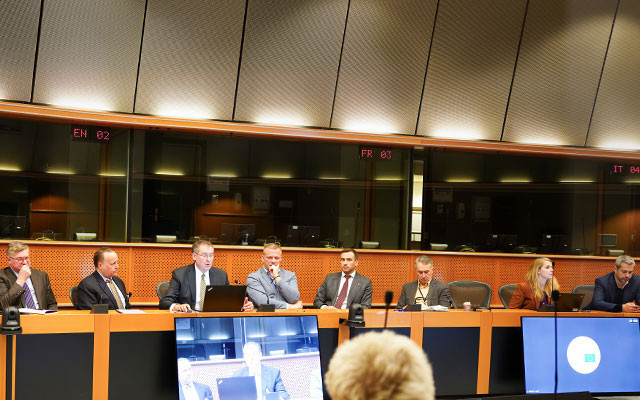
A report on Ukrainian advocacy was presented in the European Parliament
Can a shadow report on advocacy replace the political framework of the Roadmap on the rule of law with demands for the restructuring of self-government? Where is the line between accountability and the seizure of institutions? And how can we respond to narratives with data rather than impressions?

Guarantees of the practice of law
Proceedings opened following attack on advocate in Dnipro
The Committee for the protection of advocates' rights and guarantees of legal practice of the UNBA appealed to law enforcement agencies in connection with an advocate's report of an attack while performing his professional duties. The information was entered into the Unified Register of Pre-trial Investigations and a pre-trial investigation was initiated.
Abroad
UNBA office opens in EU capital
To strengthen the institutional presence of the Ukrainian advocacy community at the European level, an office of the Ukrainian National Bar Association has been opened in Brussels (Belgium), which will serve as a permanent platform for dialogue with European partners.
Guarantees of the practice of law
The President was urged to sign the law on strengthening guarantees for advocacy activities
The professional community of advocates called on Ukrainian President Volodymyr Zelenskyy to sign Law No. 4547-IX, which strengthens guarantees for advocates' activities, in particular by introducing liability for identifying an advocate with a client.
Greetings
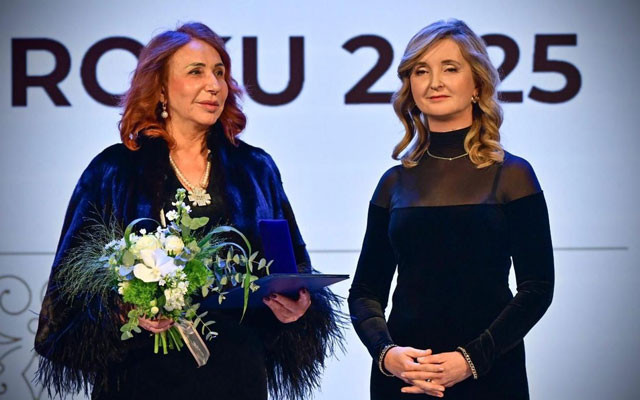
Lidiya Izovitova received an award from the Czech Bar Association
On January 23, during the gala evening of the Lawyer of the Year 2025 competition in Prague, Monika Novotná, President of the Czech Bar Association (ČAK), presented Lidiya Izovitova, President of the UNBA, BCU, with the Order of the Czech Bar, an award for distinguished representatives of foreign bar associations.

Appointment
Oleksiy Shevchuk appointed to the Competition Commission for the selection of SAPO management
Prosecutor General Ruslan Kravchenko issued order No. 405 of December 23, 2025, on the appointment of members of the Competition Commission, which will select candidates for vacant administrative positions in the Specialized Anti-Corruption Prosecutor's Office (SAPO).
Guarantees of the practice of law
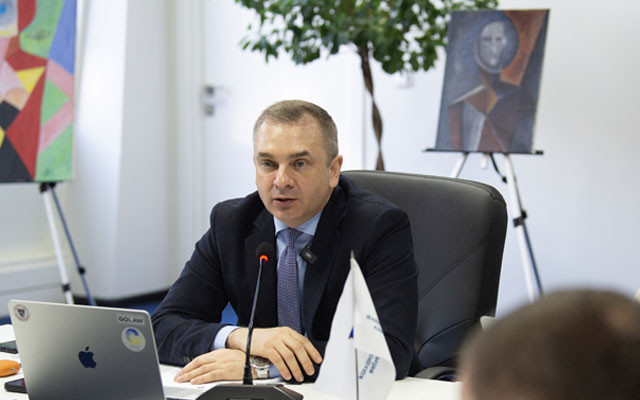
Identifying an advocate with a client is a blow to justice, — V. Gvozdiy
By defending individuals in criminal proceedings, advocates are in fact fighting for every person's right to a fair trial. Therefore, any identification of an advocate with their client is a blow not only to the profession, but also to justice itself.
Guarantees of the practice of law
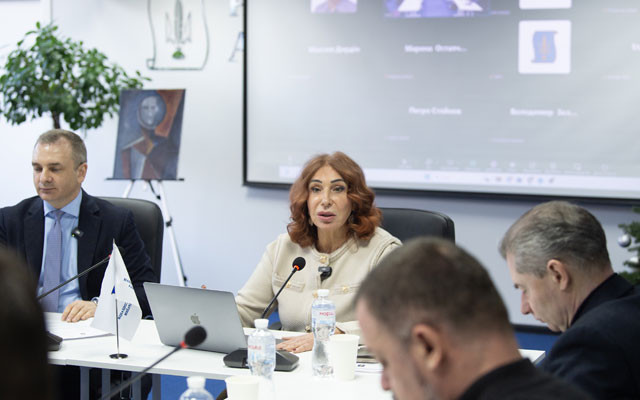
Impunity for public stigmatization of advocates violates the constitutional right to defense
The prohibition of identifying an advocate with a client is an international standard enshrined in the Law «On advocacy and legal practice». However, without accountability, this guarantee does not work, which poses a direct threat to the realization of the right to defense and the principle of adversarial proceedings.
Publications

Volodymyr Matsko Extradition as a systemic form of rights violations

Victoria Yakusha, Law and Business The anti-corruption vertical cannot «take care» of the Bar as an institution, - acting head of the HQDCB

Censor.net Protecting advocates – protecting justice: addressing concerns about the new law

Ihor Kolesnykov A BRIEF SUMMARY REGARDING THE APPLICATION OF THE ORDER ON EXTENDED CONFISCATION IN LATVIA REGARDING FINANCIAL ASSETS OF…

Valentyn Gvozdiy WORKING IN A WAR ZONE

Lydia Izovitova Formula of perfection

Sergiy Vylkov Our judicial system is so built that courts do not trust advocates

Iryna Vasylyk Advocacy in the proclamation of Independence of Ukraine