Religious marriage and de facto family union in the Civil Code: what's wrong?

Draft Book 7 «Family Law» simultaneously provides for the introduction of a mechanism for performing religious marriage ceremonies with subsequent state registration and the introduction of the concept of «de facto family union» with the extension of certain legal consequences inherent in registered marriage to it.
Both proposed regulatory models raised concerns in two Committees of the UNBA: on civil law and procedure and on family law, which commented on legislative initiatives to recodify the Civil Code in this area.
Advocates pointed out that the novelty regarding religious marriage ceremonies needs to be refined from the perspective of legal certainty and constitutional guarantees. The comments point out that the proposed model provides for the entry of a marriage registration record into the State register of civil status acts on the basis of a notification from a religious organization, with the state registration authority verifying compliance with the requirements for marriage.
At the same time, in the case of a religious marriage ceremony, the conditions for its conclusion are not actually verified at the stage of the ceremony itself, as the Committees are convinced. This could create additional difficulties in law enforcement. The proposed structure may also appear to grant the church powers of authority, which requires careful consideration in light of constitutional provisions on the secular nature of the state. In addition, the practical aspects of dissolving such marriages may also give rise to problems of certainty.
On the other hand, the proposal to simultaneously introduce the concept of a «de facto family union» as two persons of the opposite sex living together as a family without registering their marriage (provided that they are not in another marriage) is not entirely successful. The draft proposes to extend, in particular, the provisions on the legal regime of marital property and maintenance to such relationships.
The UNBA Committees did not support this approach, pointing out that under such provisions, the marriage union is effectively nullified, and the guarantees that the state provides to spouses cannot unconditionally apply to relationships chosen without marriage registration.
The application of the regime of joint shared property to de facto unions is also inappropriate and will only create grounds for complex legal disputes. An alternative direction could be the development of contractual regulation: if engaged couples and spouses can enter into a marriage contract, then persons who choose to live together without registering their marriage should also have the option of entering into a corresponding contract that would define the basic rights and obligations of the partners and reduce the need for judicial establishment of the facts of cohabitation.
The UNBA also commented on a number of other provisions of the draft Book, in particular regarding the lowering of the marriage age, the participation of guardianship and custody authorities in cases concerning the protection of children's rights, the regulation of engagements, rules on the origin of children and the introduction of the category of «parental responsibility», as well as specific rules on marital property, «family housing», and maintenance (alimony obligations, confirmation of income abroad).
In general, back in 2021, the UNBA expressed its position on the Concept of updating the Civil Code, in particular regarding the advisability of including Book 7 «Family Law» in its structure. At that time, the importance of the Family Code as a separate regulatory act governing family legal relations and aimed at strengthening the family as a basic social institution was emphasized.
The solution seems to be the modernization of family legislation in parallel with the recodification of the Civil Code, while preserving the independent status of the Family Code as an act that has proven effective in the field of legal regulation of family relations.
The full comments and proposals of the UNBA on the draft can be viewed at this link.
Popular news
Self-government
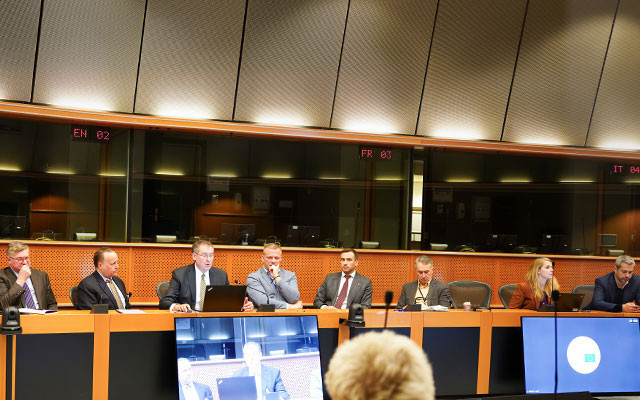
A report on Ukrainian advocacy was presented in the European Parliament
Can a shadow report on advocacy replace the political framework of the Roadmap on the rule of law with demands for the restructuring of self-government? Where is the line between accountability and the seizure of institutions? And how can we respond to narratives with data rather than impressions?

Guarantees of the practice of law
Proceedings opened following attack on advocate in Dnipro
The Committee for the protection of advocates' rights and guarantees of legal practice of the UNBA appealed to law enforcement agencies in connection with an advocate's report of an attack while performing his professional duties. The information was entered into the Unified Register of Pre-trial Investigations and a pre-trial investigation was initiated.
Abroad
UNBA office opens in EU capital
To strengthen the institutional presence of the Ukrainian advocacy community at the European level, an office of the Ukrainian National Bar Association has been opened in Brussels (Belgium), which will serve as a permanent platform for dialogue with European partners.
Guarantees of the practice of law
The President was urged to sign the law on strengthening guarantees for advocacy activities
The professional community of advocates called on Ukrainian President Volodymyr Zelenskyy to sign Law No. 4547-IX, which strengthens guarantees for advocates' activities, in particular by introducing liability for identifying an advocate with a client.
Greetings
Lidiya Izovitova received an award from the Czech Bar Association
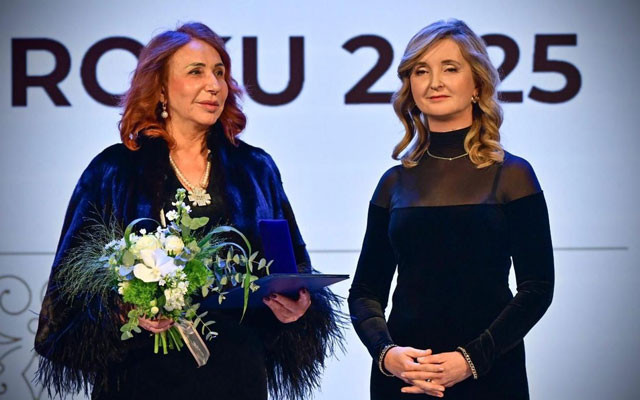
On January 23, during the gala evening of the Lawyer of the Year 2025 competition in Prague, Monika Novotná, President of the Czech Bar Association (ČAK), presented Lidiya Izovitova, President of the UNBA, BCU, with the Order of the Czech Bar, an award for distinguished representatives of foreign bar associations.

Appointment
Oleksiy Shevchuk appointed to the Competition Commission for the selection of SAPO management
Prosecutor General Ruslan Kravchenko issued order No. 405 of December 23, 2025, on the appointment of members of the Competition Commission, which will select candidates for vacant administrative positions in the Specialized Anti-Corruption Prosecutor's Office (SAPO).
Guarantees of the practice of law
Identifying an advocate with a client is a blow to justice, — V. Gvozdiy
By defending individuals in criminal proceedings, advocates are in fact fighting for every person's right to a fair trial. Therefore, any identification of an advocate with their client is a blow not only to the profession, but also to justice itself.

Guarantees of the practice of law
Impunity for public stigmatization of advocates violates the constitutional right to defense
The prohibition of identifying an advocate with a client is an international standard enshrined in the Law «On advocacy and legal practice». However, without accountability, this guarantee does not work, which poses a direct threat to the realization of the right to defense and the principle of adversarial proceedings.
Publications

Volodymyr Matsko Extradition as a systemic form of rights violations

Victoria Yakusha, Law and Business The anti-corruption vertical cannot «take care» of the Bar as an institution, - acting head of the HQDCB

Censor.net Protecting advocates – protecting justice: addressing concerns about the new law

Ihor Kolesnykov A BRIEF SUMMARY REGARDING THE APPLICATION OF THE ORDER ON EXTENDED CONFISCATION IN LATVIA REGARDING FINANCIAL ASSETS OF…

Valentyn Gvozdiy WORKING IN A WAR ZONE

Lydia Izovitova Formula of perfection

Sergiy Vylkov Our judicial system is so built that courts do not trust advocates

Iryna Vasylyk Advocacy in the proclamation of Independence of Ukraine