The UNBA supported clarifying the procedure for seizing real estate

The mechanism proposed in the Verkhovna Rada to strengthen the legal basis for protecting the rights of owners or possessors of immovable property when considering issues related to the seizure of their immovable property in criminal proceedings deserves support.
Draft Law No. 14325 of 23 December 2025 «On amendments to the Criminal Procedure Code of Ukraine regarding the clarification of the grounds and procedure for seizure of real estate» was analysed by the UNBA Committee on criminal law and procedure at the request of the Verkhovna Rada Committee on law enforcement.
In particular, advocates drew attention to the changes proposed to Article 64-2 (Third party whose property is subject to seizure) of the CPC. These amendments clarify the circle of entities that may apply (by adding entities such as the investigator, the investigator in agreement with the prosecutor, and the investigating judge) with a request for seizure of property, and thus the legal status of such an entity as a third party whose property is subject to seizure.
Such changes will undoubtedly have positive consequences, since the aforementioned entities already have the right to apply for seizure in accordance with Part 1 of Article 171 of the CPC, while the current version of Article 64-2 of the CPC indicates that legal status arises only from the moment the prosecutor applies to the court with a motion to seize property.
Another positive change is the addition to Article 64-2 of the CPC of a provision stating that the consideration of a motion for the seizure of immovable property (including land plots) belonging to a third party shall be carried out with the participation of the third party or its representative. This will narrow the discretion of the prosecution.
In addition, it is proposed to supplement Article 132 of the CPC with a new part, according to which, in case of refusal to satisfy a motion to apply a measure to secure criminal proceedings and/or to cancel a measure to secure criminal proceedings, the investigator, inquiry officer, or prosecutor shall not have the right to reapply to the investigating judge, the court with a motion to apply the relevant measure to secure criminal proceedings, unless the motion contains new circumstances and evidence that have not been considered by the investigating judge or the court. According to advocates, if approved by the legislature, this provision will be the best safeguard against the prosecution repeatedly filing motions.
Separately, the UNBA Committee drew attention to the fact that the existing practice of prolonged seizure of property often blocks the economic activities of legal entities and the lives of citizens who are not suspects or defendants. Therefore, the proposed amendments to Part 13 of Article 170 of the CPC will also have a positive effect. The draft proposes to establish a general rule that in criminal proceedings in which no person has been notified of suspicion, the seizure of immovable property of a third party shall be carried out on the basis of a ruling by an investigating judge for a period not exceeding four months. However, it will be possible to extend this period, but the investigating judge will be required to specify the duration of such seizure in the ruling on seizure.
The full position of the UNBA Committee on criminal law and procedure regarding Draft Law No. 14325 can be viewed at this link.
Popular news

Legislation
Advocates have warned that the draft Labor Code would curtail workers' protections
Certain provisions of the draft Labor Code of Ukraine regarding collective labor disputes undermine labor protections and do not comply with constitutional and international standards.
Educational events
The right of minors to marry: how judicial oversight works
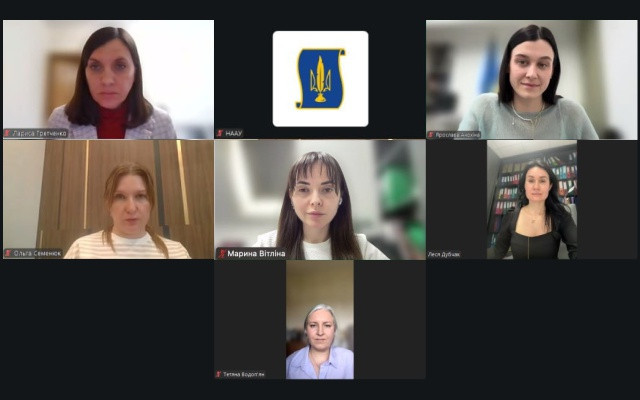
The issue of granting minors the right to marry lies at the intersection of family law, child protection, and judicial discretion. The UNBA Committee on family law dedicated a webinar held on March 30 to this very topic.
Interaction
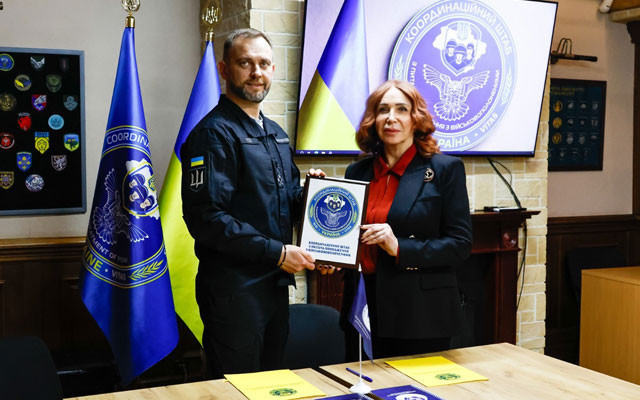
The UNBA and the Coordination headquarters have agreed to cooperate in assisting those released from captivity
Servicemen released from captivity, family members of prisoners of war, civilians deprived of their personal liberty as a result of armed aggression, as well as persons missing in connection with the war, will gain additional opportunities to access legal assistance and protect their rights.

Self-government
BCU: The HCJ’s decisions undermine the constitutional guarantees of the independence of the advocacy profession
The Bar Council of Ukraine has concluded that, in its recent decisions, the High Council of Justice has, without legal grounds, called into question the right of bar self-governing bodies to protect the guarantees of legal practice and has, in effect, attempted to grant one of its members — who retains the status of an advocate — special immunity from the Rules of professional conduct and disciplinary responsibility.
Announcements
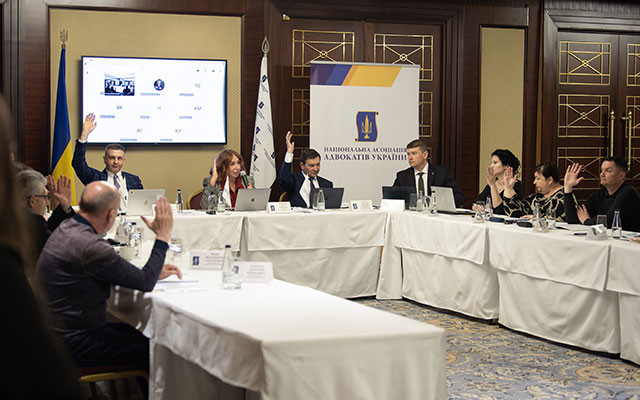
The Bar Council of Ukraine begins its meeting
Today, April 2, a meeting of the Bar Council of Ukraine is taking place in Kyiv. On the agenda are issues related to the activities of bar self-governing bodies, consideration of a decision by the High Council of Justice, a number of appeals, as well as a discussion of the current state and pressing issues regarding the functioning of the legal aid system.
Interaction
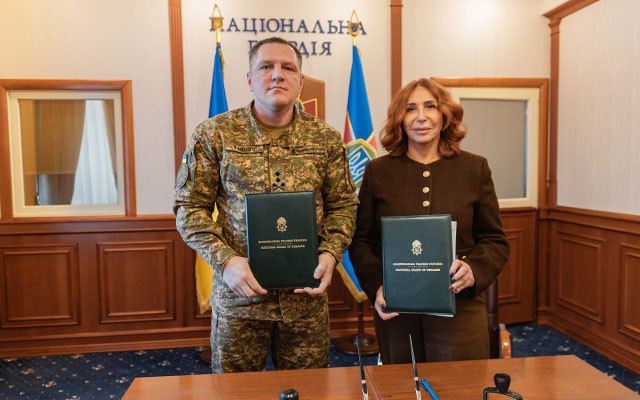
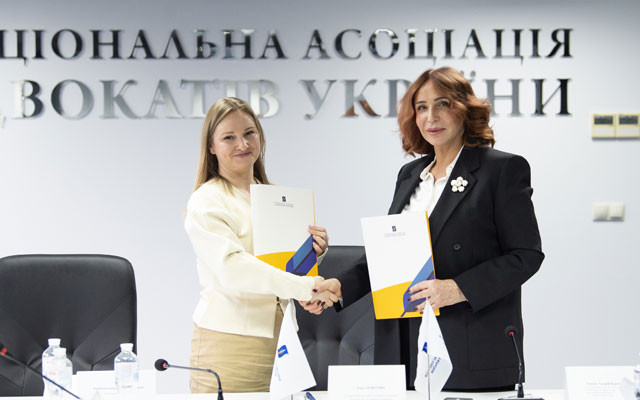
The UNBA and the National Guard have agreed to cooperate on legal protection for military personnel
Servicemembers of the National Guard, their family members, and veterans are to receive additional legal tools to protect their rights, while the National Guard’s legal services will receive methodological and expert support.
Interaction
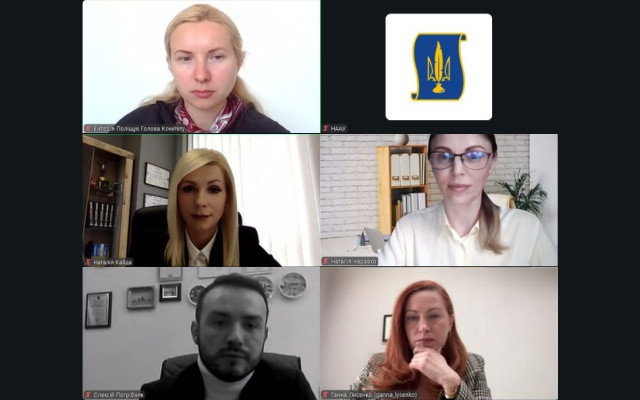
Protecting the rights of service members: The UNBA and the Military Ombudsman have agreed on cooperation
Servicemembers, reservists, conscripts during training exercises, members of local community volunteer units, and other individuals covered by the Law «On the Military Ombudsman» should have better access to professional legal assistance.
Discussion
New Labor Code: advocates highlight the strengths and risks of the draft
The draft Labor Code contains a number of progressive provisions aimed at modernizing labor legislation: digitizing procedures, expanding forms of employment, and increasing transparency in wage payments. At the same time, certain systemic issues require further refinement.
Publications

Volodymyr Matsko Extradition during wartime: when the risks outweigh the request

Volodymyr Matsko Extradition as a systemic form of rights violations

Victoria Yakusha, Law and Business The anti-corruption vertical cannot «take care» of the Bar as an institution, - acting head of the HQDCB

Censor.net Protecting advocates – protecting justice: addressing concerns about the new law

Ihor Kolesnykov A BRIEF SUMMARY REGARDING THE APPLICATION OF THE ORDER ON EXTENDED CONFISCATION IN LATVIA REGARDING FINANCIAL ASSETS OF…

Valentyn Gvozdiy WORKING IN A WAR ZONE

Lydia Izovitova Formula of perfection

Sergiy Vylkov Our judicial system is so built that courts do not trust advocates