


There is no separate «advocate's office» in the UJITS — SC

Advocates register their electronic office in the «Electronic Court» subsystem as individuals. Only after registration can they set the additional attribute «advocate» in the user profile settings, which unlocks the corresponding functionality.
The Administrative Court of Cassation of the Supreme Court in case No. 620/13177/23 explained how roles and identification of individuals by RNOICP are differentiated in the Unified Judicial Information and Telecommunications System.
On November 2, 2023, the district administrative court, following written proceedings, issued a decision and the next day sent its text to the person's electronic office in the UJITS subsystem «Electronic Court».
On December 21, the party to the case applied for a paper copy of the decision. After receiving the copy (March 11, 2024), he prepared and filed (April 2, 2024) an appeal together with a motion to renew the deadline. In his justification, he noted that the start of the deadline cannot be linked to the delivery of the decision to the electronic office registered under his RNOICP, because this office was registered and belongs to him as an advocate of a law firm. And the firm is not a party to the case.
However, the court of appeal refused to open appeal proceedings, as it found that the appeal had been filed outside the time limits set out in Article 295 of the Code of Administrative Procedure. The grounds given for renewing the time limit for appeal were found to be invalid.
When considering the complaint, the Administrative Court of Cassation of the Supreme Court proceeded from the fact that, in accordance with Article 251 of the CAS, court decisions are sent (delivered) in electronic form to the parties to the case (their representatives) who have electronic accounts in the UJITS «Electronic Court» subsystem.
The court delivers any documents in cases in which a person who has registered an electronic office in the UJITS participates exclusively in electronic form by sending them to that person's electronic office, which does not deprive them of the right to receive a copy of the court decision in paper form upon separate request.
The Administrative Court of Cassation of the Supreme Court rejected the plaintiff's comment that the electronic office to which the court of first instance's decision was delivered belongs to an advocate of a law firm, while the participant in this case is a natural person.
The court specifically referred to the fact that, according to the user manual for the Electronic Court, which is posted on the UJITS user support website, in accordance with paragraph 10 of the UJITS Regulations (decision of the High Council of Justice of 17 August 2021 No. 1845/0/15-21) advocates are required to register their official email addresses with the UJITS. These persons must register their electronic accounts as individuals. This is because the functionality of such persons in the electronic account does not differ from that of a natural person:
— documents are received from the court if such a person is added by court employees to the parties to the proceedings, indicating the person's RNOICP in the party card;
— the preparation and submission of documents to the court also does not differ from that of a natural person.
Therefore, advocates register their electronic accounts in the «Electronic Court» subsystem as individuals — using their own RNOICP as identification data, and only after registration can they set the additional attribute «advocate» in the settings of the electronic office user profile, which opens the corresponding functionality (the ability to issue an order for a specific case to access case documents, etc.).
Thus, after registering the electronic office, regardless of whether the person has the status of an advocate and has entered the relevant information in the user profile of the electronic office, all court cases (and court decisions adopted in them) in which the person is a participant will be displayed in the «My cases» section.
In view of the above, the Supreme Court concluded (resolution of the Administrative Court of Cassation of the Supreme Court dated 22.01.2026) that the plaintiff's arguments that he did not have an electronic office in the «Electronic Court» subsystem or that this electronic office is his electronic office exclusively as an advocate of the Law Firm are unfounded.
Popular news
European integration
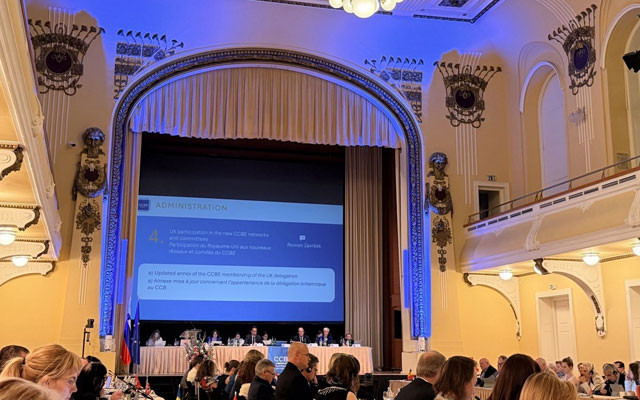
The UNBA presented the CCBE with an overview of legal reform and challenges
Reform of the legal profession, Ukraine’s European integration commitments, guarantees of the profession’s independence, and practices of bar self-governance in European countries — these issues were the subject of discussion at the Council of Bars and Law Societies of Europe (CCBE).

Rule of Law Roadmap
The UNBA is compiling the findings of the subgroups regarding the implementation of the Rule of Law Roadmap
Today, May 28, the Ukrainian National Bar Association hosted a meeting of the Coordination Bureau of the Working Group on the implementation of the Rule of Law Roadmap regarding the reform of the advocacy profession. Following a series of meetings by thematic subgroups, the work is now moving to the stage of consolidating proposals and preparing a coordinated package of recommendations.
Discussion
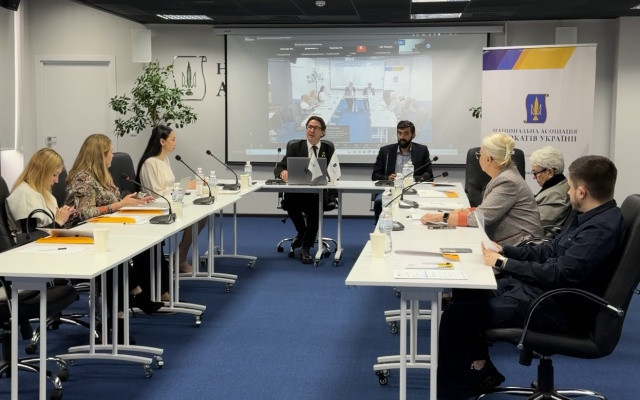
UNBA discussed removing barriers at border crossings for families with children with disabilities
Families of children with disabilities face additional requirements when traveling abroad, particularly regarding consular registration. What is happening and what changes are needed to remove these obstacles were discussed during the roundtable «Borders without barriers for families of children with disabilities».
Discussion
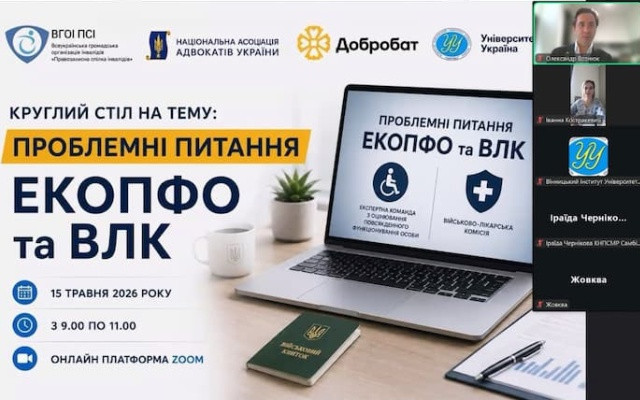
New rules, old problems: the UNBA discussed the work of the ETAIDF and MMC
The reform of medical-social assessment and military medical commissions has changed procedures but has not resolved practical issues. People face situations where documents are not issued, decisions are based on technicalities, assessments are delayed, and they struggle to demonstrate their actual health status in specific life situations.

Discussion
Co-parenting shouldn't be reduced to a 50/50 formula, — roundtable discussion
Following a divorce, joint custody can serve as a mechanism for ensuring equal parental rights. However, this model requires clear criteria and cannot be applied automatically without taking into account the child’s age, the level of conflict between the parents, the risk of violence, and the feasibility of enforcing the future decision.

Legislation
Penalties for errors in military registration require clear rules, – UNBA
The liability of officials for violations of military registration rules must be legally defined, proportionate, and effectively enforceable. Otherwise, the new fines will not protect citizens from registration errors but will create additional risks.

Educational events
How an advocate can find clients when starting a legal practice
Starting a law practice undoubtedly requires professional knowledge. At the same time, a clear understanding of one’s own area of specialization, clients, and communication channels is essential for success.

European integration
Lidiya Izovitova: In the context of European integration reforms, advocacy is a partner of the state, not a target of reform
The war has significantly altered the working conditions for advocates, while European integration has presented the profession with new institutional challenges. The ongoing negotiation process covers issues such as the rule of law, judicial independence, fundamental rights, justice, freedom and security.
Publications

Volodymyr Matsko Extradition during wartime: when the risks outweigh the request

Volodymyr Matsko Extradition as a systemic form of rights violations

Victoria Yakusha, Law and Business The anti-corruption vertical cannot «take care» of the Bar as an institution, - acting head of the HQDCB

Censor.net Protecting advocates – protecting justice: addressing concerns about the new law

Ihor Kolesnykov A BRIEF SUMMARY REGARDING THE APPLICATION OF THE ORDER ON EXTENDED CONFISCATION IN LATVIA REGARDING FINANCIAL ASSETS OF…

Valentyn Gvozdiy WORKING IN A WAR ZONE

Lydia Izovitova Formula of perfection

Sergiy Vylkov Our judicial system is so built that courts do not trust advocates