The UNBA Committee highlighted the risks of the anti-SLAPP bill

Efforts to protect the public interest from judicial pressure should not lead to the dismantling of the fundamental principles of civil procedure. Therefore, the proposed mechanisms for countering strategic lawsuits against public participation require a conceptual review and alignment with current procedural legislation.
These conclusions were reached by the UNBA Committee on information policy and media relations following an analysis of the draft law «On the protection of persons engaged in public participation from manifestly unfounded claims or abuse of legal proceedings».
The draft was developed by a working group under the Verkhovna Rada Committee on freedom of speech, established to develop mechanisms to counter strategic lawsuits against public participation (SLAPP).
The document proposes establishing safeguards to protect civic engagement and civic participants from the abuse of legal proceedings, regardless of the type of judicial process. It introduces the concepts of civic engagement, civic participant, matters of public interest, and the abuse of legal proceedings against civic engagement. The draft also provides for state protection of civic participants and their close relatives, access to legal aid, the involvement of the Verkhovna Rada Commissioner for Human Rights, specific rules regarding evidence, compensation for moral harm, out-of-court dispute resolution, the maintenance of court statistics, and the creation of a Unified State Register of cases involving the abuse of legal proceedings against civic participation.
Despite the stated goal of implementing European approaches to protecting freedom of speech, the bill contains provisions that could restrict the right of access to the courts, create conflicts with procedural law, and violate the principle of equality of the parties. Advocates have drawn attention to this. The UNBA Committee identified several systemic risks that make it impossible to adopt the bill in its current form.
One such risk is the overly broad definition of the term «public participant». The proposed model allows a wide range of individuals to claim this status. At the same time, the bill links special guarantees and support mechanisms — including access to free legal aid and the possibility of applying security measures — to this very status, which creates conditions for defendants themselves to manipulate the instruments of justice.
A separate concern relates to the mixing of institutions from different branches of law. The bill proposes taking into account the intent of the public participant when deciding on compensation for moral harm. The Committee notes that such an approach is inconsistent with the logic of civil liability, which is not limited solely to intentional forms of fault. An even greater inconsistency, in the advocates’ view, is the attempt to extend the scope of the law on the security of persons participating in criminal proceedings to parties in ordinary civil proceedings.
Another set of comments concerns the criteria by which the court must assess potential abuse of the judicial process. These include, in particular, «financial advantage», «political or social influence» or other imbalances in the parties’ positions. The Committee believes that such wording could grant the court excessive discretion and make the exercise of the right to judicial protection contingent on the plaintiff’s financial status or social standing. This would narrow the constitutionally guaranteed right to judicial protection of honor, dignity, and business reputation for individuals who have become targets of false information.
The Committee also drew attention to the proposed method of legislative regulation. The draft seeks to establish rules regarding the abuse of procedural rights, standards of proof, court costs, and the refund of court fees through a separate law. At the same time, such issues fall within the scope of procedural law and should be regulated in the relevant procedural codes.
Popular news
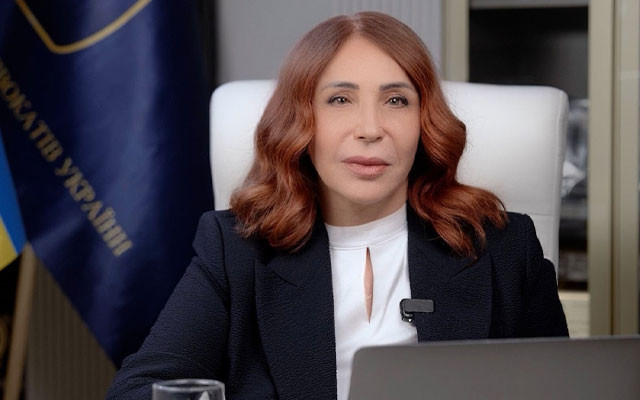
European integration
Lidiya Izovitova: In the context of European integration reforms, advocacy is a partner of the state, not a target of reform
The war has significantly altered the working conditions for advocates, while European integration has presented the profession with new institutional challenges. The ongoing negotiation process covers issues such as the rule of law, judicial independence, fundamental rights, justice, freedom and security.
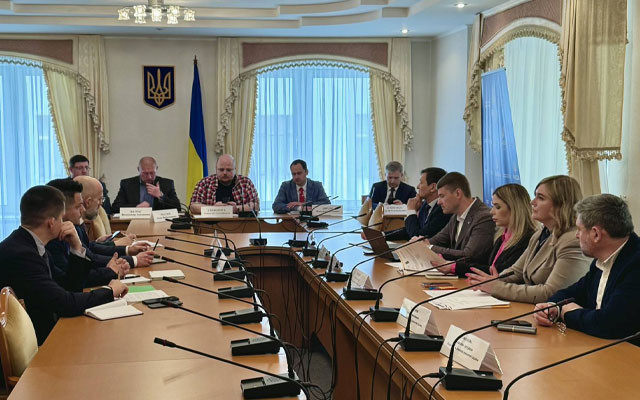
Guarantees of the practice of law
The Verkhovna Rada discussed the next steps for ratifying the Convention on the Protection of the Professions of Lawyer
The Verkhovna Rada Committee on legal policy held a working meeting to prepare for the ratification of the Convention for the Protection of the Profession of Lawyer. The meeting was attended by members of parliament, representatives of the Office of the President, the Ministry of Justice, the Ministry of Foreign Affairs and the Ukrainian National Bar Association.

Guarantees of the practice of law
Valentin Gvozdiy: Ukraine’s ratification of the Convention for the Protection of the Profession of Lawyer – is a matter…
Exactly one year ago, on May 13, 2025, in Luxembourg, during the 134th session of the Committee of Ministers of the Council of Europe, the Convention for the Protection of the Profession of Lawyer was opened for signature. Today, the Verkhovna Rada Committee on legal policy held a working meeting to prepare for its ratification. Between these two dates lies a year, during which (on March 9) Ukraine became the 28th signatory state. We spoke about this new phase with the Vice President of the UNBA, BCU Valentin Gvozdiy, who was personally involved in the preparation of this international instrument.

Support
Mental health, archives and cybersecurity: The UNBA and the IBA reviewed the progress of joint projects
The Ukrainian National Bar Association and the International Bar Association (IBA) reviewed the progress of joint projects that are of practical importance in the context of the war: supporting the mental health of advocates, digitizing archives, and strengthening the cybersecurity of the legal infrastructure.
Rule of Law Roadmap
The UNBA is developing a model for reforming the legal profession
The reform of the advocacy profession is part of the negotiation process regarding Ukraine’s accession to the European Union, and the Rule of Law Roadmap explicitly identifies the Ukrainian National Bar Association as one of the key stakeholders in the process.

Legal defence of military personnel
Missing in action: advocates explain the procedure to the families of servicemembers
As part of the «Advocate+» pilot project, advocates continue to work with military personnel in the brigades, helping to resolve practical legal issues — ranging from social benefits and payments to undergoing medical examinations and processing paperwork.

Guarantees of the practice of law
Police to investigate the NACP's attempts to reform advocacy
The Office of the Prosecutor General has opened a criminal investigation into alleged abuse of power by employees of the National Agency for Corruption Prevention.
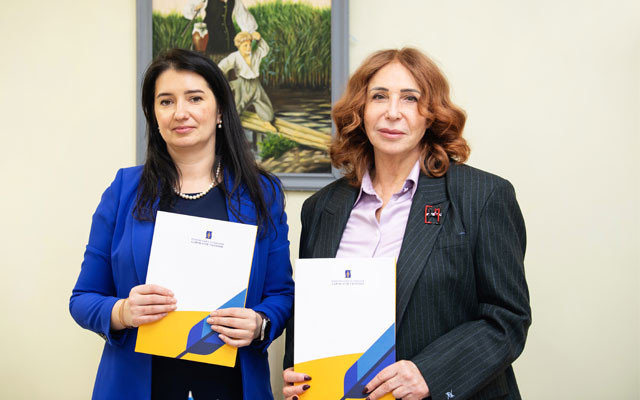
Interaction
Advocates and patent attorneys combine their expertise in the field of intellectual property
Joint legislative proposals, expert opinions on regulatory changes and professional discussions on key issues in the field of intellectual property will form the basis of cooperation between the Ukrainian National Bar Association and the National Association of Patent Attorneys of Ukraine.
Publications

Volodymyr Matsko Extradition during wartime: when the risks outweigh the request

Volodymyr Matsko Extradition as a systemic form of rights violations

Victoria Yakusha, Law and Business The anti-corruption vertical cannot «take care» of the Bar as an institution, - acting head of the HQDCB

Censor.net Protecting advocates – protecting justice: addressing concerns about the new law

Ihor Kolesnykov A BRIEF SUMMARY REGARDING THE APPLICATION OF THE ORDER ON EXTENDED CONFISCATION IN LATVIA REGARDING FINANCIAL ASSETS OF…

Valentyn Gvozdiy WORKING IN A WAR ZONE

Lydia Izovitova Formula of perfection

Sergiy Vylkov Our judicial system is so built that courts do not trust advocates