Scope of the expert examination: what the expert determines and what the party must prove
An expert opinion can be an effective tool of proof only when the advocate correctly formulates the questions, provides the necessary materials, and understands the limits of the expert’s competence.
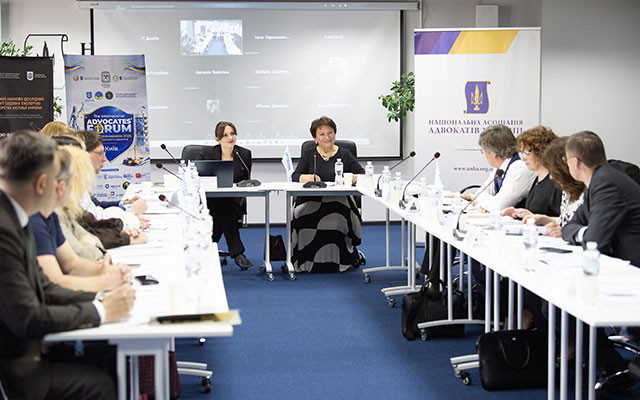
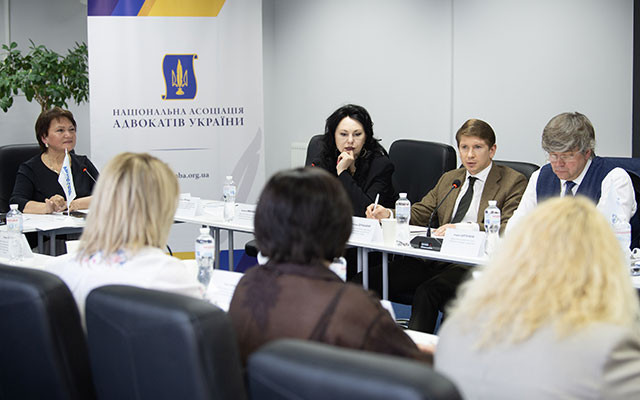
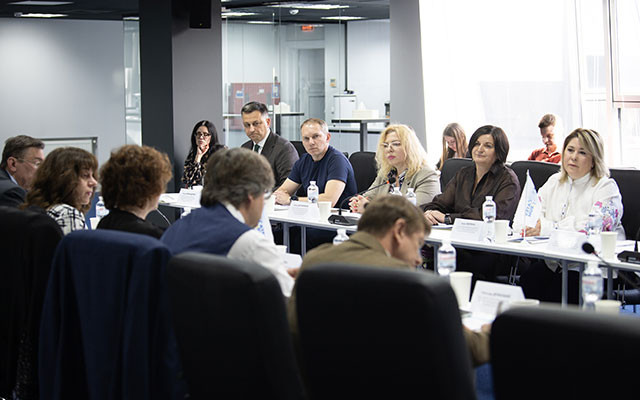
The specifics of appointing and conducting forensic examinations were discussed at the Ukrainian National Bar Association on May 15 during the «Expert support for legal practice» panel discussion, which took place as part of the «Kharkiv Unbreakable 2026» International Lawyers’ Forum.
The discussion was moderated by deputy director for research at the Kyiv Research Institute of Forensic Expertise Olena Agapova and chairman of the UNBA Committee on expert support for legal practice Violetta Fedchyshina. According to O. Agapova, during the preparation of the battle room, they reviewed a number of issues related to expert support for the administration of justice and proposed bringing the most pressing issues of interest to the legal community up for discussion.
The chairman of the Verkhovna Rada Subcommittee on the organization and activities of the advocacy Volodymyr Vatrus noted that the current version of Article 243 of the Code of Criminal Procedure grants the defense the right to independently engage experts on a contractual basis to conduct expert examinations, including mandatory ones. According to him, the defense has ceased to be a passive observer of the prosecution’s expert investigations and has become a full-fledged participant in the presentation of evidence.
One of the central issues was economic expertise. Chairman of the UNBA Committee on the independence of the judiciary and judicial power Andriy Tsygankov raised the question of whether an expert, having received a specialist’s conclusions, can agree with them without conducting their own research, or whether they must examine the original documents. According to him, this issue arises in criminal proceedings. And for the defense, it is important to understand what exactly was the object and subject of the investigation.
Head of the economic research laboratory at the Kyiv Research Institute of Forensic Expertise Olga Lukova explained that an expert first and foremost proceeds from the task at hand. If the task involves confirming the findings of an inspection report by the State Tax Service or an audit report by the State Audit Service, the expert examines the documents that formed the basis of the relevant conclusion and that were provided to him by the investigation, the court, or the advocate. The expert cannot collect documents independently: they work with the materials provided and documentally confirm the business transaction, additional tax assessments, or losses.
Deputy head of the laboratory Oksana Markina clarified that each economic examination is conducted according to a specific algorithm.
Depending on the question posed, the expert reviews source documents, accounting or tax records, or other materials. For example, assessing financial condition may require three years of financial statements, while verifying signs of driving a company into bankruptcy may also require contracts, source documents, and materials regarding specific transactions.
Separately, the participants discussed situations where the investigation links the damage to the fact that the company could have earned more revenue had it acted differently. O. Markina noted that for an economic assessment, it matters which specific category is involved: loss of an asset, lost profits, or another form of damage. An actual business transaction is confirmed by documents, whereas lost profits are a calculated figure and involve modeling a situation that did not actually occur.
Another part of the discussion concerned digital evidence. The chairman of the UNBA Committee on criminal law and procedure Anzhelika Moiseeva noted that in computer-technical expert analyses, advocates often encounter conclusions whose content is difficult to understand without specialized knowledge. In response, head of the computer-technical research laboratory at the KNDIISE Yevgen Tymko explained that conclusions must be written in clear language, as forensic expertise is a tool intended to provide the results necessary for judicial proceedings.
Using the example of crypto wallets, the expert illustrated the distinction between technical research and the subject of proof. Questions regarding who owns a crypto wallet, a phone number, or who specifically was using the device at a given moment are not the subject of forensic analysis in and of themselves. An expert can examine technical aspects, digital storage media, and methods for obtaining or recovering data. Ownership by a specific individual must be proven by a body of evidence.
Y. Tymko also noted that questions for the expert must be formulated so that the expert understands which facts need to be established. If a question is phrased incorrectly but is understandable to the expert, they may rephrase it more accurately. When the task requires clarification, the expert may contact the party requesting the examination with a request and propose a revised version of the question for approval. Such written dialogue allows for the task to be agreed upon.
Head of the laboratory of linguistic and psycholinguistic research at the KNISE Svitlana Dolynkivska spoke about the limits of linguistic expertise. She explained that the boundary lies where linguistic analysis ends and the legal qualification of the established speech act begins.
According to her, forensic linguistic expertise differs from classical philological analysis because it is conducted within the legal framework. Its purpose is to establish linguistic facts that may be relevant to the case. The expert analyzes the semantic content of the message, its pragmatic orientation, and speech acts, including threats, appeals, demands, or proposals.
At the same time, the legal classification of a statement does not fall within the expert’s competence. Therefore, she noted, questions for linguistic expertise should be formulated specifically — depending on exactly which linguistic fact needs to be established.
«This battle room has proven that expert support for legal practice requires constant dialogue between advocates and experts. For the defense, it is important not only to obtain an expert opinion but also to formulate questions correctly, provide the necessary materials, and understand the limits of specialized knowledge, - commented V. Fedchyshyna on the event. That is why we discussed specific practical situations — ranging from economic and construction-technical expert analyses to digital evidence, linguistic, and psychological studies. This format allows us to better identify the problems that arise during the process and seek professional solutions together».
Popular news
European integration
Lidiya Izovitova: In the context of European integration reforms, advocacy is a partner of the state, not a target of reform
The war has significantly altered the working conditions for advocates, while European integration has presented the profession with new institutional challenges. The ongoing negotiation process covers issues such as the rule of law, judicial independence, fundamental rights, justice, freedom and security.
Guarantees of the practice of law
The Verkhovna Rada discussed the next steps for ratifying the Convention on the Protection of the Professions of Lawyer
The Verkhovna Rada Committee on legal policy held a working meeting to prepare for the ratification of the Convention for the Protection of the Profession of Lawyer. The meeting was attended by members of parliament, representatives of the Office of the President, the Ministry of Justice, the Ministry of Foreign Affairs and the Ukrainian National Bar Association.
Guarantees of the practice of law
Valentin Gvozdiy: Ukraine’s ratification of the Convention for the Protection of the Profession of Lawyer – is a matter…
Exactly one year ago, on May 13, 2025, in Luxembourg, during the 134th session of the Committee of Ministers of the Council of Europe, the Convention for the Protection of the Profession of Lawyer was opened for signature. Today, the Verkhovna Rada Committee on legal policy held a working meeting to prepare for its ratification. Between these two dates lies a year, during which (on March 9) Ukraine became the 28th signatory state. We spoke about this new phase with the Vice President of the UNBA, BCU Valentin Gvozdiy, who was personally involved in the preparation of this international instrument.
Support
Mental health, archives and cybersecurity: The UNBA and the IBA reviewed the progress of joint projects
The Ukrainian National Bar Association and the International Bar Association (IBA) reviewed the progress of joint projects that are of practical importance in the context of the war: supporting the mental health of advocates, digitizing archives, and strengthening the cybersecurity of the legal infrastructure.

Rule of Law Roadmap
The UNBA is developing a model for reforming the legal profession
The reform of the advocacy profession is part of the negotiation process regarding Ukraine’s accession to the European Union, and the Rule of Law Roadmap explicitly identifies the Ukrainian National Bar Association as one of the key stakeholders in the process.

Legal defence of military personnel
Missing in action: advocates explain the procedure to the families of servicemembers
As part of the «Advocate+» pilot project, advocates continue to work with military personnel in the brigades, helping to resolve practical legal issues — ranging from social benefits and payments to undergoing medical examinations and processing paperwork.

Guarantees of the practice of law
Police to investigate the NACP's attempts to reform advocacy
The Office of the Prosecutor General has opened a criminal investigation into alleged abuse of power by employees of the National Agency for Corruption Prevention.
Interaction
Advocates and patent attorneys combine their expertise in the field of intellectual property
Joint legislative proposals, expert opinions on regulatory changes and professional discussions on key issues in the field of intellectual property will form the basis of cooperation between the Ukrainian National Bar Association and the National Association of Patent Attorneys of Ukraine.
Publications

Volodymyr Matsko Extradition during wartime: when the risks outweigh the request

Volodymyr Matsko Extradition as a systemic form of rights violations

Victoria Yakusha, Law and Business The anti-corruption vertical cannot «take care» of the Bar as an institution, - acting head of the HQDCB

Censor.net Protecting advocates – protecting justice: addressing concerns about the new law

Ihor Kolesnykov A BRIEF SUMMARY REGARDING THE APPLICATION OF THE ORDER ON EXTENDED CONFISCATION IN LATVIA REGARDING FINANCIAL ASSETS OF…

Valentyn Gvozdiy WORKING IN A WAR ZONE

Lydia Izovitova Formula of perfection

Sergiy Vylkov Our judicial system is so built that courts do not trust advocates