


3D-vodels in criminal cases: what an advocate needs to know
3D-technologies are already being used in criminal proceedings. Therefore, advocates must understand how a digital model is created, how to verify its authenticity, where procedural errors may arise, and how to use such data in the client’s best interests.
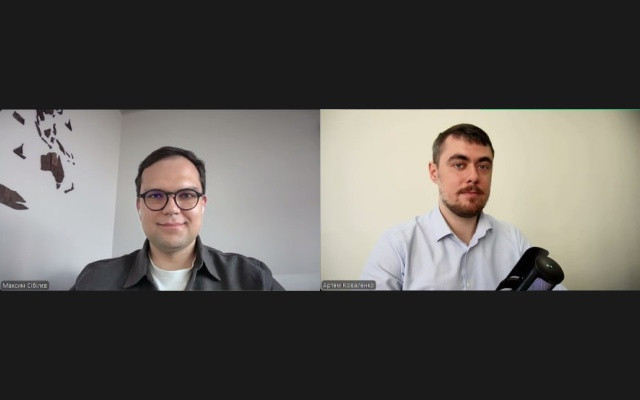
This was discussed at the webinar «3D-technologies: New opportunities for advocates», organized by the UNBA NextGen with the support of the Luhansk Regional Bar Association and King Danylo University. The event’s speaker was Artem Kovalenko, an associate professor in the Department of law at the university. The event was moderated by Maksym Sibilev, a representative of the Committee in the Luhansk region.
He noted that if a defense attorney does not understand how a digital point cloud is formed and how to verify the authenticity of a digital track, they risk conceding ground to the prosecution as early as the pre-trial investigation stage. This allows the advocate to assess the evidentiary value of a 3D-model, identify potential technical or procedural flaws, and use relevant arguments in the client’s best interest.
A. Kovalenko explained the principles of 3D-scanning, photogrammetry, and digital reconstruction. Unlike a conventional photograph, which captures an object from a single angle and in a single projection, 3D-scanning allows it to be recreated in three dimensions, complete with dimensional, spatial, and color characteristics. Such a model can be rotated, zoomed in on, measured, compared with other models, or used for visual demonstration in court.
The speaker drew attention to the inequality between the parties in terms of access to forensic technology. «Objectively speaking, under the current criminal justice system, the prosecution has a monopoly on the use of forensic technology», - he said, adding that this is precisely why it is important to explore how advocates can benefit from using such tools.
The technology is already in use in Ukraine. In particular, the Ministry of Internal Affairs’ network of forensic centers uses BALSCAN systems for 3D-scanning of bullets and shell casings. These systems allow for the creation of detailed 3D-models of ballistic objects and their use for verification against records and visualization during forensic examinations.
Kovalenko also cited an example of his own experiment involving the scanning of a shoe print in dry, fine sand. Such a print could not have been captured with a plaster cast, as it would have blurred under the plaster’s action. Instead, the 3D-model made it possible to see not only the general pattern of the sole but also microdefects smaller than a millimeter — traces of incomplete rubber extrusion, which can serve as unique identifying features of a specific pair of shoes.
Another advantage of the 3D-model is that it can be inverted to directly compare the object that created the footprint with the footprint itself. According to the speaker, the simulated footprint even revealed minor defects in the sole that he had not initially anticipated.
The procedural segment of the webinar addressed whether 3D-scanning can be used under the current Code of Criminal Procedure. A. Kovalenko noted that the term 3D itself is not used in the Code of Criminal Procedure, but this does not imply a prohibition on the use of such technologies. He drew attention to Part 7 of Article 237 of the CPC regarding inspection, the provisions of Article 241 of the CPC on examination, as well as Article 105 of the CPC, which provides for electronic copies of objects as attachments to the protocol. In his opinion, these provisions, when considered in a systematic context, provide grounds for treating the list of scientific and technical means as open-ended. At the same time, the use of new technical means must meet general requirements of effectiveness, expediency, safety, and scientific validity.
Due to the lack of specific regulations, he proposed a practical algorithm for the proper use of 3D scanning during procedural actions. In particular, according to A. Kovalenko, a qualified specialist should be involved in the use of a 3D scanner, and the protocol should specify the scanner model, serial number, software, the specialist’s qualifications, and the objects that were scanned. He also recommended using traditional methods of documentation — descriptions, photographs, and video recordings — in parallel.
The issue of equipment certification was discussed separately. According to the speaker, he does not see any requirement in current metrology legislation for mandatory calibration or certification of 3D-scanners. At the same time, manufacturers can independently certify equipment according to international standards, and to assess accuracy, one should refer to the manufacturer’s technical documentation.
For the defense, 3D-technologies can be utilized in several ways. An advocate may highlight discrepancies between manual measurements and 3D-model data, question the appropriateness of using technical means, request the use of 3D-scanning, or seek an expert examination based on 3D models. The defense may also independently commission relevant expert examinations and use their results to visually present its position in court.
According to A. Kovalenko, 3D-technologies are already being used or are gradually being incorporated into the practice of investigating war crimes, ballistic and trace evidence examinations, as well as certain construction and technical expert examinations.
Popular news
European integration
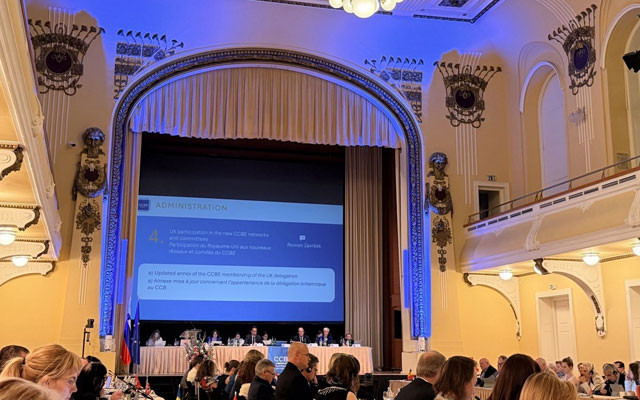
The UNBA presented the CCBE with an overview of legal reform and challenges
Reform of the legal profession, Ukraine’s European integration commitments, guarantees of the profession’s independence, and practices of bar self-governance in European countries — these issues were the subject of discussion at the Council of Bars and Law Societies of Europe (CCBE).
Rule of Law Roadmap
The UNBA is compiling the findings of the subgroups regarding the implementation of the Rule of Law Roadmap
Today, May 28, the Ukrainian National Bar Association hosted a meeting of the Coordination Bureau of the Working Group on the implementation of the Rule of Law Roadmap regarding the reform of the advocacy profession. Following a series of meetings by thematic subgroups, the work is now moving to the stage of consolidating proposals and preparing a coordinated package of recommendations.
Discussion
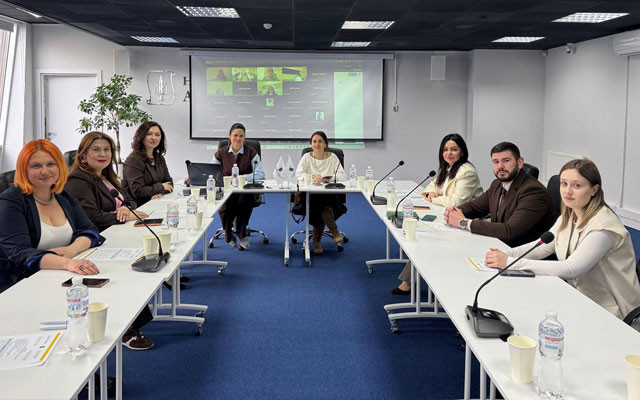
UNBA discussed removing barriers at border crossings for families with children with disabilities
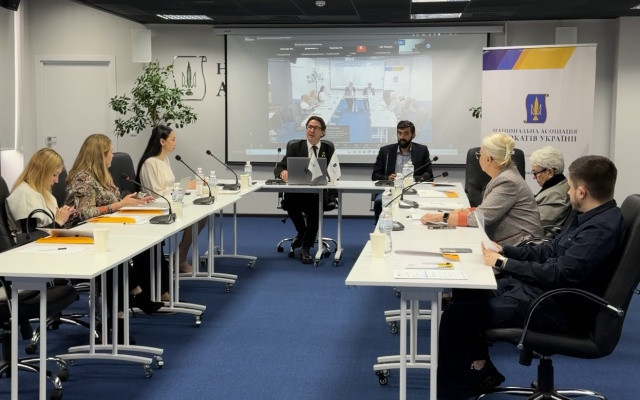
Families of children with disabilities face additional requirements when traveling abroad, particularly regarding consular registration. What is happening and what changes are needed to remove these obstacles were discussed during the roundtable «Borders without barriers for families of children with disabilities».
Discussion
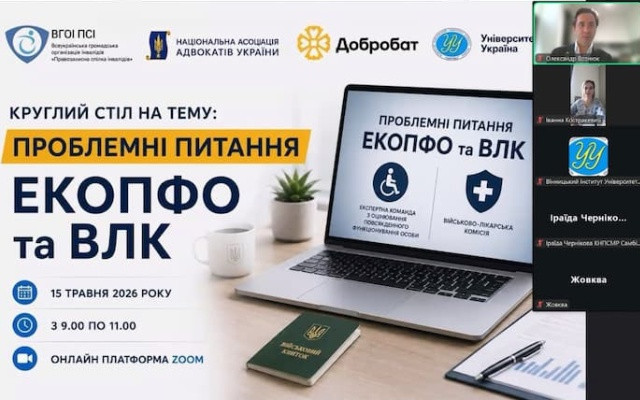
New rules, old problems: the UNBA discussed the work of the ETAIDF and MMC
The reform of medical-social assessment and military medical commissions has changed procedures but has not resolved practical issues. People face situations where documents are not issued, decisions are based on technicalities, assessments are delayed, and they struggle to demonstrate their actual health status in specific life situations.
Discussion
Co-parenting shouldn't be reduced to a 50/50 formula, — roundtable discussion
Following a divorce, joint custody can serve as a mechanism for ensuring equal parental rights. However, this model requires clear criteria and cannot be applied automatically without taking into account the child’s age, the level of conflict between the parents, the risk of violence, and the feasibility of enforcing the future decision.
Legislation
Penalties for errors in military registration require clear rules, – UNBA
The liability of officials for violations of military registration rules must be legally defined, proportionate, and effectively enforceable. Otherwise, the new fines will not protect citizens from registration errors but will create additional risks.

Educational events
How an advocate can find clients when starting a legal practice
Starting a law practice undoubtedly requires professional knowledge. At the same time, a clear understanding of one’s own area of specialization, clients, and communication channels is essential for success.
European integration
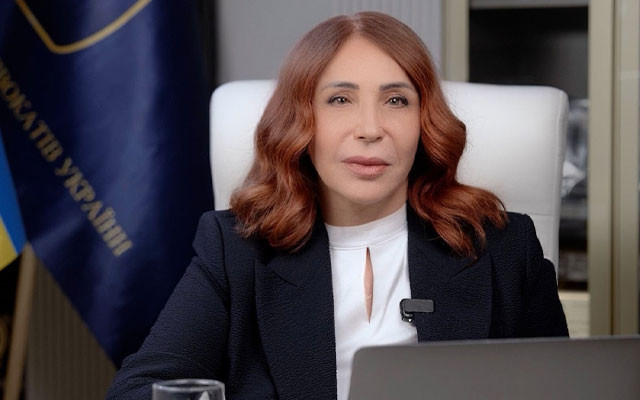
Lidiya Izovitova: In the context of European integration reforms, advocacy is a partner of the state, not a target of reform
The war has significantly altered the working conditions for advocates, while European integration has presented the profession with new institutional challenges. The ongoing negotiation process covers issues such as the rule of law, judicial independence, fundamental rights, justice, freedom and security.
Publications

Volodymyr Matsko Extradition during wartime: when the risks outweigh the request

Volodymyr Matsko Extradition as a systemic form of rights violations

Victoria Yakusha, Law and Business The anti-corruption vertical cannot «take care» of the Bar as an institution, - acting head of the HQDCB

Censor.net Protecting advocates – protecting justice: addressing concerns about the new law

Ihor Kolesnykov A BRIEF SUMMARY REGARDING THE APPLICATION OF THE ORDER ON EXTENDED CONFISCATION IN LATVIA REGARDING FINANCIAL ASSETS OF…

Valentyn Gvozdiy WORKING IN A WAR ZONE

Lydia Izovitova Formula of perfection

Sergiy Vylkov Our judicial system is so built that courts do not trust advocates