


Starting your own law practice after being hired: how your professional role changes

The transition to independent legal practice requires a shift in role: from being an employee within the system or someone who carries out tasks to becoming a professional who makes decisions independently and is accountable for the results.
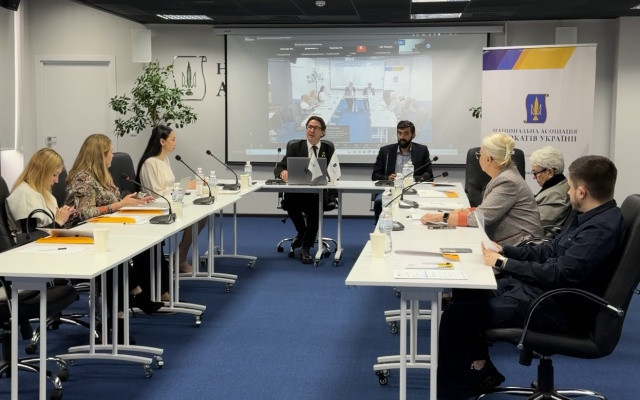
This was discussed during the webinar «From employment to private practice: how to take the plunge into becoming an advocate and start working for yourself», held in Kyiv at the initiative of the UNBA NextGen. The speaker was advocate, mediator, colonel and police veteran Natalia Zinenko.
She explained that she entered the advocacy profession after 25 years of working in law enforcement. Outside that system, according to the speaker, processes operated differently. Therefore, she had to «start from scratch», familiarize herself with new work procedures, and forge her own path. She attributed her choice of advocacy to the freedom to make decisions and personal responsibility for the outcome. Before starting her own practice, the speaker first worked as an employee. This allowed her to understand the rules of advocacy from the inside, observe how work is organized, and experience how an advocacy practice functions. And after just two months, she felt ready to move forward on her own.
N. Zinenko cited mentorship as a key element of getting started. She gave the example of a colleague from whom she learned during her internship: she performed practical tasks, prepared procedural documents, and received feedback. In her view, training, knowledge, and an understanding of internal processes form the foundation of one’s own practice.
Among the real risks of starting out, the speaker cited a lack of clients and income. Pricing can also be challenging: a novice advocate does not always yet understand how to value their own work, quote a fee to a client, and stick to it. This stage is overcome gradually — through experience and an understanding of one’s own professional value.
Speaking about preparing for the transition, the speaker advised first and foremost to determine where and why the advocate is moving, what their goal is, and to choose a practice area. It is better to start with an area that is familiar and close to the advocate’s heart, and then gradually expand their professional horizons.
Experience working within the system can be an advantage if the advocate understands its internal logic. N. Zinenko cited her own example in the field of military law: knowledge of service procedures, combatant status, benefits, and internal organization helps her avoid a cookie-cutter approach and instead tailor solutions to the specific situation.
According to the speaker, the mindset of a self-employed advocate needs to change. Advocacy operates by its own rules, while a client comes with a specific problem and expects it to be resolved. Therefore, an advocate leaving the system or employment must view the process from a new professional perspective.
In conclusion, N. Zinenko advised not to stop, to keep learning, to have a clear stance, to understand the goal of transitioning to independent practice, and to move toward it in consistent steps.
Popular news
European integration
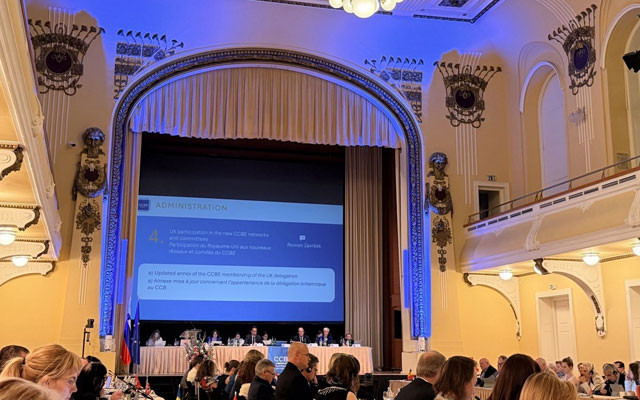
The UNBA presented the CCBE with an overview of legal reform and challenges
Reform of the legal profession, Ukraine’s European integration commitments, guarantees of the profession’s independence, and practices of bar self-governance in European countries — these issues were the subject of discussion at the Council of Bars and Law Societies of Europe (CCBE).

Rule of Law Roadmap
The UNBA is compiling the findings of the subgroups regarding the implementation of the Rule of Law Roadmap
Today, May 28, the Ukrainian National Bar Association hosted a meeting of the Coordination Bureau of the Working Group on the implementation of the Rule of Law Roadmap regarding the reform of the advocacy profession. Following a series of meetings by thematic subgroups, the work is now moving to the stage of consolidating proposals and preparing a coordinated package of recommendations.
Discussion
UNBA discussed removing barriers at border crossings for families with children with disabilities
Families of children with disabilities face additional requirements when traveling abroad, particularly regarding consular registration. What is happening and what changes are needed to remove these obstacles were discussed during the roundtable «Borders without barriers for families of children with disabilities».

Discussion
New rules, old problems: the UNBA discussed the work of the ETAIDF and MMC
The reform of medical-social assessment and military medical commissions has changed procedures but has not resolved practical issues. People face situations where documents are not issued, decisions are based on technicalities, assessments are delayed, and they struggle to demonstrate their actual health status in specific life situations.

Discussion
Co-parenting shouldn't be reduced to a 50/50 formula, — roundtable discussion
Following a divorce, joint custody can serve as a mechanism for ensuring equal parental rights. However, this model requires clear criteria and cannot be applied automatically without taking into account the child’s age, the level of conflict between the parents, the risk of violence, and the feasibility of enforcing the future decision.

Legislation
Penalties for errors in military registration require clear rules, – UNBA
The liability of officials for violations of military registration rules must be legally defined, proportionate, and effectively enforceable. Otherwise, the new fines will not protect citizens from registration errors but will create additional risks.

Educational events
How an advocate can find clients when starting a legal practice
Starting a law practice undoubtedly requires professional knowledge. At the same time, a clear understanding of one’s own area of specialization, clients, and communication channels is essential for success.

European integration
Lidiya Izovitova: In the context of European integration reforms, advocacy is a partner of the state, not a target of reform
The war has significantly altered the working conditions for advocates, while European integration has presented the profession with new institutional challenges. The ongoing negotiation process covers issues such as the rule of law, judicial independence, fundamental rights, justice, freedom and security.
Publications

Volodymyr Matsko Extradition during wartime: when the risks outweigh the request

Volodymyr Matsko Extradition as a systemic form of rights violations

Victoria Yakusha, Law and Business The anti-corruption vertical cannot «take care» of the Bar as an institution, - acting head of the HQDCB

Censor.net Protecting advocates – protecting justice: addressing concerns about the new law

Ihor Kolesnykov A BRIEF SUMMARY REGARDING THE APPLICATION OF THE ORDER ON EXTENDED CONFISCATION IN LATVIA REGARDING FINANCIAL ASSETS OF…

Valentyn Gvozdiy WORKING IN A WAR ZONE

Lydia Izovitova Formula of perfection

Sergiy Vylkov Our judicial system is so built that courts do not trust advocates