Military salary: how the amount is determined

The official salary is one of the three main types of remuneration for servicemen. Its amount depends on the position held and the specific tariff category.
The rules for calculating the official salary are regulated by Section II of the Procedure for Payment of Remuneration to Servicemen of the Armed Forces of Ukraine and Certain Other Persons, approved by Order of the Ministry of Defense No. 260 dated 07.06.2018.
Base salaries are paid in the amounts specified in the following four regulatory documents:
- The tariff scale of grades and coefficients of official salaries of servicemen from among the privates, sergeants and officers, officers (except for servicemen in regular military service), privates and commanders
- Scheme of tariff grades for the main typical positions of officers of the Armed Forces, the National Guard, the State Border Guard Service and the State Special Transport Service
- Tariff scale of grades and coefficients of official salaries of servicemen in regular military service
- The scheme of tariff coefficients for the positions of cadets of higher military educational institutions (higher education institutions with specific conditions of study) and military educational units of higher education institutions, institutions of professional pre-higher military education, higher education institutions of the Ministry of Finance, the State Service for Special Communications and Information Protection, the State Emergency Service, the State Criminal Executive Service, lyceum students of military lyceums, naval lyceums, boarding lyceums, civil defense lyceums, lyceums.
These documents are set out in the annexes to the Cabinet of Ministers' Resolution No. 704 of 30.08.2017 «On the Remuneration of Military Personnel, Ranks and Commanders and Some Other Persons».
Official salaries are paid depending on the positions held and the tariff categories provided for in the military unit's staffing.
For the purpose of establishing the official salary, the tariff categories of servicemen (except for servicemen in regular military service) are indicated in the staffing of the military unit by a fraction in the numerator. For the purpose of determining the official salary, the tariff categories of servicemen in regular military service are indicated in the staffing table of a military unit by a fraction in the denominator.
Official salaries (except for students, adjuncts, doctoral students, servicemen in regular military service, cadets, lyceum students) are paid from the day of assuming duties in the position (but not earlier than the day of issuing an order on the personnel on appointment to the position) until the day of resignation inclusive. The date of commencement of the performance of duties in the position (resignation) and the amount of the official salary in accordance with the tariff category are determined by the order of the commander of the military unit.
The salaries of officers who are enlisted for military service under a contract from the reserve or for military service by conscription of persons from among reservists during a special period (if conscription and notification were carried out by commanders of military units) are paid in the amount provided for in the 12th tariff category of the Tariff Schedule of Categories and Coefficients (Annex 1 to Resolution No. 704), from the date of enrollment in the lists of personnel of the military unit until the date of assumption of duties in the position.
The salaries of officers called up for military service are paid in the amount stipulated in the 12th tariff category of the Tariff Schedule of categories and coefficients (Annex 1 to Resolution No. 704) from the date of departure from the district (city) military commissariat (territorial center for recruitment and social support) to the military unit until the day of assuming duties.
The salaries of privates, sergeants and officers (except for servicemen in regular military service) are paid in the amount stipulated by the 1st tariff category of the Tariff Schedule of categories and coefficients (Annex 1 to Resolution No. 704), until the day of assuming the duties of the position:
- from the day of departure from the district (city) territorial center of recruitment and social support to the military unit - for those called up for military service during mobilization, for a special period or for military service for persons from among reservists during a special period
- from the date of enrollment in the lists of personnel of a military unit - for military service under a contract or for military service under a call-up of persons from among the reservists during a special period (if the call-up and notification were carried out by commanders of military units).
Servicemen who are enlisted for military service on a contract basis during their regular military service, from the date of signing the contract until the day of assuming their duties, are paid salaries in accordance with the tariff category of a serviceman on a contract basis for the position held as of the date of signing the contract.
Salaries are maintained in accordance with the tariff category of the previous position in accordance with the current legislation of Ukraine, as indicated in the orders on appointment of personnel.
The material of the section «Protection of the Military» was prepared by Victoria Polishchuk, a member of the Center for Coordination of Volunteer Assistance to Servicemen of the Ukrainian National Bar Association.
Popular news
Rule of Law Roadmap
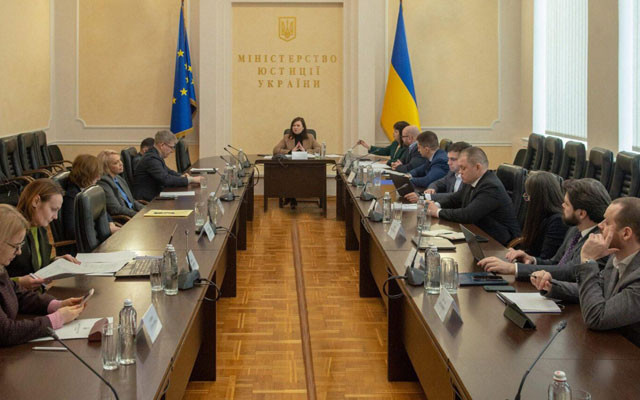
Reform without data and advocacy: what the Ministry of Justice’s launch has revealed
The Ministry of Justice hosted the first meeting of the working group on bar reform. But instead of professional preparation of legislative changes, we saw exactly what Armada Network Director Dale Armstrong had spoken about the day before in Kyiv: not reform, but a struggle for control over the agenda through a narrow circle of “stakeholders” who create an echo chamber of influence for themselves.
Rule of Law Roadmap
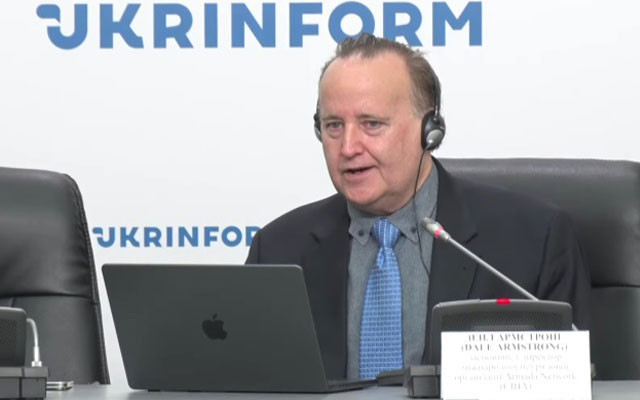
Advocacy, European integration and the limits of intervention: an American report presented in Kyiv
Following its presentation in Brussels, the report «The Ukrainian advocacy in the context of the rule of law and European integration» made its way to Kyiv. It highlighted critical issues both in understanding the very nature of the self-governing profession and in the emergence of a «shadow market» surrounding the Ukrainian advocacy.
Rule of Law Roadmap
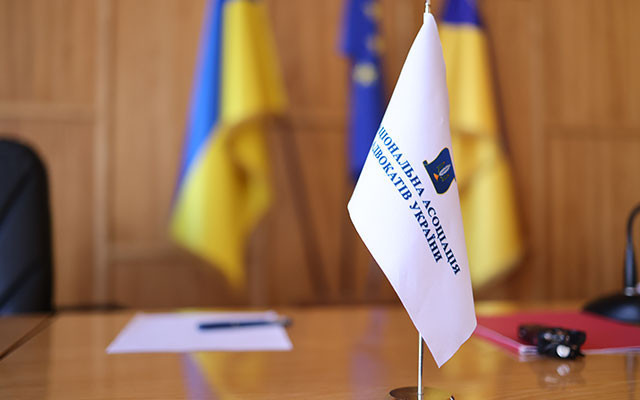
Organization of advocacy: subgroup agrees on approaches to regulatory reform
On March 13, a meeting was held of the «Organization of the advocacy and self-government» subgroup of the Working Group on the implementation of the Rule of Law Roadmap regarding bar reform. The event was conducted via videoconference.
Guarantees of the practice of law
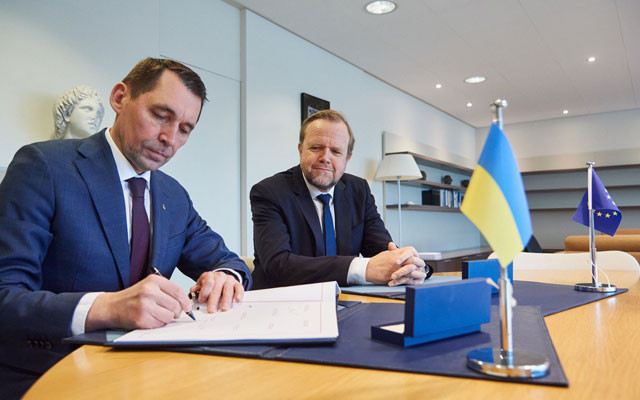
Ukraine has signed the Convention for the Protection of the Profession of Lawyer
Today, on 9 March, Ukraine's Permanent Representative to the Council of Europe Mykola Tochytskyi signed the Council of Europe Convention for the Protection of the Profession of Lawyer. This makes our country the 28th to sign this important international treaty.
European integration
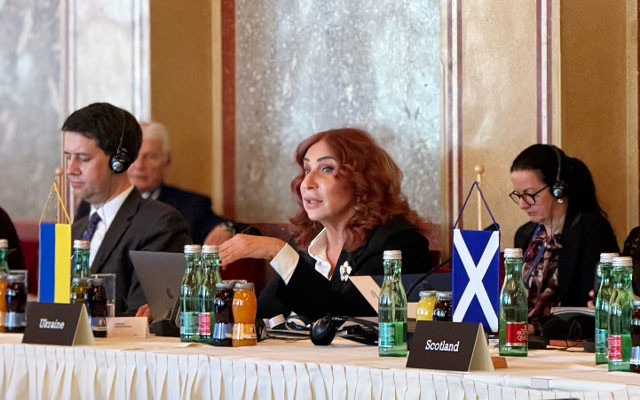
«Freedom or security» — a false formula: speech by L. Izovitova at the conference of bar presidents
Is the state protecting society from crime today, or is it gradually destroying the rule of law under the guise of this fight? These alarming trends were outlined by the President of the UNBA, BCU Lidiya Izovitova, during her speech at the 54th European Conference of bar presidents.
Discussion
AI in advocacy and justice: ethics, regulation, limits of application
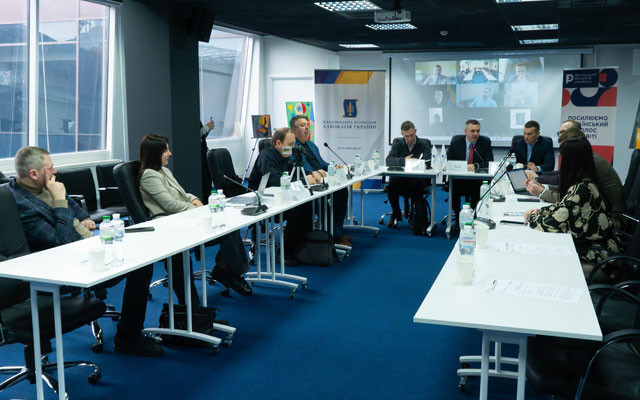
The Ukrainian National Bar Association held a roundtable discussion entitled «Artificial Intelligence in the цork of advocates: ethics, responsibility, legal process engineering». Participants discussed how artificial intelligence systems are already being used in the professional activities of advocates and where the ethical boundaries of what is permissible lie.

European integration
Researchers from the USA explain how shadow reports became a grant service
Shadow reporting often becomes a tool for the grant economy and competition for influence on policy. Such «expertise» replaces impartial analysis with the delegitimization of bar self-government, masks conflicts of interest, and is used as a channel for external pressure on the institution.
European integration
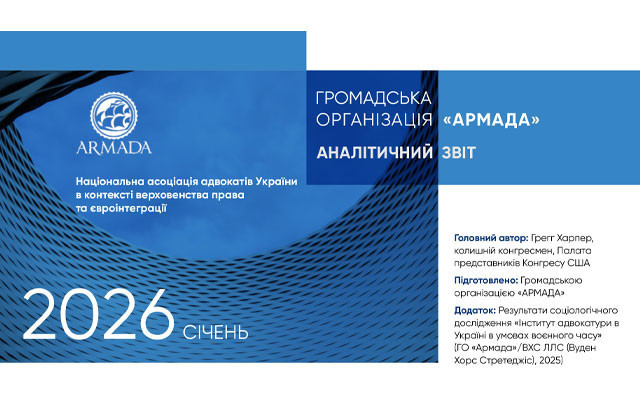
A translation of the report on advocacy presented to the European Parliament has been published
A translation of a research report on the Ukrainian advocacy profession in wartime, previously presented to the European Parliament in Brussels, has been published. The document is presented as a basis for discussion on the rule of law, Ukraine's European integration aspirations, and countering Russian disinformation in the legal sphere.
Publications

Volodymyr Matsko Extradition during wartime: when the risks outweigh the request

Volodymyr Matsko Extradition as a systemic form of rights violations

Victoria Yakusha, Law and Business The anti-corruption vertical cannot «take care» of the Bar as an institution, - acting head of the HQDCB

Censor.net Protecting advocates – protecting justice: addressing concerns about the new law

Ihor Kolesnykov A BRIEF SUMMARY REGARDING THE APPLICATION OF THE ORDER ON EXTENDED CONFISCATION IN LATVIA REGARDING FINANCIAL ASSETS OF…

Valentyn Gvozdiy WORKING IN A WAR ZONE

Lydia Izovitova Formula of perfection

Sergiy Vylkov Our judicial system is so built that courts do not trust advocates