Germany signs Council of Europe Convention for the Protection of the Profession of Lawyer
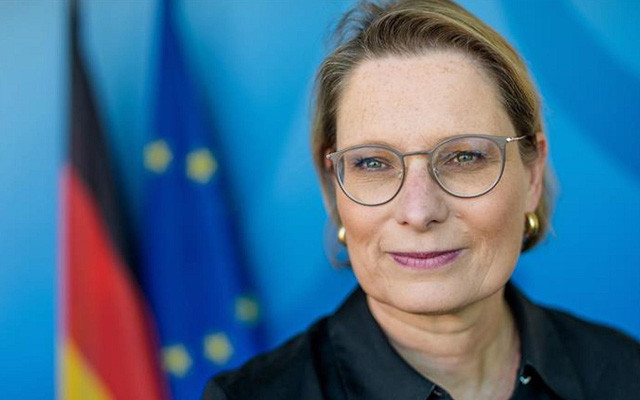
Germany has become the 26th country to sign the Convention for the Protection of the Profession of Lawyer. On January 26, Federal Minister of Justice Dr. Stefanie Hubig signed the international document on behalf of her country in Strasbourg.
This was reported by the German Federal Bar Association (Bundesrechtsanwaltskammer, BRAK).
«A good day for the rule of law! Germany's long-awaited signature is a clear confirmation of the role of advocacy in ensuring the rule of law, - commented BRAK President Dr. Ulrich Wessels, who attended the ceremony. - Advocates ensure access to justice for everyone, and now this has finally been given binding international legal guarantees. In view of today's events, including international ones, this is an extremely necessary step».
The Convention establishes uniform approaches to guarantees for the independent practice of the legal profession and provides for a mechanism to monitor the implementation of its provisions. It should be recalled that the need to prepare the Convention was prompted by the growing number of reports of attacks on advocates, including in the form of harassment, threats, physical attacks, or interference in the exercise of their professional duties.
In 2022, the European Committee on Legal Cooperation established a Committee of Experts on the Protection of Advocates (CJ-AV), which included 15 experts from across Europe, including Ukraine. One of the drafters of the Convention was the Vice President of the UNBA, BCU Valentin Gvozdiy, who was also elected Vice-President of CJ-AV.
The Convention on the protection of the profession of advocate was adopted by the Council of Europe at its meeting on March 12, 2025, and on May 13, it was opened for signature.
As of today, the international treaty has been signed (in chronological order) by Luxembourg, Andorra, Estonia, France, Greece, Ireland, Italy, Lithuania, the Netherlands, North Macedonia, Norway, Poland, Sweden, Belgium, Iceland, the Republic of Moldova, the United Kingdom, Bulgaria, Croatia, Romania, Latvia, the Czech Republic, Cyprus, Finland, Portugal and Germany.
In Ukraine, unfortunately, the formal procedure for signing the Convention is effectively being held up by state authorities. There do not appear to be any formal objections, but neither are there any real steps towards accession.
The Ministry of Justice recognises the importance of the international treaty, but insists on the need to assess what changes will have to be made to national legislation. According to Deputy Minister Lyudmila Sugak (who is currently acting as head of the ministry), the preparation of a draft law on ratification must be accompanied by the development of amendments to relevant acts, and these processes must proceed in parallel. In this regard, she refers to the Roadmap on the rule of law, approved by Cabinet of Ministers Resolution No. 475-r of May 14, 2025, which contains a number of measures to improve the advocacy profession.
The Ministry of Foreign Affairs believes that it cannot resolve this issue on its own, as the Prime Minister has instructed the Ministry of Justice to work on it and submit proposals to the government. In addition, officials have doubts about the translation of the Convention, although the Ukrainian National Bar Association published the document in Ukrainian the day after its adoption.
Popular news
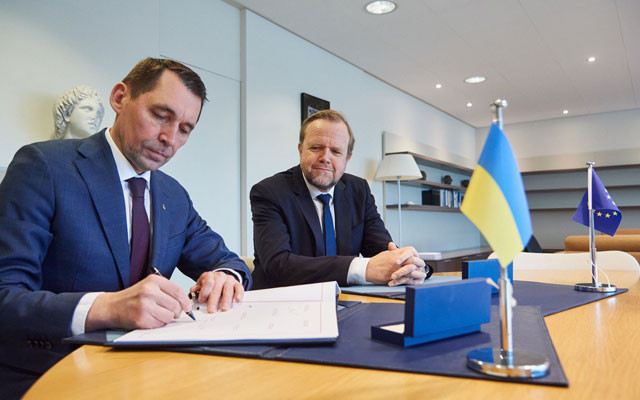
Guarantees of the practice of law
Ukraine has signed the Convention for the Protection of the Profession of Lawyer
Today, on 9 March, Ukraine's Permanent Representative to the Council of Europe Mykola Tochytskyi signed the Council of Europe Convention for the Protection of the Profession of Lawyer. This makes our country the 28th to sign this important international treaty.
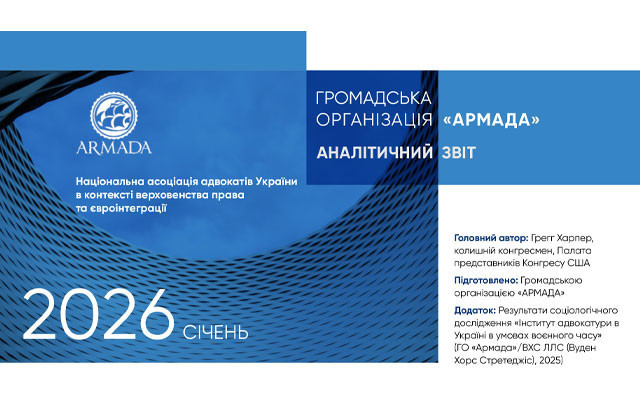
European integration
A translation of the report on advocacy presented to the European Parliament has been published
A translation of a research report on the Ukrainian advocacy profession in wartime, previously presented to the European Parliament in Brussels, has been published. The document is presented as a basis for discussion on the rule of law, Ukraine's European integration aspirations, and countering Russian disinformation in the legal sphere.
Legal defence of military personnel
How to formalize discharge from military service: practical workshop
The issue of discharge from military service remains one of the most pressing and complex for Ukrainian defenders and their families. Due to constant changes in legislation, military personnel often face refusals to discharge them from service or even to consider their reports.
Legislation
The Verkhovna Rada Committee criticized the format of the government working group on advocacy
The implementation of the Roadmap on the rule of law (approved by Cabinet of Ministers Resolution No. 475-r of May 14, 2025) in relation to advocacy raises the practical question of who exactly should prepare legislative changes and how.
Self-government
The BCU demands a review of the composition of the government working group on reforming the advocacy profession
The President of the UNBA, BCU Lidiya Izovitova, appealed to the Cabinet of Ministers of Ukraine to review the composition of the working group on improving legislation in the field of advocacy and legal practice.
Guarantees of the practice of law
The President has determined, who will sign the Convention for the Protection of the Profession of Lawyer
President of Ukraine Volodymyr Zelenskyy authorized Ukraine's Permanent Representative to the Council of Europe Mykola Tochytskyi to sign the Council of Europe Convention for the Protection of the Profession of Lawyer.
Abroad
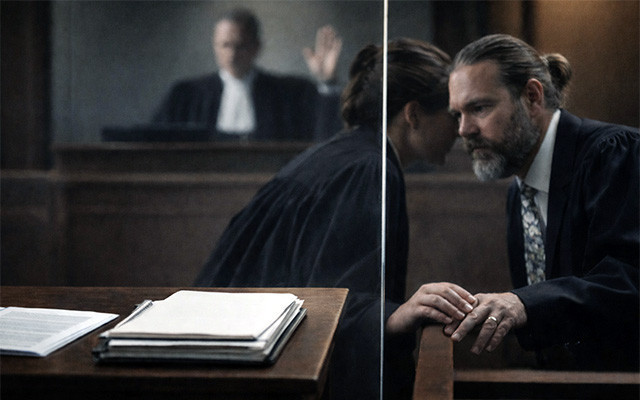
Advocate's romance with prosecutor halts criminal case in Canada
In Montreal (Quebec, Canada), a court suspended proceedings against eight defendants accused of illegal cannabis trafficking and money laundering after it was revealed that the prosecutor in the case and one of the advocates were in a secret intimate relationship.
Legislation
After the war amnesty for criminals or exemption from responsibility?
To ensure national reconciliation, rehabilitation of persons who have been persecuted for political reasons, restoration of justice, and establishment of lasting peace, it is proposed to introduce an amnesty after the war.
Publications

Volodymyr Matsko Extradition during wartime: when the risks outweigh the request

Volodymyr Matsko Extradition as a systemic form of rights violations

Victoria Yakusha, Law and Business The anti-corruption vertical cannot «take care» of the Bar as an institution, - acting head of the HQDCB

Censor.net Protecting advocates – protecting justice: addressing concerns about the new law

Ihor Kolesnykov A BRIEF SUMMARY REGARDING THE APPLICATION OF THE ORDER ON EXTENDED CONFISCATION IN LATVIA REGARDING FINANCIAL ASSETS OF…

Valentyn Gvozdiy WORKING IN A WAR ZONE

Lydia Izovitova Formula of perfection

Sergiy Vylkov Our judicial system is so built that courts do not trust advocates