


Advocates on social media: how to showcase cases without crossing ethical lines
Social media can help advocates explain legal issues, build trust, and communicate with potential clients. However, public visibility is directly linked to professional ethics: maintaining attorney-client privilege, not guaranteeing outcomes, and not turning legal arguments into attacks against colleagues.
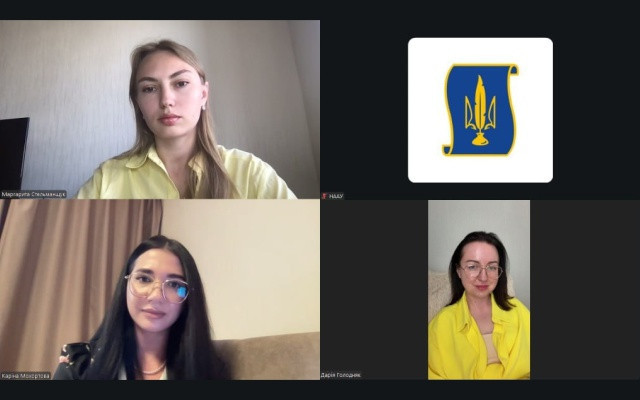
This was discussed during the webinar «Advocates on social media: a necessity or a choice?», initiated by the UNBA NextGen in the Odesa region. The speakers at the event were a member of the UNBA Committee on administrative law and procedure Daria Golodnyak and a marketing specialist Margarita Stelmanchuk.
A blog for an advocate should be a conscious choice. According to D. Golodnyak, being in the public eye requires a willingness to engage in constant communication, face criticism, and handle additional psychological stress. At the same time, through a blog, an advocate can explain current legal issues, share challenging aspects of practice and demonstrate approaches to resolving typical situations.
In particular, the speaker focused on how to discuss one’s own cases without violating attorney-client privilege. If an advocate describes not an individual client’s story but a typical legal problem with initial details that could apply to many people, such coverage does not in itself disclose confidential information. When publishing documents, it is necessary to conceal personal data, contact details, job titles, last names, first names, patronymics, case numbers and other information by which a person or case can be identified.
However, the presentation of cases should not be unsubstantiated. An advocate’s blog should not be based solely on claims of supposedly successful cases without explaining exactly what was done to resolve the issue. Otherwise, followers and colleagues may question whether the advocate is truly drawing on their own professional experience.
The speaker identified another risk of public communication: making guarantees. An advocate cannot promise a client a specific outcome or a specific timeline for resolving an issue if these depend on the court, government agencies, procedural circumstances, or the individual details of the case. Such promises can create false expectations, lead to conflicts and complaints, and generally undermine trust in advocacy.
Using examples from her practice, D. Holodniak explained that the same problem can have several solutions: pre-trial procedures, litigation, or another course of action depending on the documents and factual circumstances. Therefore, it is incorrect to create the impression that any issue can be resolved for a fixed fee, within a specific timeframe, and in only one way.
The webinar also addressed the issue of «hate» among advocates. The speaker distinguished between personal attacks, insults, or attempts to poach clients in comments directed at another advocate, and a well-reasoned legal position. If an advocate disagrees with a colleague’s approach and explains their position by citing legislation, case law, and practical experience, this is not hate speech. On the other hand, publicly discrediting a colleague without providing arguments is unethical.
M. Stelmanchuk drew attention to the reputational aspect of advocates’ public presence. According to her, entertainment content in and of itself does not harm an advocate’s professional reputation if it is kept within bounds and combined with expert presentation. Similarly, when communicating with an audience, it is important to distinguish between ordinary disagreement in comments and messages that cross the line: in the first case, the discussion can be encouraged; in the second, it is better to hide the comments so as not to provoke other participants.
The participants concluded that a lawyer’s public presence should only enhance their reputation when it is based on professional reasoning, proper communication, and adherence to the Rules of Professional Conduct.
Popular news
European integration
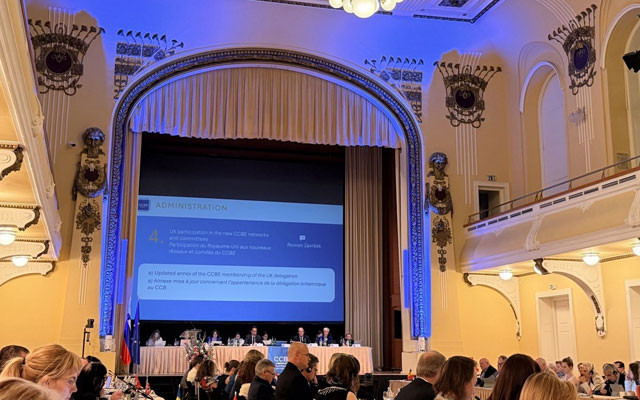
The UNBA presented the CCBE with an overview of legal reform and challenges
Reform of the legal profession, Ukraine’s European integration commitments, guarantees of the profession’s independence, and practices of bar self-governance in European countries — these issues were the subject of discussion at the Council of Bars and Law Societies of Europe (CCBE).

Rule of Law Roadmap
The UNBA is compiling the findings of the subgroups regarding the implementation of the Rule of Law Roadmap
Today, May 28, the Ukrainian National Bar Association hosted a meeting of the Coordination Bureau of the Working Group on the implementation of the Rule of Law Roadmap regarding the reform of the advocacy profession. Following a series of meetings by thematic subgroups, the work is now moving to the stage of consolidating proposals and preparing a coordinated package of recommendations.
Discussion
UNBA discussed removing barriers at border crossings for families with children with disabilities
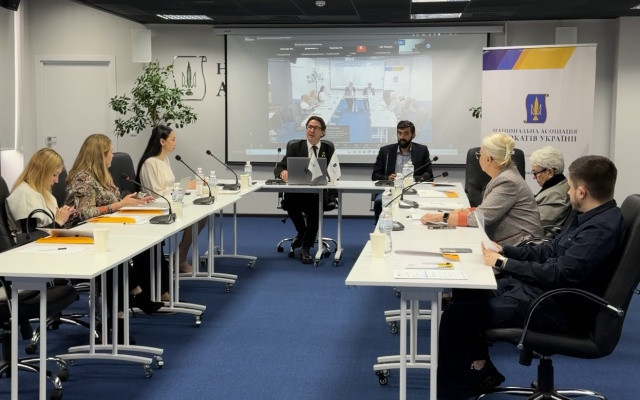
Families of children with disabilities face additional requirements when traveling abroad, particularly regarding consular registration. What is happening and what changes are needed to remove these obstacles were discussed during the roundtable «Borders without barriers for families of children with disabilities».
Discussion
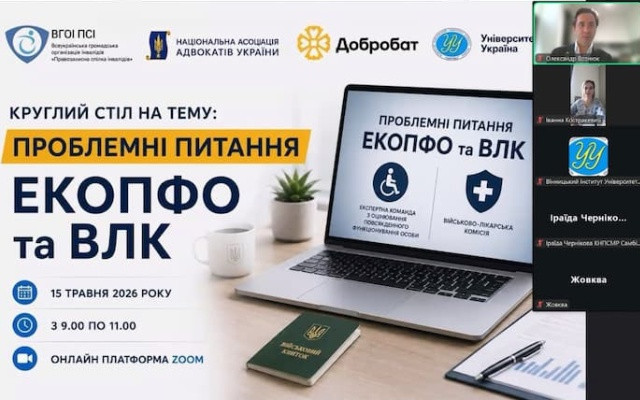
New rules, old problems: the UNBA discussed the work of the ETAIDF and MMC
The reform of medical-social assessment and military medical commissions has changed procedures but has not resolved practical issues. People face situations where documents are not issued, decisions are based on technicalities, assessments are delayed, and they struggle to demonstrate their actual health status in specific life situations.
Discussion
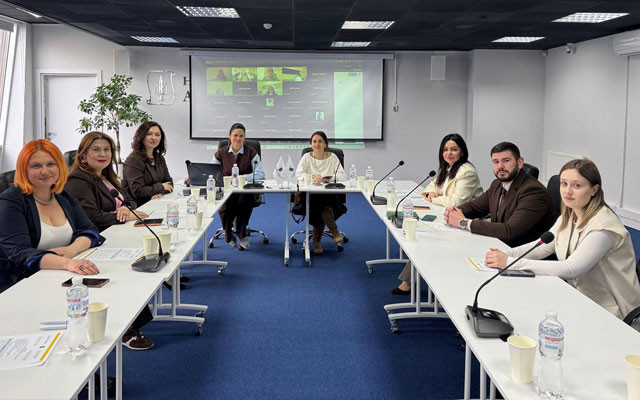
Co-parenting shouldn't be reduced to a 50/50 formula, — roundtable discussion
Following a divorce, joint custody can serve as a mechanism for ensuring equal parental rights. However, this model requires clear criteria and cannot be applied automatically without taking into account the child’s age, the level of conflict between the parents, the risk of violence, and the feasibility of enforcing the future decision.

Legislation
Penalties for errors in military registration require clear rules, – UNBA
The liability of officials for violations of military registration rules must be legally defined, proportionate, and effectively enforceable. Otherwise, the new fines will not protect citizens from registration errors but will create additional risks.

Educational events
How an advocate can find clients when starting a legal practice
Starting a law practice undoubtedly requires professional knowledge. At the same time, a clear understanding of one’s own area of specialization, clients, and communication channels is essential for success.
European integration
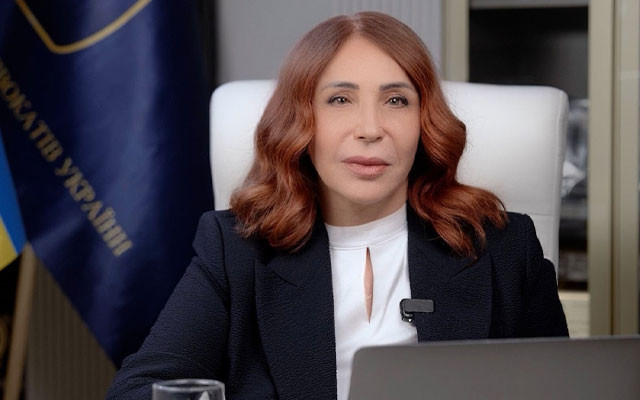
Lidiya Izovitova: In the context of European integration reforms, advocacy is a partner of the state, not a target of reform
The war has significantly altered the working conditions for advocates, while European integration has presented the profession with new institutional challenges. The ongoing negotiation process covers issues such as the rule of law, judicial independence, fundamental rights, justice, freedom and security.
Publications

Volodymyr Matsko Extradition during wartime: when the risks outweigh the request

Volodymyr Matsko Extradition as a systemic form of rights violations

Victoria Yakusha, Law and Business The anti-corruption vertical cannot «take care» of the Bar as an institution, - acting head of the HQDCB

Censor.net Protecting advocates – protecting justice: addressing concerns about the new law

Ihor Kolesnykov A BRIEF SUMMARY REGARDING THE APPLICATION OF THE ORDER ON EXTENDED CONFISCATION IN LATVIA REGARDING FINANCIAL ASSETS OF…

Valentyn Gvozdiy WORKING IN A WAR ZONE

Lydia Izovitova Formula of perfection

Sergiy Vylkov Our judicial system is so built that courts do not trust advocates