


Justice for advocates in the TOT: criteria discussed by the UNBA and IBA leaders
One of the topics currently being discussed by the professional legal community is the problem of the activities of Ukrainian lawyers in the temporarily occupied territories. How legitimate are the initiatives to criminalize it?
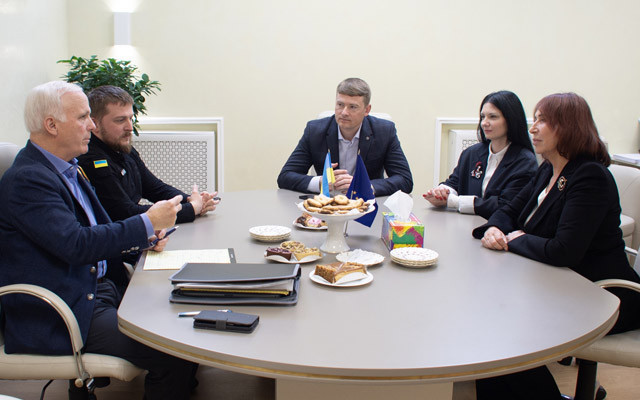
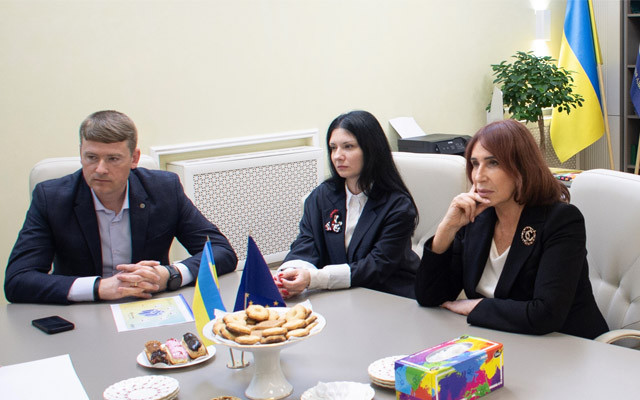
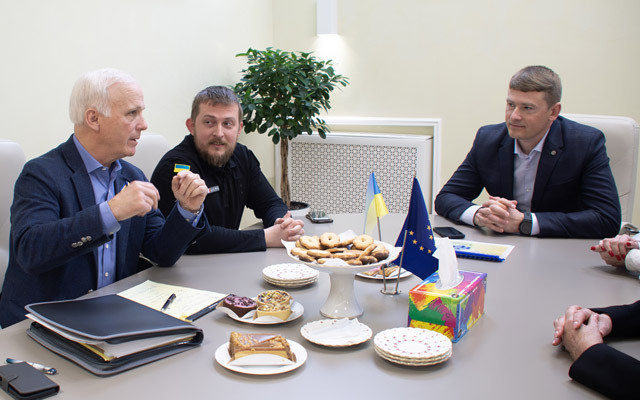
This was discussed during a working meeting between Lidiya Izovitova, the President of the UNBA, BCU, and Mark Ellis, the Executive Director of the International Bar Association (IBA), in Kyiv on April 17.
As a reminder, several draft laws have been registered in the Verkhovna Rada (No.8077 of September 26, 2022, No. 10136 of October 09, 2023), which propose to expand Article 111-1 (Collaboration) of the Criminal Code. In particular, it is proposed to consider the exercise of independent professional activity in cooperation with the occupation administration of the aggressor state as such a crime.
Despite the fact that some of the territories are temporarily occupied today, they remain part of Ukraine under the law. This was emphasized by L. Izovitova, referring to the Law «On Ensuring the Rights and Freedoms of Citizens and the Legal Regime in the Temporarily Occupied Territory of Ukraine». One of the goals of state policy in such territories is to ensure the protection of the rights, freedoms and legitimate interests of individuals and legal entities. And this is the constitutional function of the Bar - to ensure the realization of everyone's right to legal aid.
Therefore, according to the logic of the authors of such initiatives, citizens who remain under occupation should be deprived of constitutional guarantees, and lawyers who dare to comply with the Constitution should be punished as criminals.
In addition, the UNBA head emphasized, collaborationism is cooperation with the enemy's government. And the legal profession is professional and independent of the state. It is in no way related to politics, propaganda, or aggression. In such circumstances, the punishment of lawyers does not fit in with European standards of a fair trial.
Earlier, M. Ellis himself emphasized the need to comply with high international standards of fair trial even in times of war. «It is important to understand that protecting the right to a fair trial is not only about ensuring that the processes protect the fundamental rights of the individual, - the lawyer believes. - It is also about ensuring that the world perceives Ukraine's criminal justice system as fair and just».
The Executive Director of the IBA directly linked Ukraine's ensuring fairness in such processes to further international support. «Ukraine is extremely interested in demonstrating that its trials are fair, - he said. - This will become part of the Ukrainian heritage. The absence of fair trials will undermine the rule of law and jeopardize the international community's support for Ukraine».
«The message should be this: «Without justice in these lawsuits, we are no better than Russia», - M. Ellis summarized.
In addition, during the meeting, the areas of cooperation between the UNBA and the IBA were assessed. Vadym Krasnyk, Chairman of the UNBA Secretariat, expressed his gratitude for the systematic support provided by the IBA to the Ukrainian Bar. Among the successfully implemented projects he mentioned:
- technical provision of uninterruptible power supply to the points of inviolability on the basis of the bar self-government bodies
- digitization of archives stored in the Bar Councils and regional CDCs (purchase of copying and scanning equipment)
- assistance of the international community to Ukrainian lawyers through the work of the Board of Trustees.
Hanna Lazarchuk, representative of the Rivne region in the Ukrainian Bar Council, spoke about the rules of the Board of Trustees, the principles of its distribution of funds, and the total amount of income and expenses. She assured the IBA head of full transparency of the body's activities and systematic reporting to donors.
For his part, M. Ellis assured of the IBA's further support of the UNBA's initiatives to provide assistance to lawyers who suffered during the war.
The Executive Director of the IBA visits the UNBA for the fourth time. The first three visits were in August 2022, February and August 2023.
Popular news
Legislation
A bill implementing the Convention on the Protection of the Professions of Lawyer has been introduced
The constitutional guarantees of legal aid, defense, and the independence of advocacy cannot be realized without protecting advocates from unwarranted interference in their professional activities, including searches, the seizure of professional materials and the use of criminal procedural mechanisms to exert pressure.
Rule of Law Roadmap
The UNBA presented the key provisions of the future law on advocacy in Brussels
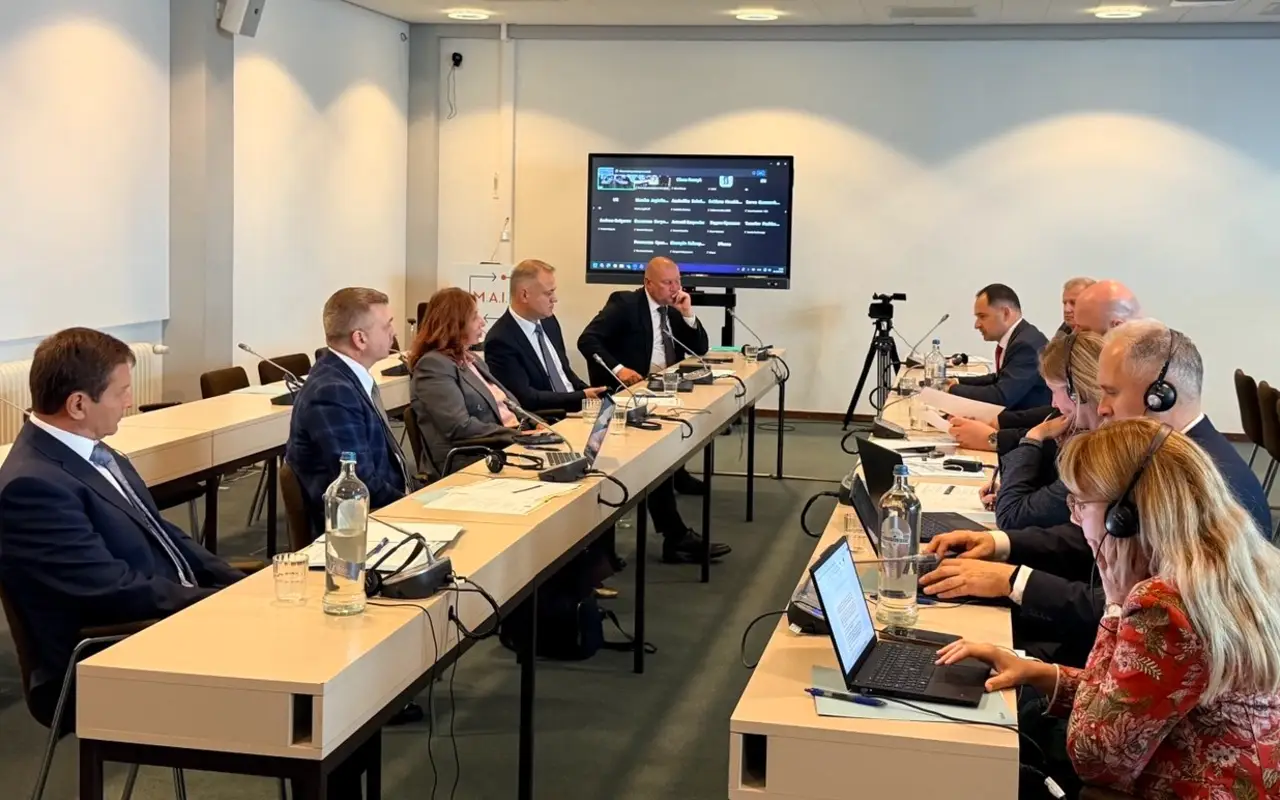
The Ukrainian National Bar Association presented its proposals for the upcoming law on advocacy, aligned with the Rule of Law Roadmap. The presentation covered topics such as access to the profession, self-governance, disciplinary procedures, professional development and guarantees for the practice of advocacy.
Guarantees of the practice of law
Independent oversight is necessary before using CISA materials against an advocate – Lidiya Izovitova
Before the prosecution uses information obtained during covert investigative actions and related to an advocate’s activities, independent procedural oversight must be conducted. It is necessary to determine whether such information is covered by attorney-client privilege and whether it may be disclosed.
Self-government
Efforts to develop advocacy must be brought to fruition — A. Misyats
The Ukrainian advocacy profession is currently going through a critical phase. Amid the war, it must ensure the continuity of legal aid, defend the independence of the profession, and improve qualification and disciplinary procedures in accordance with European standards. The work that has been started must be brought to a practical conclusion.
Support
Protecting the legal profession, cybersecurity and support for advocates: common themes for the IBA and the UNBA
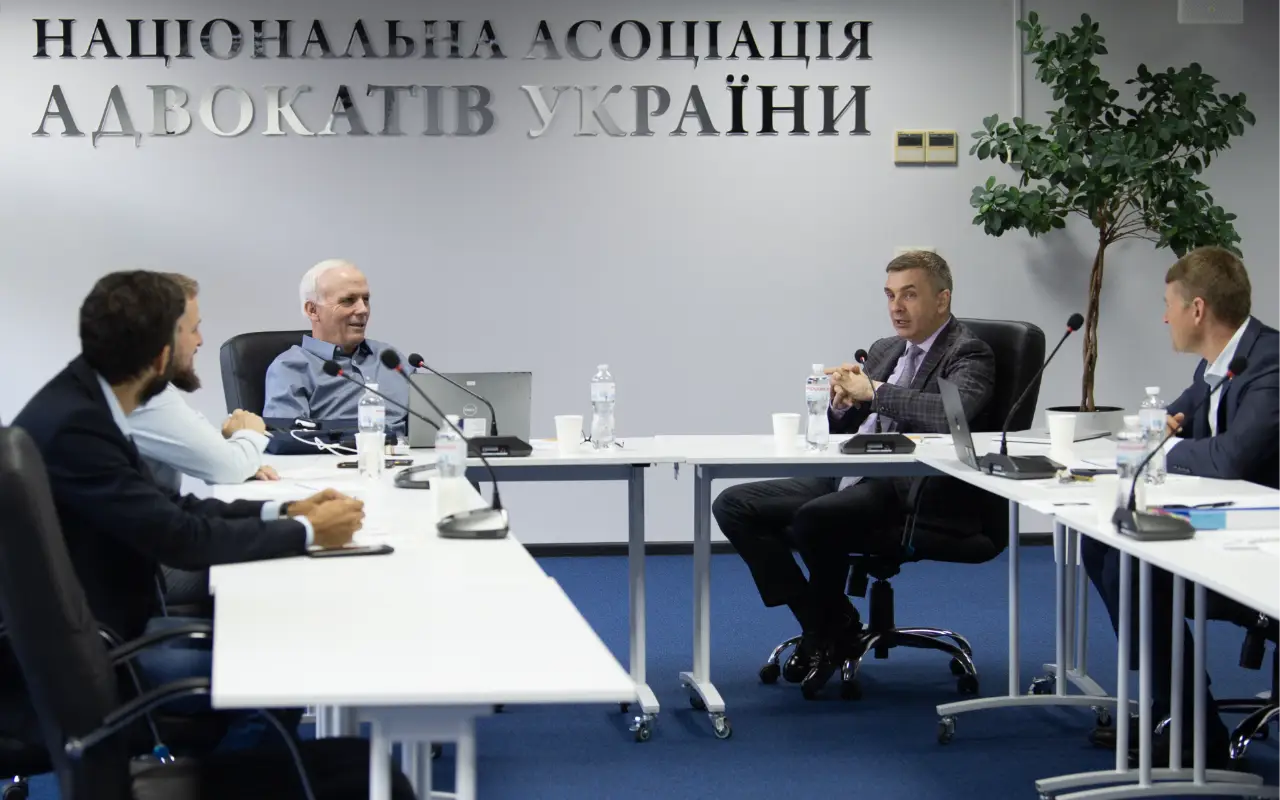
On September 18, a working meeting was held at the office of the Ukrainian National Bar Association with Executive Director of the International Bar Association (IBA) Mark Ellis. The parties discussed the Ukrainian advocacy profession’s participation in European legal processes, the protection of the UNBA’s digital infrastructure, psychological support for advocates and future areas of cooperation.
Educational events
Tax residency of Ukrainians abroad: what matters
The determination of tax residency for Ukrainians who have been living abroad for an extended period depends on the combination of their personal and economic ties to each country. The established status determines the procedure for reporting income, paying taxes and fulfilling CFC reporting obligations.
Discussion
When working with sole proprietorships leads to business fragmentation: criteria and recommendations
What criteria do regulatory and law enforcement agencies use to identify artificial business fragmentation? How does this model differ from franchising? And when can tax optimization lead to criminal liability?
War
Are Europe's advocacy associations prepared for a potential war? V. Gvozdiy shared lessons from the Ukrainian experience
The continuity of the bar’s self-governance, the protection of professional registries and archives, as well as equal guarantees of employment for advocates, judges, and prosecutors must be enshrined in advance in legislation in the event of war or another emergency.
Publications

Vasyl Kolishnyi, «Law and Business» Supporting mental health should become part of the professional culture of the Bar, - H. Udovenko

Volodymyr Matsko Extradition during wartime: when the risks outweigh the request

Volodymyr Matsko Extradition as a systemic form of rights violations

Victoria Yakusha, Law and Business The anti-corruption vertical cannot «take care» of the Bar as an institution, - acting head of the HQDCB

Censor.net Protecting advocates – protecting justice: addressing concerns about the new law

Ihor Kolesnykov A BRIEF SUMMARY REGARDING THE APPLICATION OF THE ORDER ON EXTENDED CONFISCATION IN LATVIA REGARDING FINANCIAL ASSETS OF…

Valentyn Gvozdiy WORKING IN A WAR ZONE

Lydia Izovitova Formula of perfection