Advocates, academics, and experts examine problems in forensic examination (video)
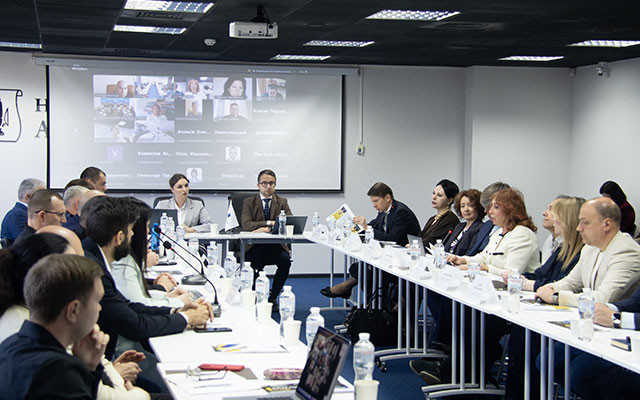
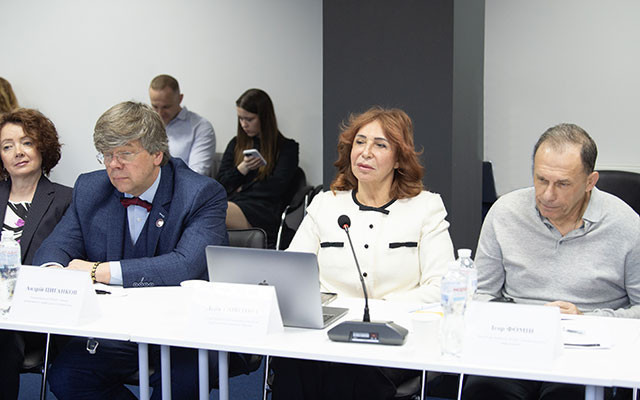
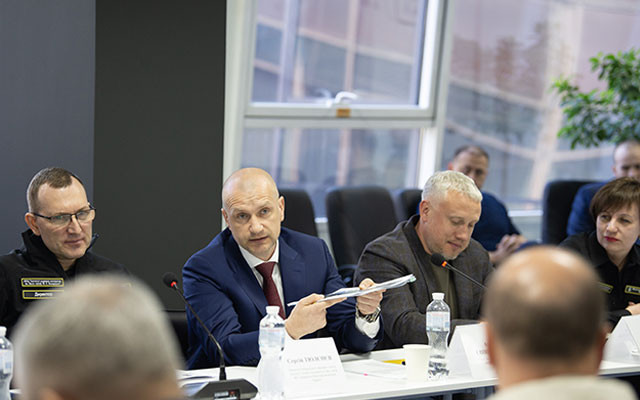
The Ukrainian National Bar Association, in cooperation with leading scientific and research institutes of forensic expertise, organized a round table on expert support for legal practice.
The speakers at the event, which took place in a mixed format on May 2, included scientists, forensic experts, and practicing lawyers.
In total, more than eight thousand lawyers participated in the round table.
A heated discussion broke out already during the introductory speeches, as a number of systemic problems requiring urgent solutions have accumulated in the field of forensic expertise.
The President of the UNBA, BCU Lidiya Izovitova drew attention to one of the most acute problems in the field of forensic expertise, according to the legal community: the failure of experts to distinguish between the concepts of «initial data» and «professional information» and the misinterpretation of the latter as a prohibition on independent collection of materials.
This practice of de facto self-restraint by experts leads to a refusal to use open professional sources, in particular statistical data, market information, and technical standards, which are necessary for the formation of a well-founded, comprehensive expert opinion.
This approach is particularly harmful in complex economic, construction, and environmental expert assessments, where ignoring professional information not only reduces the quality of the research but also directly contradicts the requirements of current standards for expert activities.
According to the President of the UNBA, BCU, experts sometimes avoid critical analysis of the adequacy of the materials provided, which opens the way for manipulation by the parties to the proceedings and turns the expert opinion into a tool for creating evidence rather than investigating it. This violates the principle of impartiality of the expert and equality of the parties.
Another related problem is the spread of the practice of «matryoshka» expertise, where the conclusion of one expert without their own analysis is confirmed by another expert. This grossly violates the principle of directness of research and contributes to the legalization of pre-established positions. In both cases, the expert loses objectivity and the conclusion loses its probative value.
Therefore, L. Izovitova noted that clarification of the legislation on the permissibility of using open sources of professional information and the introduction of guarantees that would prevent the use of expertise as a tool for creating evidence by one of the parties is necessary. This is necessary to preserve the autonomy of the expert, the competitiveness of the process, and the protection of human rights, which are key conditions for the functioning of the rule of law.
Yuriy Chechil, Director of the Ukrainian Research Institute of Special Equipment and Forensic Expertise of the Security Service of Ukraine, spoke about the nuances of collecting source data and using professional information in forensic expertise.
He recalled that in the context of commodity expertise, investigators often provide contracts and price offers, which experts formally take as a basis.
However, in such cases, when the expert merely reproduces the data provided, a logical question arises: what then is the expert's work? This was emphasized by Yuriy Chechil, who noted that such a role of the expert is negated.
At the same time, he expressed his support for the use of professional information by experts, in particular market data, etc. Yuriy Chechil also noted that in practice, the approach to this issue often depends on the expert himself.
The Yaroslav Mudryi National Law University, although not an expert institution, has been cooperating with expert institutions, universities, and advocates for many years and often prepares scientific and legal conclusions at the request of state authorities, which influence not only law-making but also law enforcement activities. The Vice-Rector for Scientific Work at the Yaroslav Mudryi National Law University, Dmytro Luchenko, said that in 2024, university researchers prepared scientific and legal opinions at the request of the Verkhovna Rada (131), the Supreme Court (106), and the Constitutional Court (53). The university also processed hundreds of requests from state authorities, law enforcement agencies, and local self-government bodies. The vice-rector noted that the university had prepared a significant number of scientific and legal conclusions at the request of advocates. «It is cooperation with the legal community that makes up the lion's share of the work of our research sector», - said D. Luchenko.
The director of the National Scientific Center «Institute of Forensic Expertise named after Honored Professor M.S. Bokarius» of the Ministry of Justice of Ukraine, Serhiy Tyulenev, confirmed the interest of defense lawyers in specialized knowledge. He cited statistics showing that 290 expert examinations were conducted in response to requests from advocates in 2024 and the first quarter of 2025. «Most of the issues raised by advocates in their requests concern the possibility of appointing forensic examinations, the availability of experts, qualifications for certain types of forensic examinations, deadlines for conducting examinations, the workload of experts, and the provision of copies of forensic expert conclusions or methodologies used in conducting these examinations», - the head of the center explained.
He also recalled the memorandum of cooperation recently signed with the UNBA, which has intensified the work of advocates. «This shows greater trust in our activities by the Ministry of Justice, in line with the actions we are taking together with you», - commented S. Tyulenev.
The acting director of the Scientific and Research Center for Independent Forensic Expertise of the Ministry of Justice of Ukraine, Andriy Svintsitsky, focused on the problem of improving the professional level of those who commission expert examinations.
Based on the results of the round table, he proposed creating a training course on the possibility of legal assessment of the materials encountered by those who commission expert examinations.
«We have already launched a course to improve the qualifications of customers of expert services. These are expert specialties in economic, construction, technical, computer, phonoscopic expertise, compliance with state secrets, etc., - said the head of the Research Center. – We all need to improve our professional level because, although everything is regulated, it is the industry experts who can provide this knowledge to customers of expert services as part of a training course».
His colleague, Maksym Kiselov, director of the Kyiv Scientific Research Institute of Forensic Expertise of the Ministry of Justice of Ukraine, supported him. He expressed his conviction that cooperation must be rebuilt on a qualitatively new level in both criminal proceedings and civil and commercial cases. «I myself am from the legal community and can say that expert examination is quite complex in terms of formulating questions and obtaining the results that the parties expect. This is a specific field that requires the direct involvement of experts in the process, - noted the director of the KNDISE. - And I believe that we need to meet more often, communicate more, develop, teach lawyers to work with experts, because experts are overregulated, while lawyers are freer and are not subject to the same disciplinary liability».
The issue of expert support for legal practice is extremely important and does not need to be proven, according to Volodymyr Shekhovtsov, dean of the Faculty of Law at Yaroslav Mudryi National Law University. To implement it, it is necessary to gradually develop a roadmap for interaction and solving the tasks at hand. He also noted the need to create methodological guidelines and recommendations.
The dean announced plans to organize a traditional International Forum of Advocates in Kharkiv at the end of the year, where the round table's findings could be presented in the form of methodological and scientific practical advice for advocates.
Popular news

Advocacy
Another conflict with the TCC: an advocate's leg was broken and his client jumped out of a window
On June 19, at the premises of the military medical commission, where a bus from the Krasnograd Territorial Center for Recruitment and Social Support delivered several people, an incident occurred involving the use of physical force against an advocate.
Advocacy
The Bar Council of Ukraine appealed to the High Council of Justice due to delays in forming the Competition Commission of t…
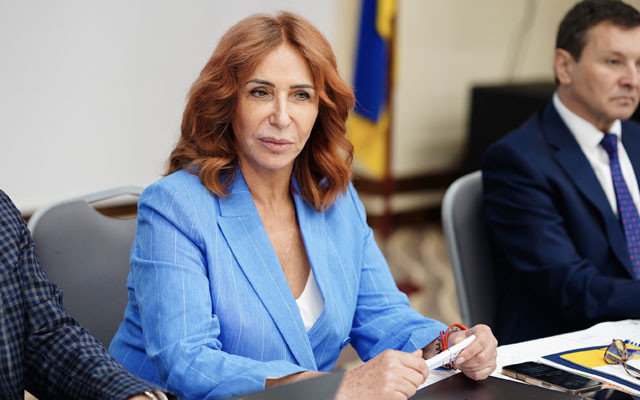
On June 13, 2025, Lidiya Izovitova, President of the Bar Council of Ukraine, addressed Grigory Usik, Head of the High Council of Justice, regarding the violation of the deadlines for forming a new composition of the Competition Commission for the selection of members of the High Qualification Commission of Judges of Ukraine.
Advocacy
UNBA calls for compliance with Council of Europe standards for the legal profession
The recently approved roadmap for EU accession in terms of bar reform refers to non-existent European standards and was adopted in violation of international principles. Therefore, before talking about changes, it is necessary to compare the current model of the bar with the Council of Europe standards embodied in the Convention on the Protection of the Profession of Lawyer.
Advocacy
Mobilization of advocates in court: UNBA records another case of pressure
The Ukrainian advocacy has once again faced extrajudicial influence on advocates with the aim of obstructing the exercise of their legitimate powers related to the provision of professional legal assistance to clients.
Advocacy
BCU demands verification of authenticity of SSU letter on «dangerous» advocacy
The Bar Council of Ukraine will appeal to the head of the Security Service of Ukraine, Vasyl Malyuk, regarding the verification of information about «negative trends in the legal profession» disseminated by some media outlets on behalf of the SSU.
Advocacy
Council of Europe Convention on the Protection of the Profession of Advocate open for signature
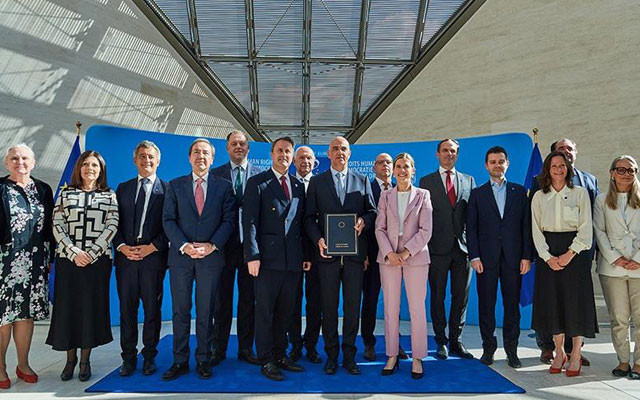
Thirteen member states of the Council of Europe have signed the Convention on the Protection of the Profession of Advocate, which was adopted by the Committee of Ministers of the Council of Europe on March 12, 2025. Four more countries will do so today. Ukraine is not among them.
Advocacy
BCU initiates resolution of the issue of visits by advocates to convicted persons
Article 110 of the Criminal Enforcement Code guarantees convicted persons confidentiality of meetings with their advocate. One of the important elements is the possibility to communicate with an advocate in a room without a solid partition. In practice, this provision of the law is systematically violated.
Advocacy
Advocates, academics, and experts examine problems in forensic examination (video)
The Ukrainian National Bar Association, in cooperation with leading scientific and research institutes of forensic expertise, organized a round table on expert support for legal practice.
Publications

Ihor Kolesnykov A BRIEF SUMMARY REGARDING THE APPLICATION OF THE ORDER ON EXTENDED CONFISCATION IN LATVIA REGARDING FINANCIAL ASSETS OF…

Valentyn Gvozdiy WORKING IN A WAR ZONE

Lydia Izovitova Formula of perfection

Sergiy Vylkov Our judicial system is so built that courts do not trust advocates

Iryna Vasylyk Advocacy in the proclamation of Independence of Ukraine

Oleksandr DULSKY When we cross the border of the Supreme Anti-Corruption Court, we get into another department of the National Anti-Corruption…

Vadym Krasnyk The UNBA will work, and all obstacles and restrictions are only temporary inconveniences

Lydia Izovitova Interview with Lydia Izovitova on the occasion of the 8th anniversary of the founding of UNBA: We are the voice of t…