


The BCU declared inadmissible the reorganization of the Odesa Law Academy
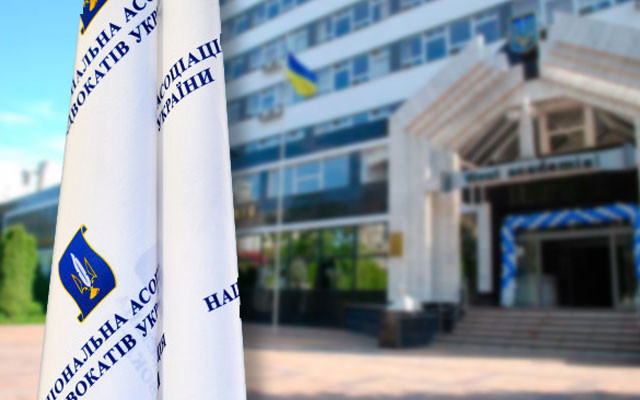
The Bar Council of Ukraine considers it appropriate to support the preservation of the National University Odesa Law Academy as an independent university, whose decades-long traditions and high standards of education and academic independence determine its distinctive uniqueness.
This decision was made on March 14 by the Bar Council of Ukraine, having considered the appeal of the Bar Council of Odesa Region, the Academic Council of the University and the staff of the Department of Organization of Judicial, Law Enforcement and Advocacy.
As a reminder, on February 12, the Cabinet of Ministers of Ukraine issued Order No. 111-r on the proposal of the Ministry of Education and Science of Ukraine, according to which the Odesa Law Academy should be reorganized by joining the I. Mechnikov Odesa National University.
The university staff categorically disagreed with the Government's order, as there were no prerequisites for its adoption. The lack of objectivity, logical consistency, and clear arguments in this decision caused concern among the academic community and the public. The Bar Council of the region noted that the liquidation of the University would lead to the loss of a specialized law school, unique educational programs (in particular, in the field of advocacy), and would also destroy the established ties between the bar community and university legal science.
During the discussion of the issue at the meeting, UNBA member Oksana Kadenko reminded that the Odesa Law Academy is a unique educational institution that has been successfully operating since 1997. Until 2017, it was the only institution that had a special faculty of advocacy. Today, the university is one of the flagships of higher education in the scientific and educational space of Ukraine. Almost 8,000 students study at the university, and almost a thousand employees work there (including 333 doctors and candidates of sciences, 15 academicians and corresponding members of the National Academy of Legal Sciences of Ukraine).
By many indicators, the university holds top positions among higher education institutions: in terms of the number of applicants, conditions for a safe educational process in the classroom format during martial law, graduate employment rate, etc. The university also ranks high in various rankings of higher education institutions. Among other things, the Odesa Law Academy is a member of the European Association of Universities (since 1998) and the European Public Law Association (since 2008), and a signatory to the Magna Charta Universitatum (since 2004).
«Recognition of the university by the scientific community, including on the world stage, is an important indicator and pride for the entire higher education of Ukraine», - said O. Kadenko. She also emphasized that for the bar it is crucial that the university is an important educational center that creates a favorable environment for human rights protection in Ukraine. Because the high quality of higher education, substantive scientific developments of the bar and absolute transparency to all forms of constructive inter-institutional cooperation make it an important tool for the Ukrainian National Bar Association to fulfill the tasks of bar self-government, and for Ukraine to form legal elites capable of building a state governed by the rule of law.
Pursuant to Article 44 of the Law «On the Bar and Practice of Law», the tasks of the bar self-government, among other things, are to maintain a high professional level of lawyers and to create favorable conditions for the practice of law.
To implement these tasks, on April 7, 2017, the Ukrainian National Bar Association and the National University Odesa Law Academy signed a memorandum of cooperation. Pursuant to the agreement, numerous joint events are held, projects and programs are implemented to train legal professionals. UNBA experts and university researchers jointly develop proposals for draft laws and other regulatory acts, work training and state programs and action plans, strategies, etc., and conduct joint research and publishing activities. The university has introduced normative disciplines on the history of the formation and development of the Bar, opened thematic classrooms and auditoriums. Also, educational, industrial and pre-graduation practices were organized on the basis of regional bar councils in accordance with the schedule of the educational process and in compliance with the requirements of the current legislation of Ukraine.
Following the discussion of the issue, the Bar Council of Ukraine decided to support the National University Odesa Law Academy and the university staff in maintaining it as an independent higher education institution.
Also, the Vice President of the UNBA, BCU was instructed to address the President of Ukraine, the Cabinet of Ministers, the Ministry of Education and Science, and other bodies and institutions with a request to take measures to preserve the Odesa Law Academy as an independent higher education institution.
Popular news
Legislation
A bill implementing the Convention on the Protection of the Professions of Lawyer has been introduced
The constitutional guarantees of legal aid, defense, and the independence of advocacy cannot be realized without protecting advocates from unwarranted interference in their professional activities, including searches, the seizure of professional materials and the use of criminal procedural mechanisms to exert pressure.
Abroad
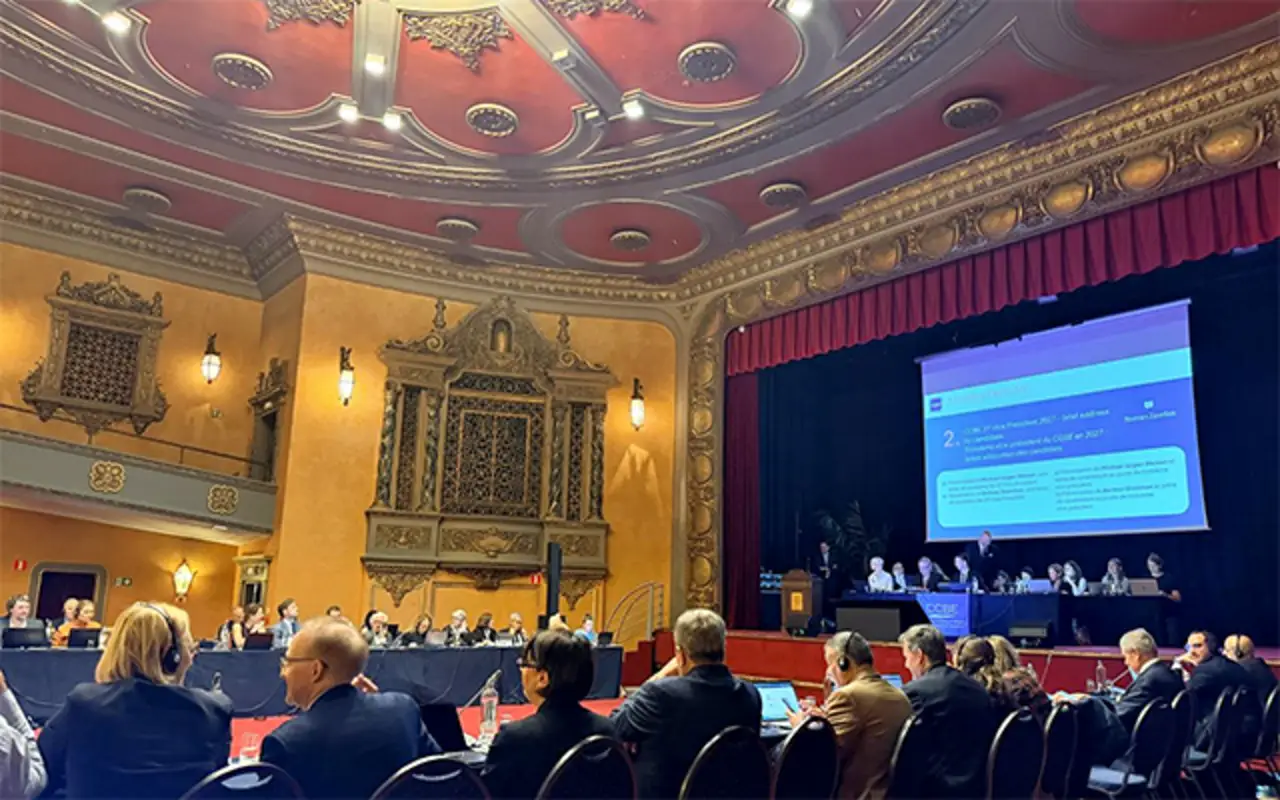
The CCBE is discussing European justice and issues related to the protection of advocates
Today, October 2, a meeting of the Standing Committee of the Council of Bars and Law Societies of Europe (CCBE) is taking place in Brussels. On the agenda are the protection of the advocate profession, the rule of law, attorney-client privilege, and changes in the European justice system.
Rule of Law Roadmap
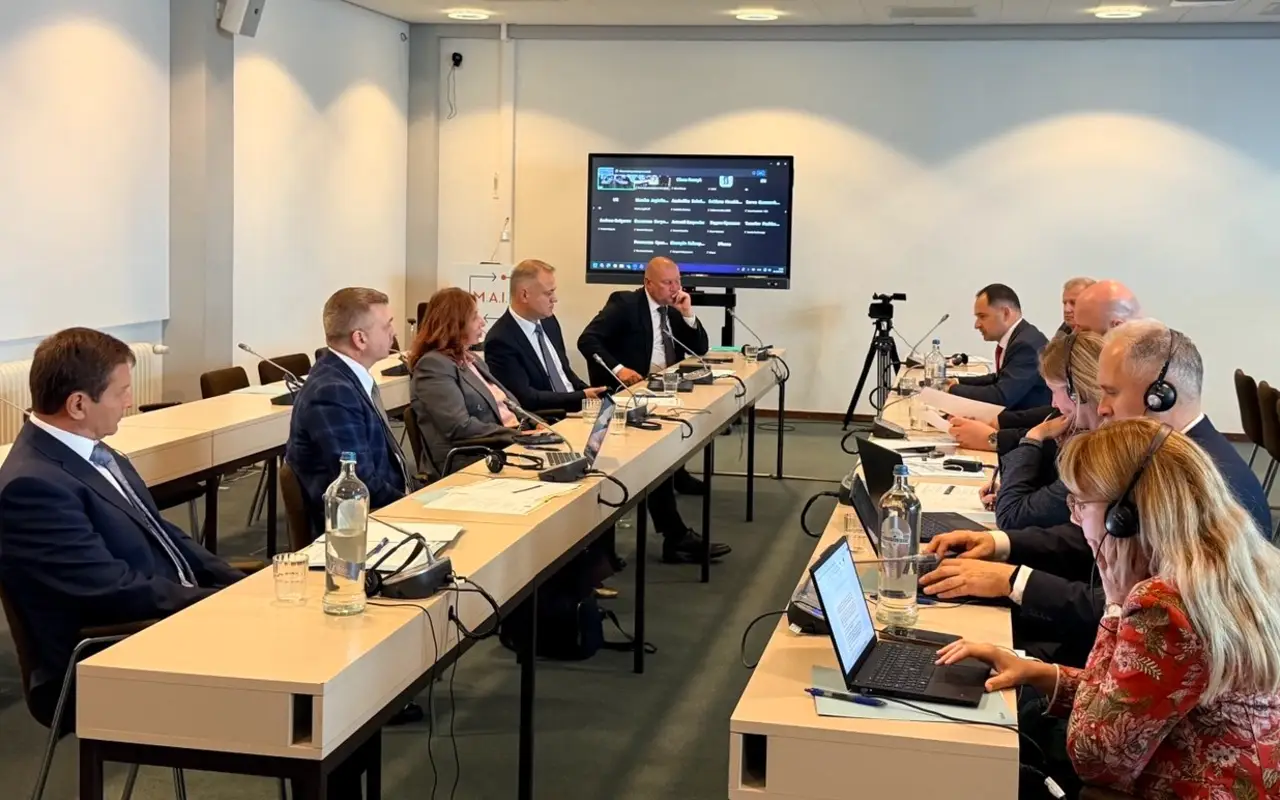
The UNBA presented the key provisions of the future law on advocacy in Brussels
The Ukrainian National Bar Association presented its proposals for the upcoming law on advocacy, aligned with the Rule of Law Roadmap. The presentation covered topics such as access to the profession, self-governance, disciplinary procedures, professional development and guarantees for the practice of advocacy.

Educational events
Advocates were taught to voice their complaints without making accusations
In a difficult conversation, it’s easy to confuse facts with opinions, feelings with accusations, and requests with demands. How can you express dissatisfaction, explain your own needs, and propose a specific solution while still allowing your conversation partner the opportunity to refuse or suggest an alternative?
Guarantees of the practice of law
The contract provides for a video conference, but the court requires in-person appearance: how should an advocate proceed?
Many advocates today work remotely; therefore, their agreements with clients provide for the provision of legal assistance via videoconferencing. However, this form of work does not, in and of itself, create an unconditional obligation for the court to conduct every hearing via videoconference.
Guarantees of the practice of law
Independent oversight is necessary before using CISA materials against an advocate – Lidiya Izovitova
Before the prosecution uses information obtained during covert investigative actions and related to an advocate’s activities, independent procedural oversight must be conducted. It is necessary to determine whether such information is covered by attorney-client privilege and whether it may be disclosed.
Self-government
Efforts to develop advocacy must be brought to fruition — A. Misyats
The Ukrainian advocacy profession is currently going through a critical phase. Amid the war, it must ensure the continuity of legal aid, defend the independence of the profession, and improve qualification and disciplinary procedures in accordance with European standards. The work that has been started must be brought to a practical conclusion.
Support
Protecting the legal profession, cybersecurity and support for advocates: common themes for the IBA and the UNBA
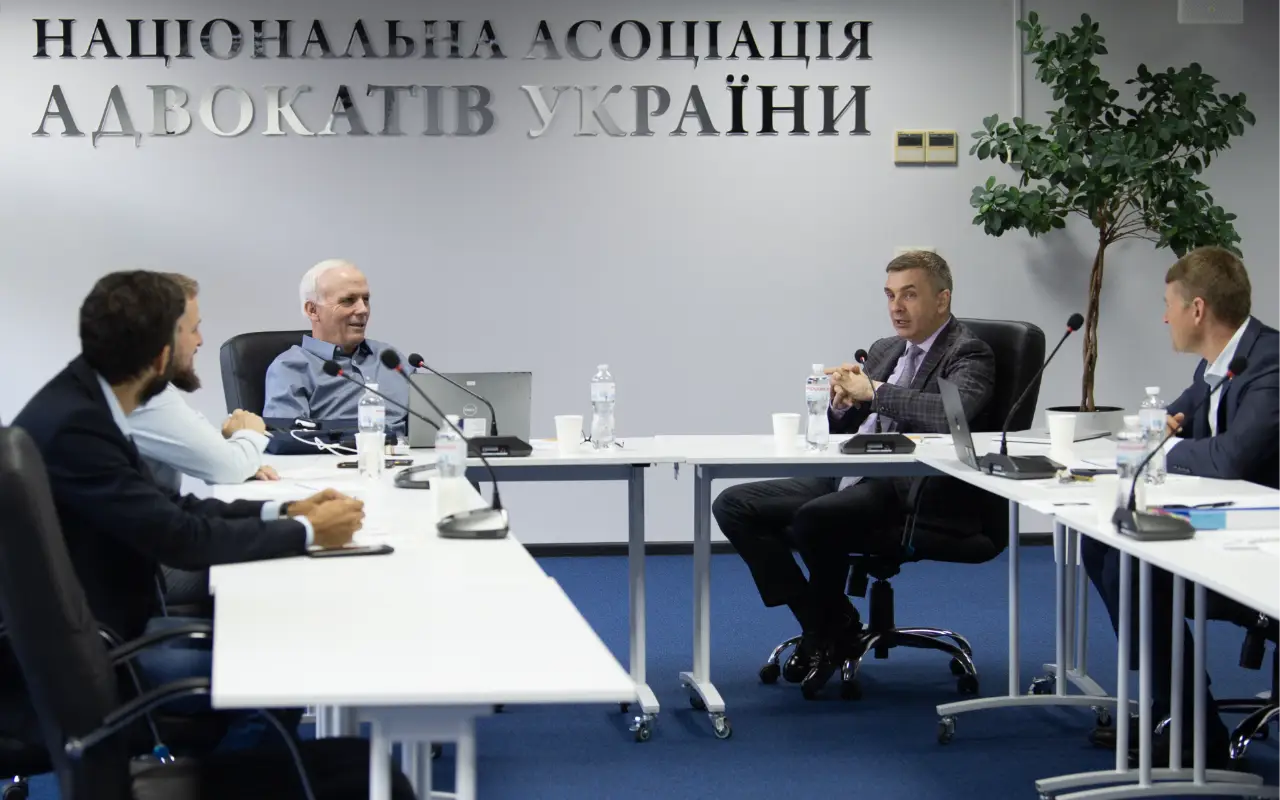
On September 18, a working meeting was held at the office of the Ukrainian National Bar Association with Executive Director of the International Bar Association (IBA) Mark Ellis. The parties discussed the Ukrainian advocacy profession’s participation in European legal processes, the protection of the UNBA’s digital infrastructure, psychological support for advocates and future areas of cooperation.
Publications

Vasyl Kolishnyi, «Law and Business» Supporting mental health should become part of the professional culture of the Bar, - H. Udovenko

Volodymyr Matsko Extradition during wartime: when the risks outweigh the request

Volodymyr Matsko Extradition as a systemic form of rights violations

Victoria Yakusha, Law and Business The anti-corruption vertical cannot «take care» of the Bar as an institution, - acting head of the HQDCB

Censor.net Protecting advocates – protecting justice: addressing concerns about the new law

Ihor Kolesnykov A BRIEF SUMMARY REGARDING THE APPLICATION OF THE ORDER ON EXTENDED CONFISCATION IN LATVIA REGARDING FINANCIAL ASSETS OF…

Valentyn Gvozdiy WORKING IN A WAR ZONE

Lydia Izovitova Formula of perfection