


Joint custody after divorce: discussion in the Verkhovna Rada with the participation of advocates
A child has the right to contact with parents who live separately and to be raised by both of them. Therefore, legislative initiatives should promote the development of a model of joint parental care that focuses on the child and his or her best interests. At the same time, the use of a child as a tool to satisfy the whims of adults or conflicts between them should be prevented.
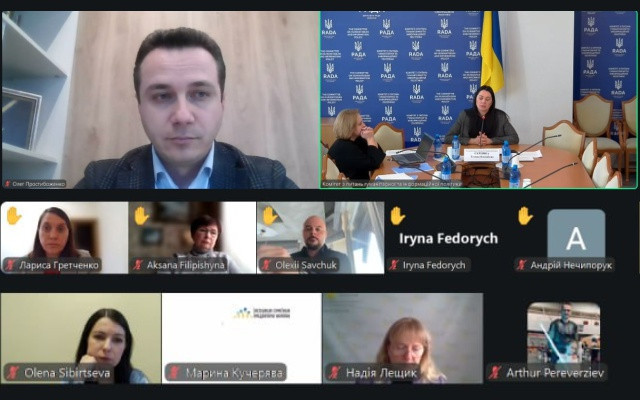
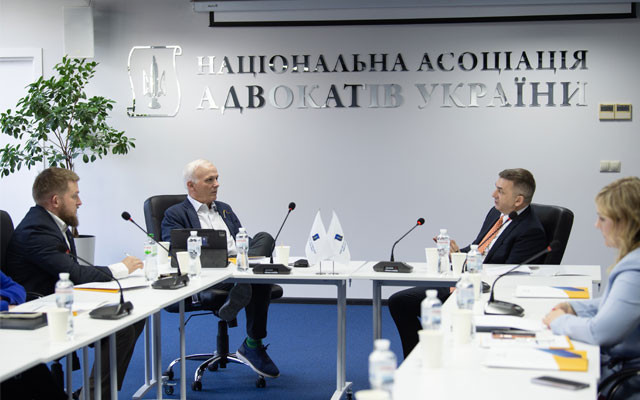
On March 3, the Verkhovna Rada Committee on humanitarian and information policy organized and held a meeting of the working group on parental involvement in child-rearing, during which MPs, human rights activists, representatives of public organizations, and advocates expressed their opinions on the advisability of the changes proposed by the draft laws: The chairman of the UNBA Committee on civil law and procedure Oleg Prostybozhenko, drew attention to the inexpediency of the guardianship and custody authority providing conclusions on cases being decided by the court. This results in delays in the consideration of cases, the actual replacement of the court by the guardianship and custody authority (given the actual duplication of their functions), and also causes corruption risks.
- No. 12123 of 15.10.2024 «On amendments to the Family Code of Ukraine regarding joint parental custody of children»;
- No. 12132 of 17.10.2024 «On amendments to the Family Code of Ukraine regarding the introduction of a model of joint parental custody of children after divorce as the primary model».
He emphasized the need to change the existing paradigm to a child-centered one: the child should be the focus of attention of parents, the court, the guardianship and custody authority, etc., and these persons should «revolve» around the child. In practice, this should manifest itself in the prohibition of unilateral changes to the child's educational institution by one of the parents, arbitrary changes to the child's place of residence, etc.
«It is necessary to simultaneously resolve the issue of determining the child's place of residence and establishing a schedule for the other parent's communication with the child. This approach will avoid lengthy court disputes and help ensure the best interests of the child. In addition, alternating residence of the child with each parent can be implemented not by changing the child's place of residence, but by alternating the parents' residence in the child's home», - O. Prostybozhenko emphasized.
In his opinion, the proposal to secure the claim by establishing the child's place of residence and a schedule for communication, as well as prohibiting a change in the child's educational institution, is quite reasonable. He drew particular attention to the need to increase liability for failure to comply with a court decision concerning parental responsibility.
The equality of parents' rights with regard to the child derives from the rights and interests of the child itself to harmonious development and proper upbringing. This was noted by the chairman of the UNBA Committee on family law Larysa Gretchenko. Family relationships are characterized by multiplicity and diversity, which makes it impossible to apply a general rule to each individual situation.
In addition to judicial protection, it is important to improve the mechanisms for contractual settlement of disputes involving children or relating to their interests, mediation as an alternative means of settling family disputes, and to enshrine guarantees for their practical implementation.
According to L. Gretchenko, the cyclical nature of family disputes can be continuous: often, after the completion of court proceedings to determine the child's place of residence with one of the parents, a lawsuit is immediately filed to change it, or there is a risk of the other parent arbitrarily changing the child's place of residence. The methods of participation of one of the parents in the upbringing of the child and the established schedule of communication, determined by the decision of the guardianship and custody authority or the court, often encounter obstacles in their implementation, which necessitates a repeat application to the court with a request to remove them. Long-term court proceedings and the parents' conflictual behavior within the family dispute create the risk of the child developing alienation syndrome towards the parent who lives separately, which is considered a manifestation of psychological violence.
«Parental divorce is a factor that can lead to difficult life circumstances and negatively affect the life, health, and development of the child. Legislation should focus not only on making decisions about parental involvement in the child's upbringing after divorce, but also on ensuring that the child is accompanied and supported during the lengthy resolution of the family dispute, - said L. Gretchenko. - It is urgent to develop special legislative provisions regarding the child's right to have their interests represented by an independent advocate, as well as access to psychological assistance in the absence of parental consent — as guarantees of adequate protection of children by the state. This approach requires not fragmentary changes to the Family Code of Ukraine, but systemic changes to legislation on child protection, social services, enforcement proceedings, and a number of other regulatory and legal acts».
Popular news

Legislation
Penalties for errors in military registration require clear rules, – UNBA
The liability of officials for violations of military registration rules must be legally defined, proportionate, and effectively enforceable. Otherwise, the new fines will not protect citizens from registration errors but will create additional risks.
European integration
Lidiya Izovitova: In the context of European integration reforms, advocacy is a partner of the state, not a target of reform
The war has significantly altered the working conditions for advocates, while European integration has presented the profession with new institutional challenges. The ongoing negotiation process covers issues such as the rule of law, judicial independence, fundamental rights, justice, freedom and security.
Guarantees of the practice of law
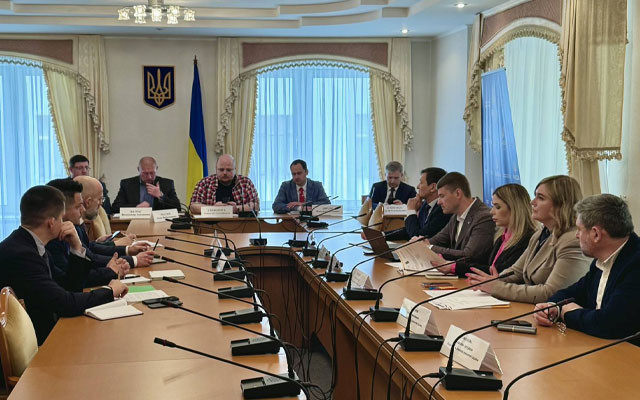
The Verkhovna Rada discussed the next steps for ratifying the Convention on the Protection of the Professions of Lawyer
The Verkhovna Rada Committee on legal policy held a working meeting to prepare for the ratification of the Convention for the Protection of the Profession of Lawyer. The meeting was attended by members of parliament, representatives of the Office of the President, the Ministry of Justice, the Ministry of Foreign Affairs and the Ukrainian National Bar Association.
Guarantees of the practice of law
Valentin Gvozdiy: Ukraine’s ratification of the Convention for the Protection of the Profession of Lawyer – is a matter…
Exactly one year ago, on May 13, 2025, in Luxembourg, during the 134th session of the Committee of Ministers of the Council of Europe, the Convention for the Protection of the Profession of Lawyer was opened for signature. Today, the Verkhovna Rada Committee on legal policy held a working meeting to prepare for its ratification. Between these two dates lies a year, during which (on March 9) Ukraine became the 28th signatory state. We spoke about this new phase with the Vice President of the UNBA, BCU Valentin Gvozdiy, who was personally involved in the preparation of this international instrument.
Support
Mental health, archives and cybersecurity: The UNBA and the IBA reviewed the progress of joint projects
The Ukrainian National Bar Association and the International Bar Association (IBA) reviewed the progress of joint projects that are of practical importance in the context of the war: supporting the mental health of advocates, digitizing archives, and strengthening the cybersecurity of the legal infrastructure.
Rule of Law Roadmap
The UNBA is developing a model for reforming the legal profession
The reform of the advocacy profession is part of the negotiation process regarding Ukraine’s accession to the European Union, and the Rule of Law Roadmap explicitly identifies the Ukrainian National Bar Association as one of the key stakeholders in the process.
Legal defence of military personnel
Missing in action: advocates explain the procedure to the families of servicemembers
As part of the «Advocate+» pilot project, advocates continue to work with military personnel in the brigades, helping to resolve practical legal issues — ranging from social benefits and payments to undergoing medical examinations and processing paperwork.

Guarantees of the practice of law
Police to investigate the NACP's attempts to reform advocacy
The Office of the Prosecutor General has opened a criminal investigation into alleged abuse of power by employees of the National Agency for Corruption Prevention.
Publications

Volodymyr Matsko Extradition during wartime: when the risks outweigh the request

Volodymyr Matsko Extradition as a systemic form of rights violations

Victoria Yakusha, Law and Business The anti-corruption vertical cannot «take care» of the Bar as an institution, - acting head of the HQDCB

Censor.net Protecting advocates – protecting justice: addressing concerns about the new law

Ihor Kolesnykov A BRIEF SUMMARY REGARDING THE APPLICATION OF THE ORDER ON EXTENDED CONFISCATION IN LATVIA REGARDING FINANCIAL ASSETS OF…

Valentyn Gvozdiy WORKING IN A WAR ZONE

Lydia Izovitova Formula of perfection

Sergiy Vylkov Our judicial system is so built that courts do not trust advocates