


Advocates have examined gender governance as a tool in legal practice
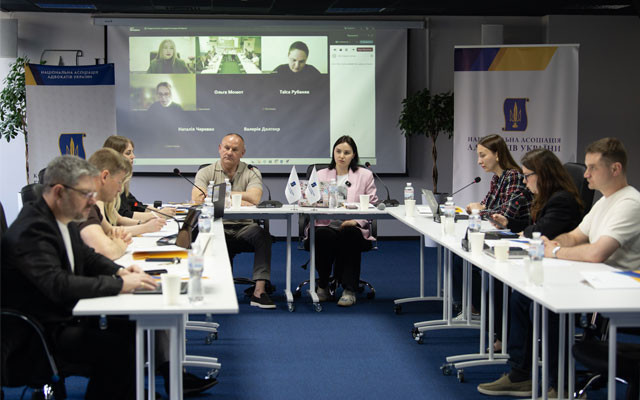
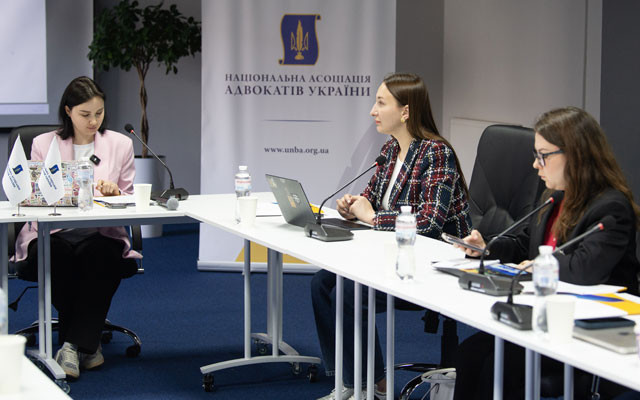

On May 27, the Ukrainian National Bar Association hosted a professional discussion titled «Gender policy and governance in legal practice», organized by the UNBA Committee on gender policy. During the event, participants discussed methodological guidelines developed for use in legal practice and legal education.
Committee chairman Anatoliy Telman emphasized that issues of gender governance, gender-responsive budgeting, ensuring the rights of male and female veterans, protecting the rights of military personnel, and the strategic vision for 2030 have already moved beyond academic discourse and become part of the advocacy profession’s professional responsibility. He noted that the war has brought to the forefront issues regarding women’s participation in military units, their material and social support, as well as hidden discrimination against men, which, due to societal stereotypes, is not always brought up for discussion.
Since 2019, the Association has supported the topic of gender policy and the work of the relevant Committee. The head of the Secretariat of the UNBA Vadym Krasnyk cited statistics: the URAU includes approximately 73,000 advocates, of whom 60% are men and 40% are women. In the HQDCB, the ratio of men to women is 50% to 50%; women make up 54% of the leadership of regional bar associations and 45% of the leadership of the QDCB.
Deputy director of the Department — head of the division for the observance of equal rights and prevention of discrimination within the Department for monitoring the observance of equal rights and freedoms, the rights of national minorities, political and religious views of the Secretariat of the Verkhovna Rada Commissioner for Human Rights Olga Momot noted that the implementation of gender approaches in governance and access to justice directly relates to the Commissioner’s mandate as a national human rights institution and an equality body. According to her, the Commissioner’s office focuses on incorporating gender approaches into post-war reconstruction, protecting victims of crimes and offenses under martial law, and monitoring the observance of the rights of vulnerable population groups by executive authorities and local self-government bodies.
Head of the Department of preventive activities at the National Police of Ukraine Vasyl Bohdan spoke about gender policy in work with children. According to him, for the juvenile police, this is part of their daily activities aimed at ensuring equal opportunities for child protection. He referred to advocates in this field as partners. Bogdan also noted that gender sensitivity involves taking into account the individual characteristics of a child who is a victim, witness, or suspect; avoiding stereotypical pressure; and creating conditions in which the child feels protected. Child-friendly justice standards must be applied from the initial interview through the preparation of case materials.
A representative of the Committee in the Donetsk region Anastasia Klimova explained how a gender-based approach affects the quality of decisions, access to rights, procedural fairness, resource allocation, and trust in institutions. According to her, gender-responsive governance means a shift from a formally neutral approach to assessing the actual impact of decisions on different groups of people. A. Klimova emphasized that a rule that appears neutral at first glance is not always neutral in practice. If an institution does not take into account people’s diverse social experiences, it can perpetuate existing inequalities even without direct intent. Therefore, gender-responsive governance must be applied in policies, programs, services, administrative procedures, and management decisions.
Secretary of the Committee Valentyna Slobodyanyuk spoke about gender-responsive governance as a standard of the modern professional community. She noted that following the ratification of the Istanbul Convention, Ukraine has undertaken the obligation to integrate gender perspectives into all spheres of activity, and advocacy must implement these approaches both in working with clients and within the professional community. According to her, advocacy is an institution of trust, professional ethics, self-governance, and accountability to society. Therefore, the professional community cannot limit itself to issues of qualifications, discipline, or organizational structure alone. It must create an environment in which everyone has equal access to development, representation, decision-making, and protection from discrimination.
V. Slobodyanyuk specifically emphasized that gender governance is not about pitting women against men, competing experiences, or granting privileges to one group. In practical terms, she highlighted institutional, representational, educational, communicative, and protective components, including the need for procedures to address discrimination, sexism, sexual harassment, or bias in the professional environment.
Committee Council member Natalia Cherevko focused on gender-responsive budgeting. She explained that this does not involve creating separate budgets for men and women, but rather incorporating gender analysis at all stages of the budget process — from planning to program performance evaluation. This approach involves assessing how expenditures and policies affect different groups, particularly socially vulnerable and marginalized categories.
The speaker also explained the role of advocates in this area. According to her, an advocate can conduct a legal review of a budget program: assessing whether it complies with the law, whether it contains signs of discrimination, and whether there are grounds for protecting the rights of a specific group of citizens or a specific individual.
The Committee’s representative in Ivano-Frankivsk region Maria Logvinova presented UN Sustainable Development Goal No. 5, «Gender equality», as a practical tool for advocates. She noted that such documents are not directly enforceable, but can be used in arguments, particularly in appeals to the Constitutional Court, the European Court of Human Rights, and the Verkhovna Rada Commissioner for Human Rights. The speaker also drew attention to the State Strategy for Ensuring Equal Rights and Opportunities for Women and Men by 2030. According to her, when the state recognizes a specific systemic problem in the strategy, advocates can use this in court proceedings to argue that a violation of a client’s rights is not an isolated incident but is linked to a broader systemic context.
An advocate and war veteran Yana Maksymenko spoke about the gender perspective on the realization of veterans’ rights. She noted that their needs are not uniform, and the ways to meet them are not always individualized. In her view, equality does not lie in uniformity, but rather in the individualization of how equal rights are ensured. Indeed, the needs of male and female veterans may differ depending on disability, injuries, medical needs, housing conditions, mobility, marital status, the presence of children, and financial security. As an example of a formally neutral but not always accessible program, she cited «Veteran sports», which some veterans — particularly those undergoing treatment or staying in rehabilitation centers — cannot utilize.
A member of the Center for methodological assistance and coordination of the volunteer movement of advocates for the legal protection of servicemembers at the UNBA Alla Otrokh also spoke about the rights of servicemembers from a gender perspective. She noted that as of 2025, there were 70,000 women in the ranks of the Armed Forces of Ukraine, of whom 20,000 held officer positions and 5,500 were directly on the front lines.
A. Otrokh recalled that a turning point in ensuring equal rights for women and men during military service was the adoption of Law No. 2523-VIII of September 6, 2018 No. 2523-VIII «On amendments to certain laws of Ukraine regarding the ensuring of equal rights and opportunities for women and men during military service in the Armed Forces of Ukraine and other military formations».
According to her, following this, women and men have equal access to positions, including officer and combat roles, equal opportunities for promotion, the same procedures for obtaining military ranks, signing contracts and equal responsibilities.
She also spoke separately about special protection for women during pregnancy and childbirth as a guarantee of maternity protection, as well as about reproductive rights, cryopreservation, and the storage of reproductive cells of military personnel stationed in combat zones. In the context of balancing service and family life, she referenced the ECHR case «Konstantin Markin v. Russia», which involved the denial of paternity leave to a male service member.
Summarizing the presentations, V. Dolgoyer emphasized that the gender component in today’s context concerns not only sex but also health status, marital status, territorial affiliation, evacuation, limited mobility, disability, access to services, and the integration of people affected by war. According to her, advocates should not work with a boilerplate case, but with a specific person and their needs.
The methodological guidelines «Gender policy and governance in legal practice» can be downloaded via this link.
Popular news
European integration
The UNBA presented the CCBE with an overview of legal reform and challenges
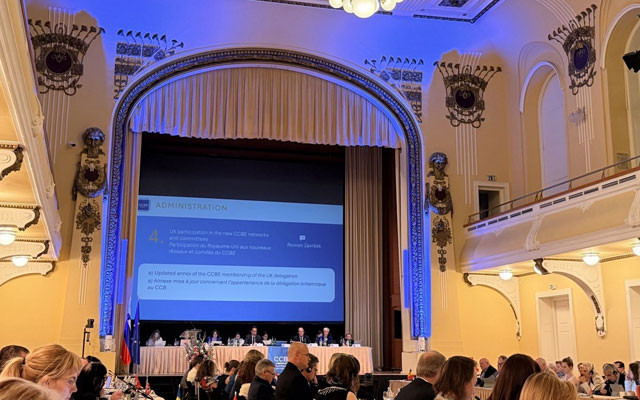
Reform of the legal profession, Ukraine’s European integration commitments, guarantees of the profession’s independence, and practices of bar self-governance in European countries — these issues were the subject of discussion at the Council of Bars and Law Societies of Europe (CCBE).
Discussion
UNBA discussed removing barriers at border crossings for families with children with disabilities
Families of children with disabilities face additional requirements when traveling abroad, particularly regarding consular registration. What is happening and what changes are needed to remove these obstacles were discussed during the roundtable «Borders without barriers for families of children with disabilities».
Discussion
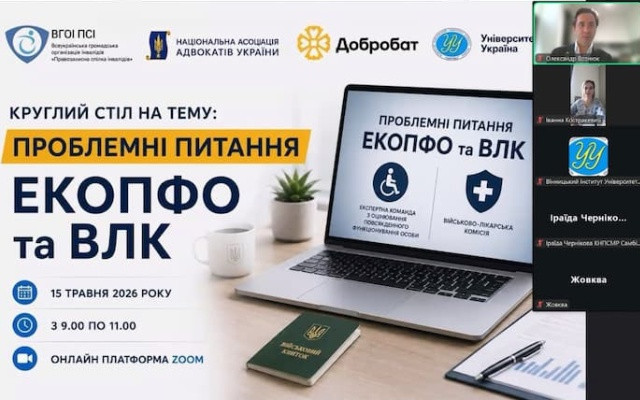
New rules, old problems: the UNBA discussed the work of the ETAIDF and MMC
The reform of medical-social assessment and military medical commissions has changed procedures but has not resolved practical issues. People face situations where documents are not issued, decisions are based on technicalities, assessments are delayed, and they struggle to demonstrate their actual health status in specific life situations.
Discussion
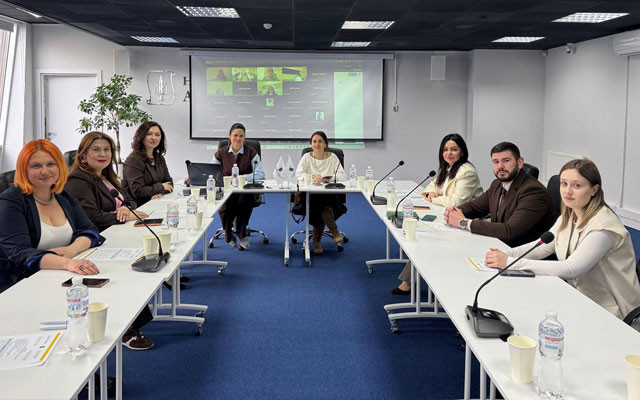
Co-parenting shouldn't be reduced to a 50/50 formula, — roundtable discussion
Following a divorce, joint custody can serve as a mechanism for ensuring equal parental rights. However, this model requires clear criteria and cannot be applied automatically without taking into account the child’s age, the level of conflict between the parents, the risk of violence, and the feasibility of enforcing the future decision.

Legislation
Penalties for errors in military registration require clear rules, – UNBA
The liability of officials for violations of military registration rules must be legally defined, proportionate, and effectively enforceable. Otherwise, the new fines will not protect citizens from registration errors but will create additional risks.
European integration
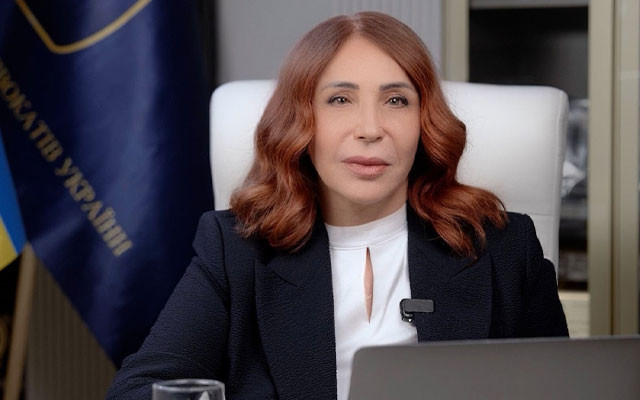
Lidiya Izovitova: In the context of European integration reforms, advocacy is a partner of the state, not a target of reform
The war has significantly altered the working conditions for advocates, while European integration has presented the profession with new institutional challenges. The ongoing negotiation process covers issues such as the rule of law, judicial independence, fundamental rights, justice, freedom and security.
Guarantees of the practice of law
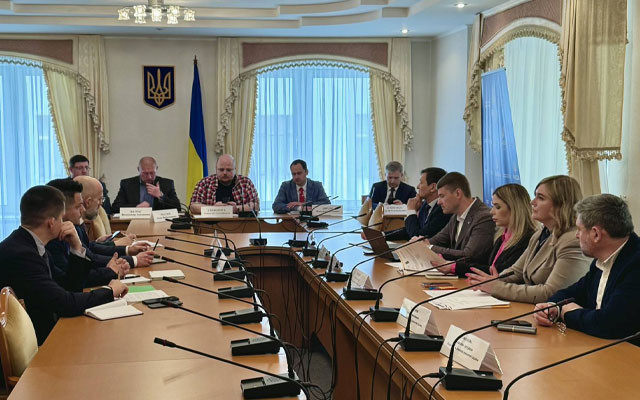
The Verkhovna Rada discussed the next steps for ratifying the Convention on the Protection of the Professions of Lawyer
The Verkhovna Rada Committee on legal policy held a working meeting to prepare for the ratification of the Convention for the Protection of the Profession of Lawyer. The meeting was attended by members of parliament, representatives of the Office of the President, the Ministry of Justice, the Ministry of Foreign Affairs and the Ukrainian National Bar Association.
Guarantees of the practice of law
Valentin Gvozdiy: Ukraine’s ratification of the Convention for the Protection of the Profession of Lawyer – is a matter…
Exactly one year ago, on May 13, 2025, in Luxembourg, during the 134th session of the Committee of Ministers of the Council of Europe, the Convention for the Protection of the Profession of Lawyer was opened for signature. Today, the Verkhovna Rada Committee on legal policy held a working meeting to prepare for its ratification. Between these two dates lies a year, during which (on March 9) Ukraine became the 28th signatory state. We spoke about this new phase with the Vice President of the UNBA, BCU Valentin Gvozdiy, who was personally involved in the preparation of this international instrument.
Publications

Volodymyr Matsko Extradition during wartime: when the risks outweigh the request

Volodymyr Matsko Extradition as a systemic form of rights violations

Victoria Yakusha, Law and Business The anti-corruption vertical cannot «take care» of the Bar as an institution, - acting head of the HQDCB

Censor.net Protecting advocates – protecting justice: addressing concerns about the new law

Ihor Kolesnykov A BRIEF SUMMARY REGARDING THE APPLICATION OF THE ORDER ON EXTENDED CONFISCATION IN LATVIA REGARDING FINANCIAL ASSETS OF…

Valentyn Gvozdiy WORKING IN A WAR ZONE

Lydia Izovitova Formula of perfection

Sergiy Vylkov Our judicial system is so built that courts do not trust advocates