


The advocate’s workplace in court: is it possible to ensure normal conditions?
It is no secret that Ukrainian courts have many courtrooms that do not meet the basic needs of the parties. At times, advocates are forced to work literally on their knees and have to get used to such every-day humiliation.
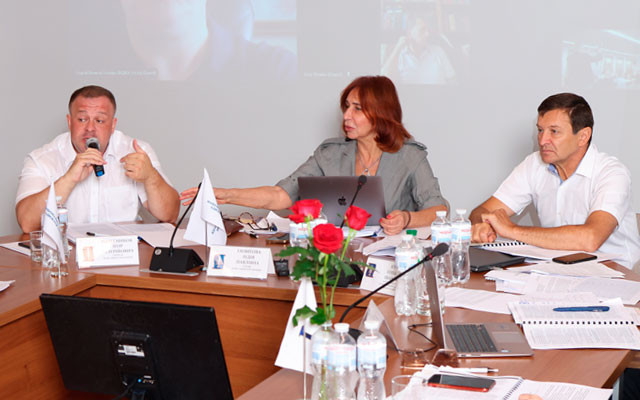
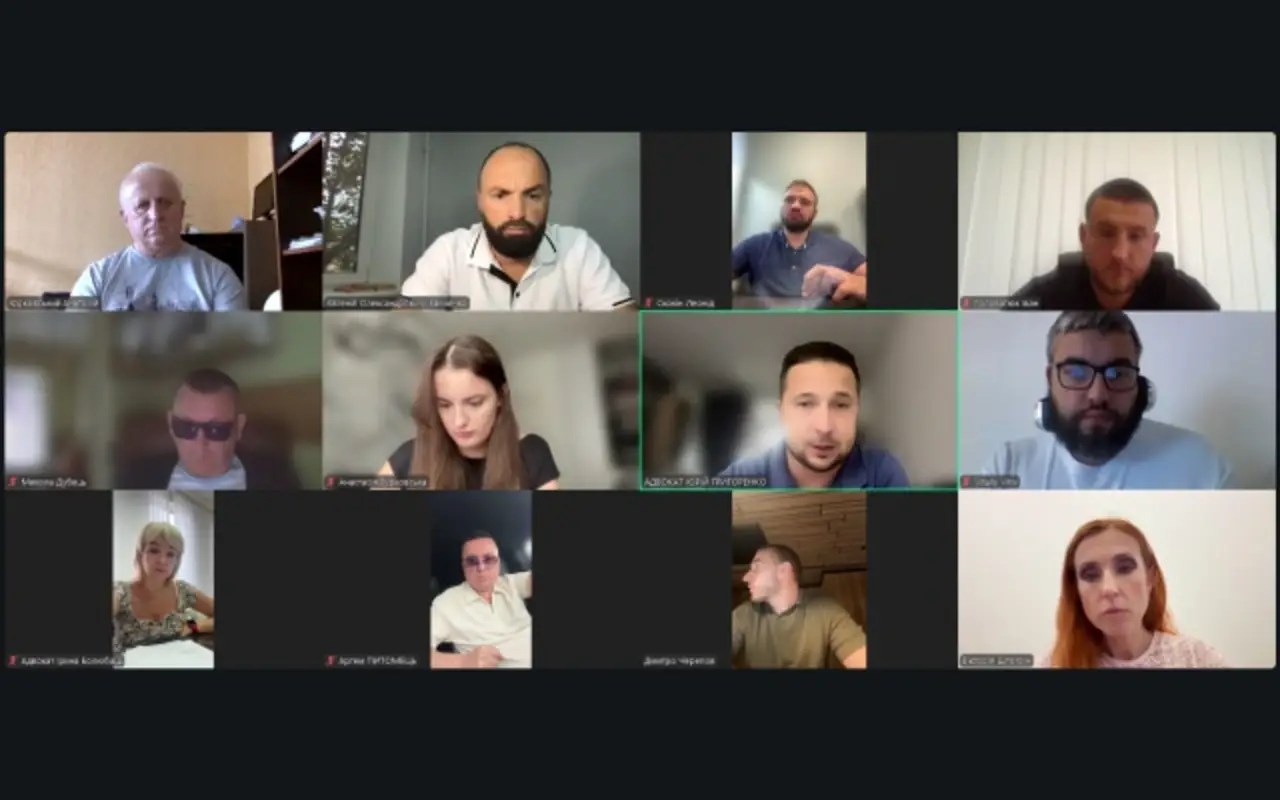
This problem was raised by the Bar Council of Ukraine at the meeting ace today, August 12th, in Uzhhorod) in connection with the consideration of a lawyer's appeal on violation of his professional rights.
For instance, an advocate arrived at the court hearing, where the issue of choosing a preventive measure for the client was being decided. However, there was no place in the courtroom where he could sit down at the table and lay out his working materials in the criminal case. The motion to the presiding judge to change the room was not granted by the court. Therefore, in the advocate’s opinion, the lack of proper working conditions was an obstacle to the effective defense of the client.
«When courts do not provide conditions for advocates to sit at a table and lay out their materials in order to provide professional assistance, we can talk about signs of obstruction of the practice of law and violation of advocate’s professional guarantees», - said Ihor Kolesnikov, Secretary of the Ukrainian National Bar Association, who spoke on the issue.
The participants of the meeting shared their own experiences and confirmed that the situation can be considered normal only in Kyiv City, where the courts are more or less stocked with the necessary supplies. But in the regions, the situation with advocates' workplaces is much worse. At the same time, when choosing a courtroom for a hearing, the court knows how many defendants and how many defense lawyers will be present. Therefore, they must choose the right room, including the need to provide a workplace for all advocates into consideration.
«Providing and arranging a place for an advocate in the courtroom, although purely a technical issue, directly affects the quality of everyone's right to professional legal aid guaranteed by the Constitution of Ukraine», - said Lidiya Izovitova, President UNBA and BCU. «By taking an oath, an advocate promises to honestly and conscientiously ensure the right to defense and provide legal aid in accordance with the Constitution and laws of Ukraine, and to fulfil his or her duties with high responsibility. However, one is simply precluded from providing effective defense to a client. Also, in this regard, the technical recording of complaints and motions filed by him is not carried out at all or is carried out with poor quality, which is a violation of the provisions of the Procedure Code. That is, the issue is quite important for us», - added President of UNBA, BCU.
Lyudmyla Hryn, a member of the BCU from Chernihiv region, added that the lack of a workplace is also a humiliation and a manifestation of disrespect for the legal profession. «If a prosecutor has a proper workplace, but an advocate does not, then the principle of adversariality is violated. You can't compete in unequal conditions», - she added.
«We are increasingly tolerant of violations of rights», - said Oksana Kadenko, a member of the BCU from Khmelnytsky region. «We already accept it as the norm when the accused is not allowed to sit in court with his advocate, only with the prosecutor». In her opinion, it is necessary to formulate a position on providing advocates with the necessary working conditions on an equal footing with other parties (to enable use of equipment, documents), as well as to ensure access to confidential communication with the client directly at such a workplace.
Following the discussion, the members of the BCU decided to contact the advocates in order to summarize similar cases. Based on the results of the study, it is planned to prepare an appeal to the State Judicial Administration and the High Council of Justice to organize a comprehensive solution to the problem of inadequacy of advocate’s workplaces in the courts of Ukraine.
Popular news
Guarantees of the practice of law
Independent oversight is necessary before using CISA materials against an advocate – Lidiya Izovitova
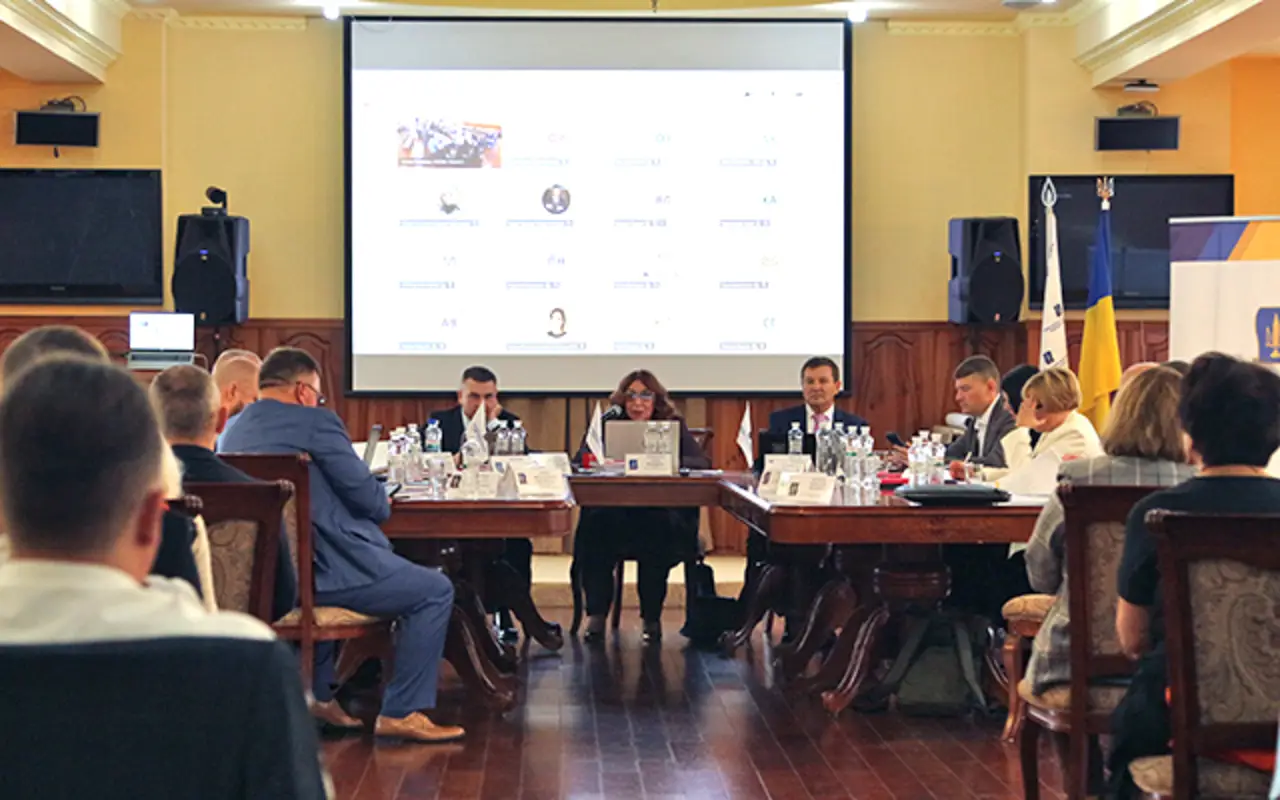
Before the prosecution uses information obtained during covert investigative actions and related to an advocate’s activities, independent procedural oversight must be conducted. It is necessary to determine whether such information is covered by attorney-client privilege and whether it may be disclosed.
Self-government
Efforts to develop advocacy must be brought to fruition — A. Misyats
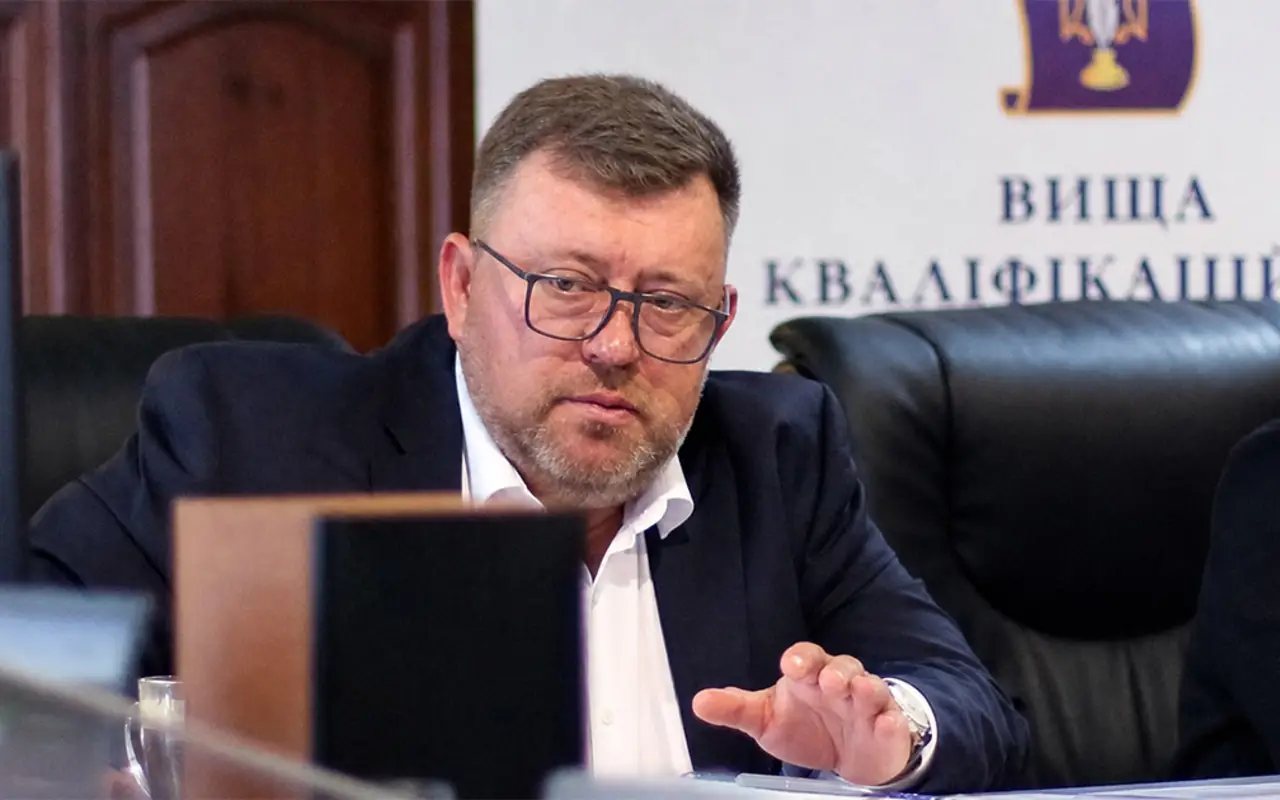
The Ukrainian advocacy profession is currently going through a critical phase. Amid the war, it must ensure the continuity of legal aid, defend the independence of the profession, and improve qualification and disciplinary procedures in accordance with European standards. The work that has been started must be brought to a practical conclusion.
Support
Protecting the legal profession, cybersecurity and support for advocates: common themes for the IBA and the UNBA
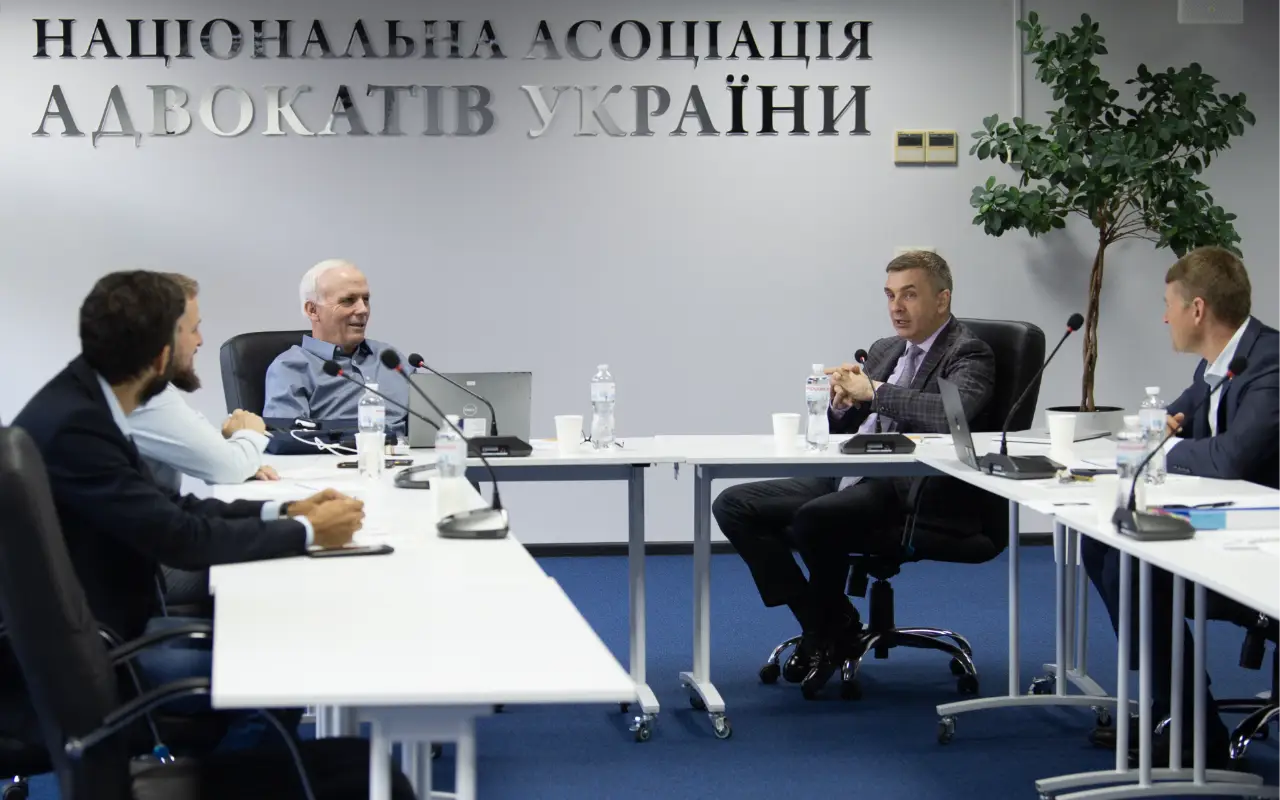
On September 18, a working meeting was held at the office of the Ukrainian National Bar Association with Executive Director of the International Bar Association (IBA) Mark Ellis. The parties discussed the Ukrainian advocacy profession’s participation in European legal processes, the protection of the UNBA’s digital infrastructure, psychological support for advocates and future areas of cooperation.
Educational events
Tax residency of Ukrainians abroad: what matters
The determination of tax residency for Ukrainians who have been living abroad for an extended period depends on the combination of their personal and economic ties to each country. The established status determines the procedure for reporting income, paying taxes and fulfilling CFC reporting obligations.
War
Are Europe's advocacy associations prepared for a potential war? V. Gvozdiy shared lessons from the Ukrainian experience
The continuity of the bar’s self-governance, the protection of professional registries and archives, as well as equal guarantees of employment for advocates, judges, and prosecutors must be enshrined in advance in legislation in the event of war or another emergency.
Legal defence of military personnel
Payments to military personnel require clear and uniform criteria — UNBA Committee
The vagueness of terms in subordinate regulatory acts leads to differing interpretations of the grounds for paying additional compensation to military personnel. The UNBA has proposed harmonizing these acts and establishing transparent criteria for the allocation of funds.
Discussion
Finding them isn't enough: issues surrounding the seizure and return of crypto assets
The technical structure of transactions does not automatically identify the person who controlled the crypto wallet, and courts have reached differing conclusions on whether a digital asset can be seized as physical evidence. So how can one prove ownership of such assets, enforce court orders, and return funds to victims?
Legislation
The UNBA will prepare guidelines on lawyers' requests
By the end of 2026, the UNBA Committee on the prevention of administrative offenses committed against advocates will develop guidelines on drafting advocate inquiries and responding to refusals to provide information. There are also plans to standardize the practice of applying Article 212-3 of the Code of Administrative Offenses.
Publications

Vasyl Kolishnyi, «Law and Business» Supporting mental health should become part of the professional culture of the Bar, - H. Udovenko

Volodymyr Matsko Extradition during wartime: when the risks outweigh the request

Volodymyr Matsko Extradition as a systemic form of rights violations

Victoria Yakusha, Law and Business The anti-corruption vertical cannot «take care» of the Bar as an institution, - acting head of the HQDCB

Censor.net Protecting advocates – protecting justice: addressing concerns about the new law

Ihor Kolesnykov A BRIEF SUMMARY REGARDING THE APPLICATION OF THE ORDER ON EXTENDED CONFISCATION IN LATVIA REGARDING FINANCIAL ASSETS OF…

Valentyn Gvozdiy WORKING IN A WAR ZONE

Lydia Izovitova Formula of perfection