


Regarding the NACP's Pressure on the Constitutional Court of Ukraine: Statement of the Bar Council of Ukraine
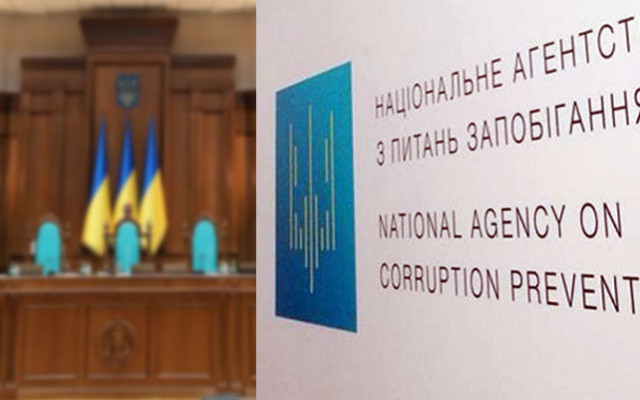
On June 11, the National Agency for the Prevention of Corruption published a news item on its website entitled «Should members of the Qualification and Disciplinary Commissions of the Bar Declare: Whose Side Will the CCU Take?», in which it called on the public, journalists and international partners to closely monitor the consideration by the Constitutional Court of Ukraine of the complaint filed by Oksana Bukhtoyarova, a member of the Disciplinary Chamber of the Qualification and Disciplinary Commission of the Bar of the Zakarpattia Region, regarding the constitutionality of certain provisions of the Law of Ukraine «On Prevention of Corruption». The CCU hearing on this case is scheduled to take place at 10 a.m. on June 12, 2024.
Along with presenting the agency's position on the impossibility of satisfying the constitutional complaint, Deputy Head of the NACP Yaroslav Lyubchenko stated that members of the High Qualification and Disciplinary Commission and members of the disciplinary chambers of the QDCB, who decide on the disciplinary responsibility of current lawyers, must submit declarations. He stated that there are very high corruption risks in this area, and the positions of the commission members have a high level of influence and, at the same time, discretion without clear criteria for its application.
The Ukrainian National Bar Association has repeatedly expressed its position on the issue raised in the constitutional complaint of O. Bukhtoyarova in forms that respect both the status of the Constitutional Court and the principles of constitutional justice.
Taking into account the provisions of the Constitution of Ukraine and the Law of Ukraine «On the Constitutional Court of Ukraine», the Bar Council of Ukraine:
- assesses the public statements of the NACP leadership, as well as the fact of placing the publication immediately before the session of the Constitutional Court of Ukraine, as a manifestation of direct pressure on the judges of the only body of constitutional jurisdiction;
- draws attention to the fact that a judge of the Constitutional Court exercises his/her powers exclusively under the Constitution of Ukraine and the Law of Ukraine «On the Constitutional Court of Ukraine», based on the rule of law. Influencing a judge of the Constitutional Court in any way is prohibited (Article 24 of the Law of Ukraine «On the Constitutional Court of Ukraine»);
- notes that the Constitutional Court a priori cannot «take sides», as the NACP formulates the issue in its statement of June 11. After all, the Constitutional Court is not a court of facts, but a court of law! The body of constitutional jurisdiction decides on the compliance of the laws of Ukraine with the Constitution of Ukraine and provides official interpretation of the Constitution of Ukraine. Putting the question in the format of «whose side will the CCU take» may indicate a high level of legal nihilism in the approaches to the NACP's activities, which denies the social value of law - the basis of the Constitutional Court's activities;
- reminds us that a constitutional complaint is the newest guarantee of protection of citizens' rights. And the accusatory bias demonstrated in the NAPC's publication shows a lack of understanding of the European legal culture at a time when Ukraine is at the beginning of negotiations on accession to the EU, where the rule of law is a key value.
- expresses its belief that the Constitutional Court, despite the fact of pressure, adheres to the requirements of Article 147 of the Basic Law of Ukraine, according to which the activities of the Constitutional Court should be based on the principles of the rule of law, independence, collegiality, transparency, validity and binding nature of its decisions and conclusions.
Popular news
Legislation
A bill implementing the Convention on the Protection of the Professions of Lawyer has been introduced
The constitutional guarantees of legal aid, defense, and the independence of advocacy cannot be realized without protecting advocates from unwarranted interference in their professional activities, including searches, the seizure of professional materials and the use of criminal procedural mechanisms to exert pressure.
Abroad
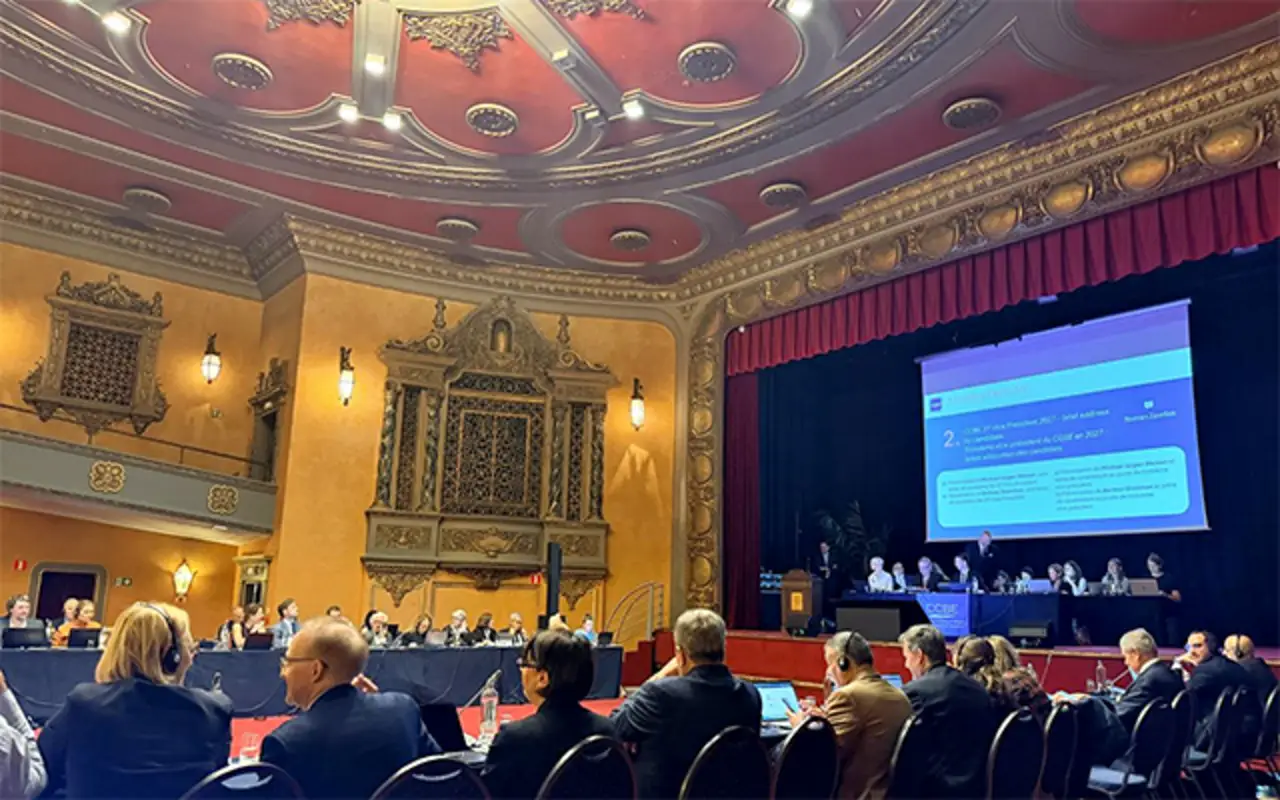
The CCBE is discussing European justice and issues related to the protection of advocates
Today, October 2, a meeting of the Standing Committee of the Council of Bars and Law Societies of Europe (CCBE) is taking place in Brussels. On the agenda are the protection of the advocate profession, the rule of law, attorney-client privilege, and changes in the European justice system.

Rule of Law Roadmap
The UNBA presented the key provisions of the future law on advocacy in Brussels
The Ukrainian National Bar Association presented its proposals for the upcoming law on advocacy, aligned with the Rule of Law Roadmap. The presentation covered topics such as access to the profession, self-governance, disciplinary procedures, professional development and guarantees for the practice of advocacy.

Educational events
Advocates were taught to voice their complaints without making accusations
In a difficult conversation, it’s easy to confuse facts with opinions, feelings with accusations, and requests with demands. How can you express dissatisfaction, explain your own needs, and propose a specific solution while still allowing your conversation partner the opportunity to refuse or suggest an alternative?

Guarantees of the practice of law
Unrestricted access to advocates' accounts poses a risk of client data disclosure — BCU
Information regarding transactions in the bank accounts of an advocate, a law firm, or a bar association from which clients can be identified, as well as the fact and subject matter of a request for legal assistance, the purpose of payments, and the amount of the fee constitutes attorney-client privilege. This rule applies regardless of whether the information also constitutes banking information and is in the possession of a bank.

Guarantees of the practice of law
The contract provides for a video conference, but the court requires in-person appearance: how should an advocate proceed?
Many advocates today work remotely; therefore, their agreements with clients provide for the provision of legal assistance via videoconferencing. However, this form of work does not, in and of itself, create an unconditional obligation for the court to conduct every hearing via videoconference.

Guarantees of the practice of law
Independent oversight is necessary before using CISA materials against an advocate – Lidiya Izovitova
Before the prosecution uses information obtained during covert investigative actions and related to an advocate’s activities, independent procedural oversight must be conducted. It is necessary to determine whether such information is covered by attorney-client privilege and whether it may be disclosed.

Legislation
Handing over a bank card should not automatically constitute a crime – UNBA
Criminal liability for transferring a bank card or access to an account should arise only if it is proven that the person knew the card or account would be used as a means to commit an intentional crime. The mere fact that a payment instrument was transferred or that an account was used by a third party is not sufficient.
Publications

Vasyl Kolishnyi, «Law and Business» Supporting mental health should become part of the professional culture of the Bar, - H. Udovenko

Volodymyr Matsko Extradition during wartime: when the risks outweigh the request

Volodymyr Matsko Extradition as a systemic form of rights violations

Victoria Yakusha, Law and Business The anti-corruption vertical cannot «take care» of the Bar as an institution, - acting head of the HQDCB

Censor.net Protecting advocates – protecting justice: addressing concerns about the new law

Ihor Kolesnykov A BRIEF SUMMARY REGARDING THE APPLICATION OF THE ORDER ON EXTENDED CONFISCATION IN LATVIA REGARDING FINANCIAL ASSETS OF…

Valentyn Gvozdiy WORKING IN A WAR ZONE

Lydia Izovitova Formula of perfection